LifeStraw Personal Water Filter Review
A field review of the classic LifeStraw straw filter: 57g, no batteries, but is drinking-from-a-straw the right call for backpacking?
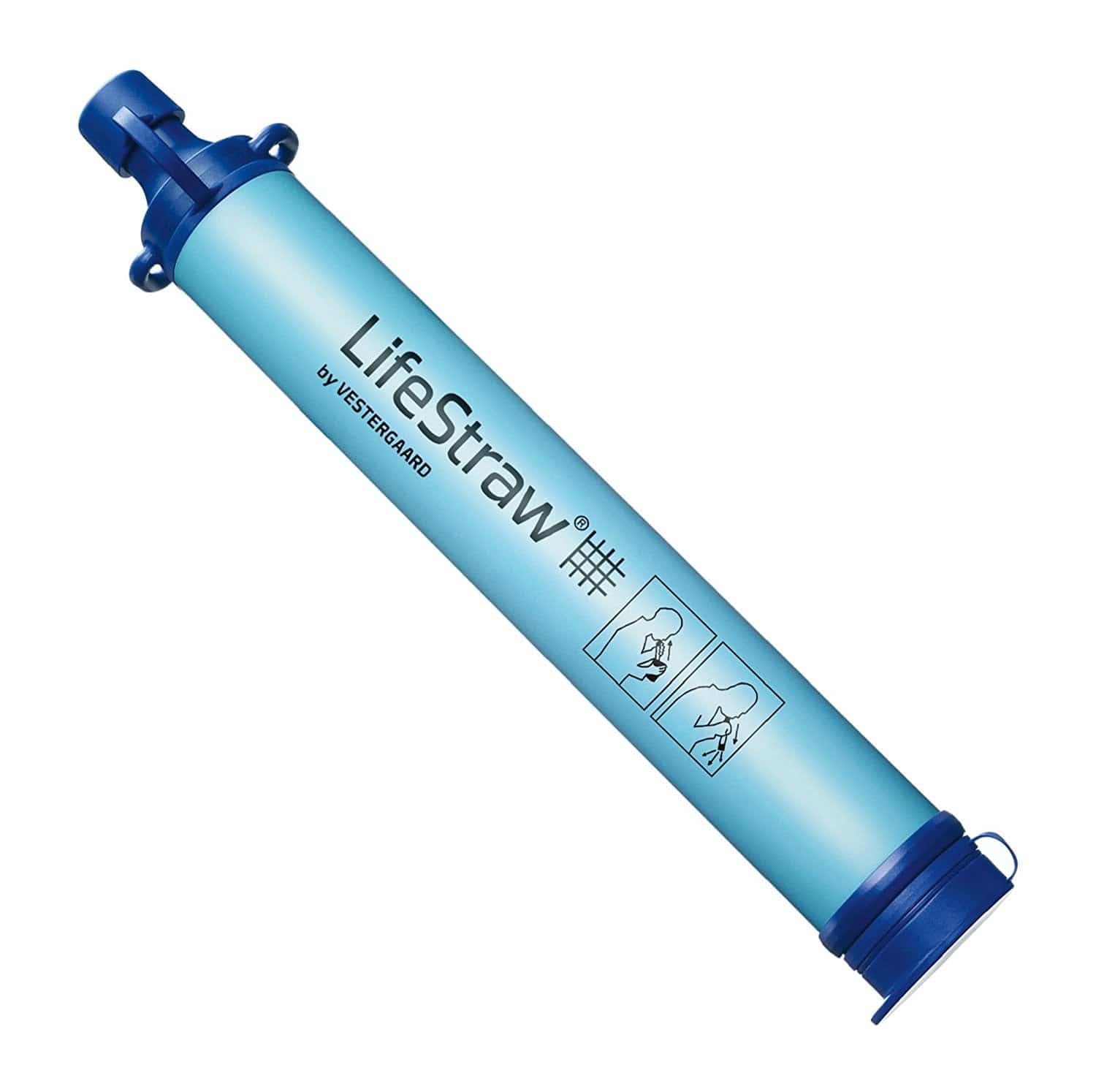
Overview
The LifeStraw Personal Water Filter is the product that put the whole “straw filter” category on the map back in 2005, and the current version is still basically the same idea: a hollow-fiber membrane housed in a plastic tube that you either suck water through directly from a source or use to filter water into a bottle. It’s built for hikers, travelers, and emergency-kit stashers who want a dead-simple, no-moving-parts backup filter rather than a primary high-volume system.
Key Specs
| Spec | Value |
|---|---|
| Weight | 57 g (2 oz) |
| Dimensions | 9 x 1 x 1 in |
| Filter lifespan | 4,000 L / 1,000 gal |
| Micron rating | 0.2 microns |
| Bacteria removal | 99.9999% |
| Parasite removal | 99.999% |
| Microplastic removal | 99.999% |
| Virus removal | None |
| Shelf life | Unlimited (unused) |
| Flow rate | ~2-3 L/min by suction (new filter, clean water) |

Build your Gear Closet
View all of your gear in one place, create packing lists and hit the trail with confidence. Available on iOS, Android and the web.
Get StartedPerformance
Filtration itself is solid and well-documented. The 0.2-micron hollow-fiber membrane handles the two things that actually make backcountry water dangerous in North America — bacteria and protozoa like Giardia and Cryptosporidium. Standard LifeStraw filters remove 99.9999% of waterborne bacteria including E. coli, Campylobacter, Vibrio cholerae, Pseudomonas aeruginosa, Shigella, and Salmonella, and also eliminate 99.999% of waterborne parasites including Giardia, Cryptosporidium, and Entamoeba histolytica. What it won’t do is stop viruses, which matters more if you’re traveling internationally in areas with contaminated municipal supplies than it does for most US/Canada backcountry trips. Original LifeStraw models do not remove viruses, chemicals, heavy metals, or dissolved salts.
Flow rate is the recurring complaint, and it’s real. Out of the box it’s fine — the initial flow rates are impressive, with only a slight amount of resistance as water passed through the filter material — but that doesn’t hold up forever. One long-term tester noted flow rate averages 1.5-2 liters per minute with moderate suction effort, and the filter maintains consistent performance throughout its lifespan, with flow rates declining gradually as the membrane approaches capacity. In practice, sediment-heavy water accelerates this a lot faster than the spec sheet implies — flow rate decreased significantly after filtering really dirty water, since the pre-filter gets clogged fast when dealing with sediment-heavy sources. If you’re pulling from a clear alpine stream, no problem. If you’re filtering off a silty desert seep or a stagnant cattle pond, expect to be working for every sip.
Clogs happen, and there’s no real fix. This is the filter’s biggest structural weakness. Outdoor Gear Lab’s testers found everything is enclosed and inaccessible, so if it clogs, it’s hard to unclog — blowing it out the other way works, but it’s inefficient. The manufacturer’s own guidance backs this up: once you’re finished drinking, you should clear the LifeStraw of excess water by blowing it through the straw, shaking excess water, and recapping the ends, because over time the flow rate will drop or you might notice a significant increase in the amount of suction needed to produce water — once this occurs, blowback through the straw to clear any clogging particulates, though as the filter ends its useful life, you’ll slowly lose the ability to clear this blockage. One real-world tester summed up the backflush routine bluntly: you can backflush it by blowing through it (after removing from water source), but it’s not as simple as the marketing suggests.
Cold weather adds another wrinkle. A cold-weather test found temperature matters more than they tell you — cold water made the suction even more difficult, and the plastic also got noticeably stiffer in freezing temperatures. If you’re doing shoulder-season or winter trips, this is worth factoring in; sucking hard through a stiff tube in 20°F air is not a fun way to hydrate.
The 4,000 L lifespan is a soft limit, not a hard wall. 4,000L isn’t a hard limit — the manufacturer has tested the LifeStraw past the designed lifespan, though you can expect to have more difficulty producing water beyond that point. Realistically, most thru-hikers will retire theirs well before hitting that number simply because the effort-per-liter creeps up gradually and nobody wants to suck that hard for water.
Compared to alternatives, the tradeoffs are pretty clear-cut. The LifeStraw is the cheapest at around $20, but you get what you pay for in terms of convenience — the Sawyer Mini has a better flow rate and comes with a squeeze pouch, so you’re not limited to drinking directly from the source, which matters for emergency kits. That squeeze-pouch flexibility is the real differentiator: with the LifeStraw you’re either face-down at the water source or pre-filling a bottle and drinking through the straw inserted into it — there’s no efficient way to filter a liter into your reservoir while you do something else.
Pros & Cons
Pros
- 57g and 9 inches long — genuinely disappears in a pack or hip belt pocket
- No batteries, pump, or moving parts to break
- Unlimited shelf life when unused, so it’s a great “just leave it in the pack forever” backup
- Removes bacteria and protozoa to a standard that covers the vast majority of backcountry water risks in North America
- Cheap enough that carrying a spare isn’t a big deal
Cons
- No virus protection — a real limitation for international travel or sketchy municipal sources
- Sealed housing means clogs can’t be cleaned out, only blown backward, and eventually even that stops working
- Flow rate degrades noticeably with sediment-heavy water
- Drinking straight from the source (or a pre-filled bottle) is less convenient than a squeeze or gravity system for filling multiple containers or cooking water
- Cold temperatures stiffen the tube and make suction harder
Who Should Buy This
This is the right call as a backup filter, an emergency-kit staple, or a budget entry point for someone who wants insurance without committing to a full water treatment system. It’s also genuinely good for day hikes and short trips where you’re drinking on the move from clear sources. If you’re doing multi-day trips where you need to fill cook pots or camp bladders efficiently, or you’re headed somewhere viruses are a real concern, look at a squeeze filter like the Sawyer Squeeze/Mini or a purifier instead — and consider the LifeStraw as the lightweight backup riding in the bottom of your pack.
Verdict
The LifeStraw does what it says on the box: it’s light, it’s cheap, and it reliably strips bacteria and protozoa out of backcountry water with zero setup. It’s held back from “primary system” status by a sealed housing that can’t be cleaned and a flow rate that drops noticeably once sediment or filter age catch up with it. As a $20 insurance policy or dedicated backup, I’d give it a 7/10 — as your only water treatment for a serious thru-hike, I’d look elsewhere.