Opinel N°8 Carbon Review
The Opinel N°8 Carbon is a 45 g French folder with a razor-sharp XC90 blade and a Virobloc lock. It needs oiling and two hands, and it costs about $25.
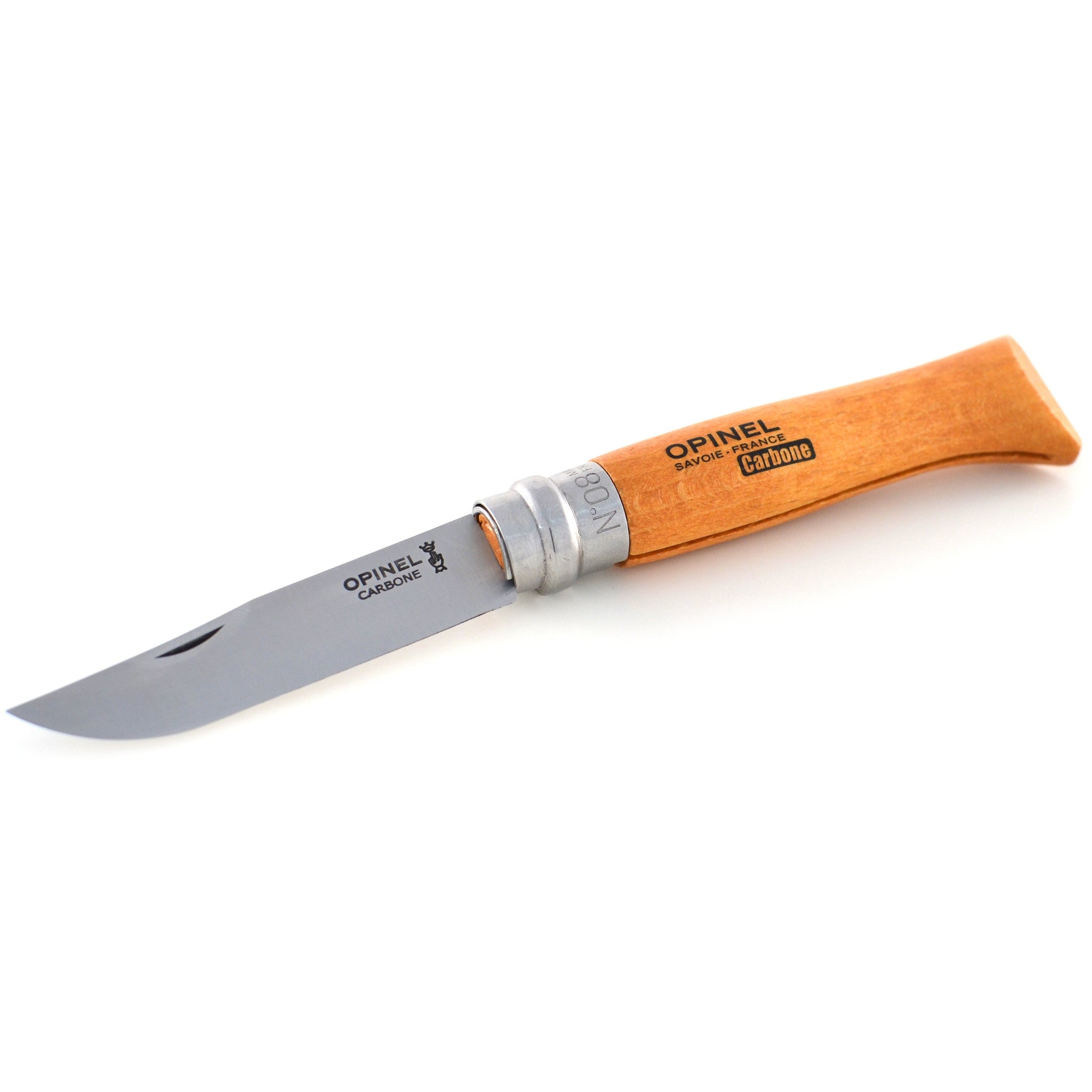
Overview
The Opinel N°8 Carbon is a French folding knife that has barely changed in more than a century: a thin XC90 carbon steel blade, a beechwood handle and a twist-collar lock. At 45 g, it is one of the lightest real knives a backpacker can carry, and it cuts food and cordage better than most folders that cost three times as much. The trade-off is upkeep. Carbon steel rusts, wood swells, and the knife opens with two hands.
Key Specs
| Spec | Value |
|---|---|
| Weight | 45 g (1.6 oz) |
| Blade length | 8.3 cm |
| Blade thickness | 1.7 mm |
| Overall length, open | 19.3 cm |
| Overall length, closed | 11.0 cm |
| Blade steel | XC90 carbon |
| Handle | Beech wood |
| Lock | Virobloc® rotating safety ring |
| Made in | France |

Build your Gear Closet
View all of your gear in one place, create packing lists and hit the trail with confidence. Available on iOS, Android and the web.
Get StartedPerformance
Cutting. The N°8 is a slicer, not a pry bar. Its thin, convex-ground clip-point blade is the source of most of the praise. Outdoor Gear Lab’s reviewer, testing the stainless version, described a knife that is a dream for food and soft materials and that “virtually cuts under its own low weight.” CleverHiker’s testers put it to work on fruit and camp meals. They also found that the blade is efficient, with minimal wear after prolonged cutting. At camp, that means cheese, salami, apples, tent-stake whittling and feather sticks. It does not mean batoning firewood or prying open lids. Reviewers note that the thin blade flexes, and the 1.7 mm spine is not meant for hard leverage.
Edge and sharpening. The carbon version is the one traditionalists choose, and the reason is the steel. XC90 is a high-carbon, easy-to-grind alloy. One reviewer at Blade Reviews found it sharpened more readily than any steel he had used, including Victorinox’s famously easy steel, and said a dull blade could be brought back to very sharp in about ten minutes on stones. A hiker with a small stone or a ceramic rod can keep it keen without effort. Stainless Opinels, by contrast, need honing more often, according to CleverHiker. Carbon trades that away for an edge that comes back quickly.
Rust and moisture. This is the catch. Owners report that carbon blades will blacken, pit and rust if left wet, and the usual advice is to wipe the blade after use and add a drop of oil now and then. Cutting acidic fruit or cleaning fish without wiping afterward is the usual way to get orange spots. Most owners embrace the gray patina that develops over time. Trail-focused reviewers see it differently. GearJunkie’s reviewer keeps carbon knives oiled at home but takes stainless on trail, so that daily oiling does not become a camp chore. The beech handle has its own quirk. It can swell when it gets wet, which tightens the blade’s action until the wood dries. Owners say it is temporary and the knife stays usable. Drying it near a warm surface fixes it.
Lock and handling. The Virobloc ring rotates to lock the blade open and closed, so it will not close on fingers during use or open in a pack. It has no spring, no thumb stud and no clip. Opening and locking takes two hands, and both CleverHiker and Outdoor Gear Lab list that as the main drawback. The round handle is comfortable and works in any grip, but it takes up more pocket volume than a flat-handled knife of similar weight. Anyone expecting a screwdriver, a bottle opener or a saw will not find them here. One Outbound reviewer called it a workhorse that “sits idly by” until needed, which describes it well.
Pros & Cons
Pros
- 45 g, light enough to forget in a pack or hip-belt pocket
- Thin convex blade that slices food very well
- XC90 carbon steel takes a sharp edge and is quick to restore
- Virobloc ring locks the blade open and closed
- Simple five-part construction with nothing to break
- About $25, cheap enough to keep one in every pack and one in the truck
- Made in France, with a century of design refinement behind it
Cons
- Carbon blade rusts and stains without regular wiping and oiling
- Two-handed opening and locking
- Wood handle swells when wet
- Thin blade flexes under hard use, and the knife is not a prying tool
- No clip, sheath or extra tools
- Round handle is bulkier in a pocket than a flat grip
Who Should Buy This
This knife suits the backpacker who mostly cuts food, cord, moleskin and the occasional stick. It rewards people who will wipe the blade at the end of the day, and who enjoy a knife with some character and an edge they can renew on a stone. It also suits anyone who wants a decent knife for under $30 and will not mind a patina. Hikers on wet, multi-week trips who do not want to think about corrosion should buy the stainless N°8 instead, which weighs the same. Anyone who wants one-handed opening, a clip or a pry-capable blade should look at a modern folder or a small fixed blade.
Verdict
The N°8 Carbon is a light, sharp and honest tool that does the small jobs of a backpacking trip better than almost anything else near its weight. It asks for a little maintenance in return. Hikers who accept that will get a knife that costs little, lasts for decades and comes back to a razor edge in minutes.