Odenwolf W Flat Review
A budget-friendly full-tang D2 bushcraft knife that punches well above its price — here's how it holds up on the trail.
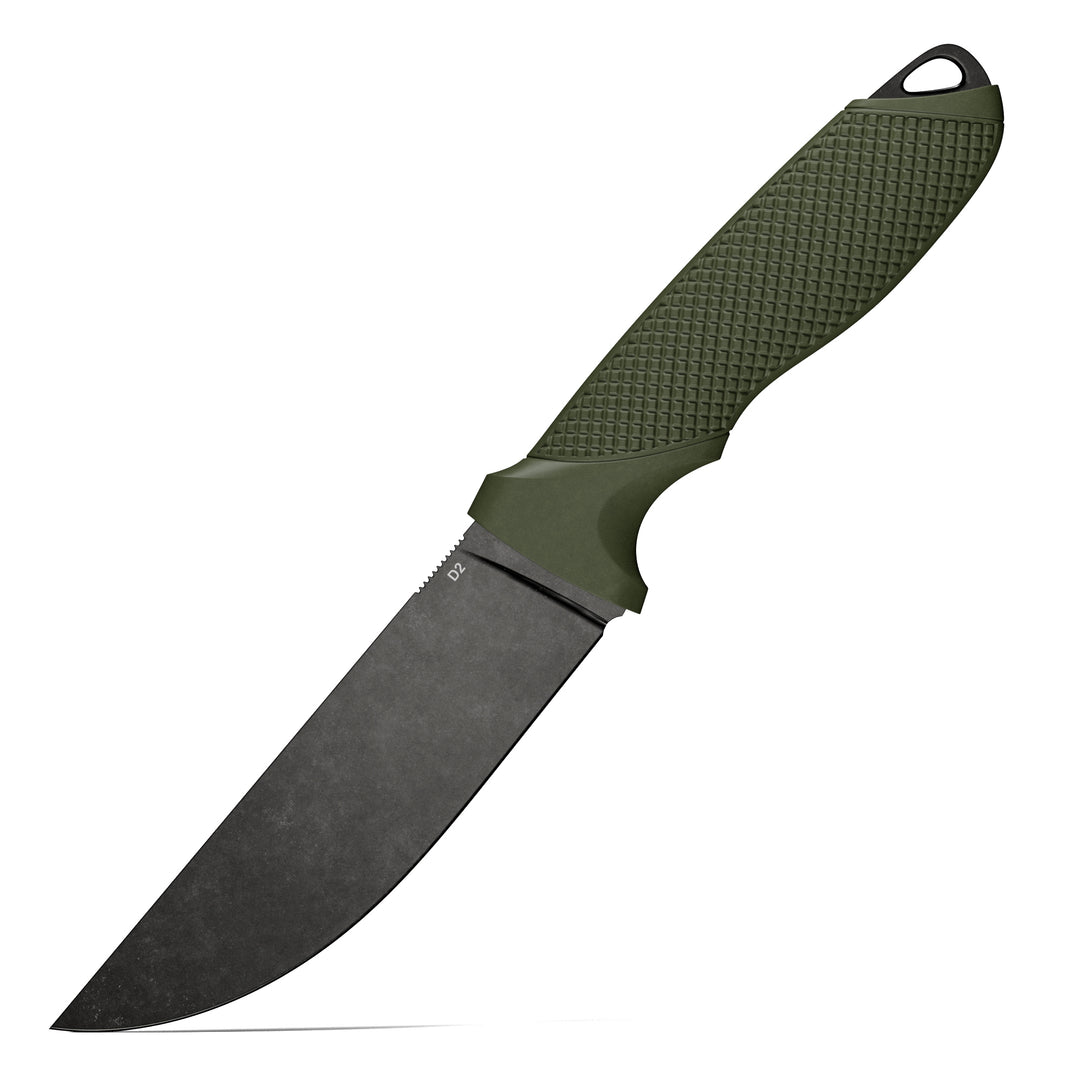
Overview
The Odenwolf W Flat is a full-tang fixed-blade camp knife built around D2 tool steel and a TPE handle, aimed at backpackers and bushcrafters who want a durable, no-frills blade without paying premium-knife prices. It’s part of Odenwolf’s “W Series,” a lineup of budget outdoor knives from a relatively young German brand that’s been picking up steam in the bushcraft and survival-knife space over the past couple of years. If you’re the type who wants a knife for batoning kindling, food prep, and general camp chores — but doesn’t want to drop $150+ on a Bark River or ESEE — this is the price bracket the W Flat is competing in.
Key Specs
| Spec | Value |
|---|---|
| Weight | 140 g (4.94 oz) |
| Steel | D2 tool steel |
| Hardness | 60 HRC |
| Blade length | 4.53 in |
| Blade thickness | 0.12 in |
| Handle material | TPE |
| Handle length | 4.72 in |
| Handle width | 0.98 in |
| Sheath material | Polypropylene |
| Sheath length | 6.46 in |
| Sheath width | 1.3 in |
| Tang | Full tang |

Build your Gear Closet
View all of your gear in one place, create packing lists and hit the trail with confidence. Available on iOS, Android and the web.
Get StartedPerformance
D2 is a divisive steel in the knife community — it’s semi-stainless, prone to some staining/patina if you don’t wipe it down, and quality varies a lot between manufacturers depending on heat treatment. The good news is that Odenwolf’s execution here seems to land on the right side of that spectrum. One independent reviewer who put the W Flat through cardboard and general camp use noted the knife is razor-sharp out of the box, holds an edge well, and has the wear resistance and balance of toughness and hardness expected from good D2. That’s a meaningful data point, because D2 at 60 HRC can go either way — too soft and you lose edge retention, too brittle and you risk chipping on hard use. Odenwolf appears to have dialed in the heat treatment reasonably well for a knife in this price range.
At 0.12 in blade thickness, the W Flat isn’t a heavy chopper — it’s built more for camp tasks like feathering wood, food prep, and general cutting than for splitting logs. That thickness, combined with a flat grind, should make it a capable slicer, though a flat grind also means the edge is inherently a bit less durable than a saber or convex grind if you’re prying or batoning through knots. Full tang construction is a real plus here; it means the knife should handle harder use (batoning kindling, light prying) without the tang-to-handle failure points you get on cheaper stick-tang budget knives.
The TPE handle is where this knife tries to punch above its price point. TPE (thermoplastic elastomer) gives a grippier, more rubberized feel than the hard polymer or wood handles you often see on sub-$50 knives, and it holds up well when wet — a real consideration if you’re using this around water or in humid conditions where a wood handle might get slick or a paracord wrap might hold moisture. Handle width comes in at just under an inch, which should suit most hand sizes without feeling too bulky in a pack.
The polypropylene sheath with snap retention and belt loop is functional but not fancy — it does the job of keeping the blade secured and accessible on your belt or pack, though one video reviewer noted he wished it had a leather sheath instead. That’s a fair ding: polypropylene is durable and weatherproof, but it lacks the premium feel (and resale value) of leather or Kydex. For a knife in this price bracket, though, it’s a reasonable trade-off — you’re not paying for a boutique sheath, you’re paying for a working blade.
One thing to flag: independent long-term testing and forum chatter (r/Ultralight, r/bushcraft, BladeForums) on this specific model is still thin. Odenwolf is a newer brand, and most of what’s out there right now comes from a handful of YouTube reviewers and the manufacturer’s own site rather than years of accumulated user reports. That’s not a red flag, just a reminder that durability claims over hundreds of hours of hard use haven’t been fully stress-tested by a wide user base yet.
Pros & Cons
Pros:
- Full-tang D2 construction at a genuinely budget price point
- Comes sharp out of the box with solid edge retention reported by independent testers
- TPE handle offers good grip, including when wet
- Lightweight at 140 g — easy to justify carrying on a backpacking trip
- Functional sheath with belt loop and retention snap
Cons:
- Polypropylene sheath feels utilitarian compared to leather or Kydex options
- D2 steel requires more maintenance (oiling, drying) than true stainless if you want to avoid staining
- Thin blade stock (0.12 in) means it’s better suited to camp chores than heavy chopping/batoning
- Limited long-term user data since Odenwolf is a newer brand
- No lifetime warranty pedigree or resale value of established bushcraft brands
Who Should Buy This
The W Flat makes sense for backpackers and campers who want a dependable, full-tang fixed blade for camp chores — cutting cordage, food prep, light feathering — without spending big-knife money. It’s a solid pick for someone building out a first bushcraft kit or looking for a beater knife they won’t stress over losing or damaging on trail.
Verdict
For the price, the Odenwolf W Flat delivers a full-tang D2 blade that early testers say comes sharp and holds an edge better than you’d expect at this cost. It’s not going to replace a premium bushcraft knife for hard chopping or batoning duty, and the sheath is more functional than fancy, but as a lightweight, grippy, do-it-all camp knife, it’s a reasonable value pick. I’d rate it a 7.5/10 — solid for the money, with the caveat that long-term durability data is still catching up to the hype.