Lixada Titanium Shovel Review
A budget titanium cathole trowel that's light and packable, but lacks the digging-specific design of dedicated trowels like the Deuce or QiWiz.
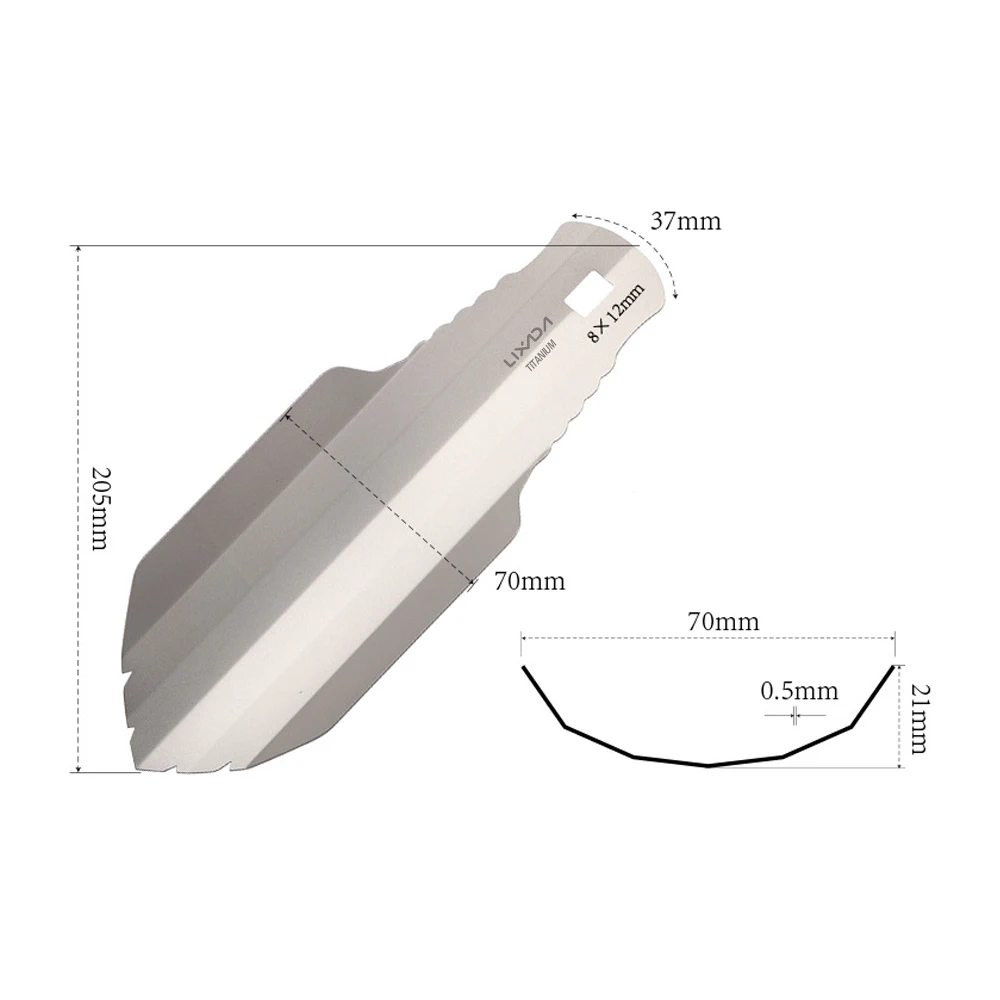
Overview
The Lixada Titanium Shovel is a bare-bones cathole trowel aimed at backpackers who want titanium’s weight savings without paying boutique-brand prices. It’s a single flat piece of 0.7mm titanium sheet with a curved scoop and a lanyard hole, sold with a small storage sack and an aluminum clip for backpack attachment. If you just need something to bury waste and don’t need a specialized digging tool, this fits the bill at a fraction of the cost of name-brand options.
Key Specs
| Spec | Value |
|---|---|
| Weight | 40.0 g (1.4 oz) |
| Material | Pure titanium |
| Thickness | 0.7 mm |
| Dimensions | 70 × 205 mm (2.8 × 8.1 in) |
| Includes | Storage sack, aluminum alloy clip |
| Price | Roughly $7–10 |

Build your Gear Closet
View all of your gear in one place, create packing lists and hit the trail with confidence. Available on iOS, Android and the web.
Get StartedPerformance
Let’s start with the obvious comparison point: this is not a Deuce of Spades or a QiWiz Cathole Digger, and it’s not trying to be. Those two trowels dominate the ultralight trowel conversation for a reason — the QiWiz is one of the first titanium trowels to hit the market, and the “original” length comes in at just 0.4 oz, while the Deuce is a genre-defining backpacking trowel, and unquestionably the best selling model in most gear guides. Both of those tools were engineered specifically around digging geometry — pointed tips, serrated root-cutting edges, handle shapes that let you drive the blade with your palm.
The Lixada, by contrast, reads more like a flat titanium blank bent into a scoop shape. At 40g it’s noticeably heavier than the QiWiz original (0.4 oz / ~11g) and about on par with mid-weight aluminum trowels like the Deuce #2. You’re not getting the absolute lightest trowel on the market here, though 40g is still trivial compared to a Coghlan’s plastic trowel, which several longtime users have compared unfavorably. One backpacking forum poster summed up decades of trowel history by noting since the mid 80s I used the ol Coghlan’s orange trowel… but as I’ve continued to lighten up, I got a Deuce of Spades and I like it — that’s the trajectory most ultralight hikers eventually follow, and the Lixada is a reasonable stepping stone on that path.
In practice, a flat titanium sheet like this digs fine in loose, sandy, or loamy soil — it’ll scoop a 6-inch cathole without much fuss. Where it struggles is the same place every non-serrated, non-pointed trowel struggles: root-choked or rocky ground. Reviewers of purpose-built trowels consistently point to features this Lixada lacks — a genuinely sharp point for popping rocks, or notched edges for sawing through roots. Without either, you’re relying on the thin edge of a titanium sheet to muscle through obstructions, which works but takes more elbow grease and more time than a trowel designed for it.
Titanium’s real advantage here isn’t digging performance — it’s that the material itself won’t rust, won’t corrode, and won’t fatigue-crack the way a thin aluminum blade might over years of abuse. At 0.7mm thickness, the blade has some flex to it, which is normal for titanium sheet goods this light, but I wouldn’t expect it to bend permanently under normal cathole-digging loads. The aluminum clip that comes with it is the more likely failure point — clips on budget gear like this tend to be the first thing to snap or lose their spring tension after repeated on/off cycles clipped to a pack strap.
I couldn’t find much dedicated long-term user testing of this specific Lixada model on Reddit’s r/Ultralight, Backpacking Light, or BPL — it’s overshadowed in review coverage by the bigger-name trowels. That’s worth flagging: most of what’s out there is retailer listing copy rather than independent field testing, so take the “great for gardening, camping, hiking, backpacking, beach” marketing language with a grain of salt.
Pros & Cons
Pros:
- Titanium construction resists corrosion indefinitely — no rust concerns even if it lives in a wet food bag or hip belt pocket
- Very inexpensive relative to other titanium trowels on the market
- Storage sack keeps it (and your hands) away from whatever it just dug through
- Lanyard hole and included clip make it easy to hang off a pack
Cons:
- No serrated edge or sharpened point, so it struggles more than purpose-built trowels in rocky or root-heavy soil
- At 40g, it’s heavier than the lightest dedicated cathole diggers on the market
- Included aluminum clip is a likely weak point over time
- Little independent long-term testing or user feedback available online
- Flat sheet design offers less leverage than trowels with a more contoured handle
Who Should Buy This
This is a reasonable pick for casual backpackers and car campers who dig in soft-to-moderate soil and want a titanium trowel mainly for its rust-proof durability and low weight, without spending $15-20 on a dedicated brand like Deuce or QiWiz. If you regularly hike in the Sierra, Rockies, or anywhere with consistently rocky or root-bound ground, you’ll be better served by a trowel with a sharpened point or serrated edge — the digging geometry matters more than the base material once the ground fights back.
Verdict
The Lixada Titanium Shovel does the one job it needs to do — bury waste — competently in easy soil, and its titanium build means it’ll outlast the ground it’s digging into. But it’s a generic tool riding on a premium material rather than a purpose-engineered trowel, so don’t expect Deuce-of-Spades-level digging performance for Deuce-of-Spades money (which, to be fair, it doesn’t cost). I’d call it a 6.5/10: a fine budget option for mellow terrain, but frequent backcountry users digging in rocky or rooty ground will get more mileage out of a trowel built specifically for that fight.