Urberg Insulated Airmat Review
Urberg's Insulated Airmat is a 549 g, R-3.9 synthetic-insulated pad that undercuts premium inflatables on price but gives up width and polish.
Overview
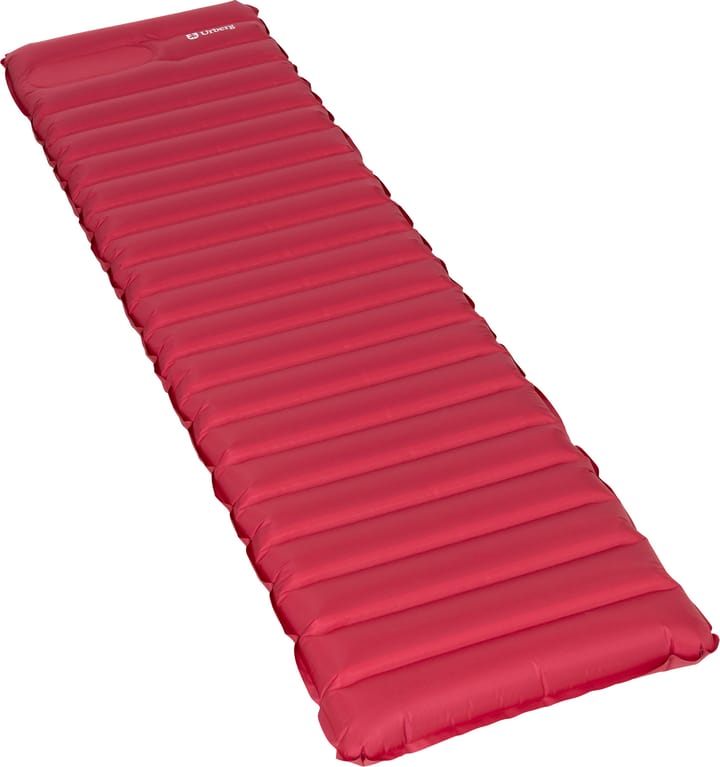
The Urberg Insulated Airmat is a budget inflatable pad that carries a synthetic-fiber fill and a 70D ripstop nylon shell, and it weighs 549 g. It targets three-season backpackers who want real ground insulation without paying for a name-brand ultralight pad. The trade-off is a narrow sleeping surface and a plainer finish than the pricier competition.
Key Specs
| Spec | Value |
|---|---|
| Weight | 549 g |
| R-value | 3.9 |
| Insulation | Synthetic fiber |
| Fabric | 70D ripstop nylon |
| Dimensions | 185 × 50 cm |
| Thickness | About 6 cm |
| Valve | 19 mm |
| Inflation | Manual; compatible with the Urberg Drybag Pump (sold separately) |

Build your Gear Closet
View all of your gear in one place, create packing lists and hit the trail with confidence. Available on iOS, Android and the web.
Get StartedPerformance
Warmth. At R 3.9, the pad sits in the range Urberg’s own guidance assigns to early spring through late autumn. Swedish test sites echo that. One comparison names it the best budget pick for three-season use. Another praises it for giving more protection from ground cold than its price suggests. The synthetic fill does the work that baffled air alone can’t, and it should hold up better against the heat-sapping convection that plagues thin, uninsulated air pads. It is not a winter pad. Outdoorproffs says anyone shopping for winter-capable gear should look elsewhere, and a Swedish forum poster who took one out on a mid-May night at about 11°C reported being cold all night, even under a bag rated well below that. Warmth is also subjective, but a pad with a rating of 3.9 is a shoulder-season tool, not a cold-weather one.
Weight and packing. At 549 g, the pad is light for an insulated 185 cm pad in this price bracket, though it is not in the sub-400 g class of premium ultralight pads. Reviewers describe the weight as low relative to the pad’s intended use. Retailer listings often round it to 535 g.
Comfort. The pad is about 6 cm thick, with welded air channels, and testers say the thin fabric is surprisingly pleasant to lie on once inflated. The weak point is width. At 50 cm, the pad is narrower than the 51–64 cm pads from most big names. Both Swedish retailer-style reviews and the Friluftsrevyn comparison flag the narrow shape, and one review notes that broad-shouldered and restless sleepers will feel it most. Side sleepers who sprawl will find an arm or hip over the edge by 3 a.m. The 185 cm length, however, suits taller hikers better than the 183 cm standard some brands call “regular.”
Durability. The 70D ripstop nylon is thicker than the 15–30D fabrics found on pricier ultralight pads. Outdoorproffs calls it one of the more durable options in its price range. Treat that as a point in the pad’s favor on rocky tent pads, not as puncture-proof, since any inflatable can fail.
Inflation. Inflation is manual through a large 19 mm valve at the foot end. Reviewers find it easy enough, but one tester says a pump sack would be smoother over the long run. Urberg sells the Drybag Pump separately and stresses that using it keeps exhaled moisture out of the pad, which extends its life. That is a real consideration with a synthetic-filled pad, where internal moisture can matter. Budget for the pump if you buy the pad.
Value. Swedish listings place the pad at roughly SEK 800–1,000. Outnorth’s 151 user ratings average 4.2 out of 5. Independent roundups score it 8.6–8.9 out of 10 for value, and the finish is the usual complaint.
Pros & Cons
Pros
- R 3.9 insulation covers spring through autumn
- 549 g is light for an insulated pad at this price
- 70D ripstop nylon is tougher than most ultralight shells
- Large 19 mm valve and a simple, welded-channel design
- 185 cm length works for taller sleepers
- Strong value; user ratings are high
Cons
- 50 cm width is narrow for side sleepers and broad shoulders
- Pump sold separately; blowing it up by mouth risks moisture inside
- Not a winter pad despite the R-value, and at least one owner reported a cold night in mild conditions
- Finish is plainer than premium pads
- Heavier than top-tier ultralight pads
Who Should Buy This
This is the pad for the three-season backpacker moving up from foam, or the thru-hiker who wants an insulated inflatable without a $200 price tag. It also suits tall hikers who want length and don’t mind a slim profile. Side sleepers, big-framed hikers and anyone planning real cold-weather camping should look to a wider pad with a higher R-value. Gram-counters chasing a sub-400 g base weight will also want to look at premium alternatives.
Verdict
The Urberg Insulated Airmat delivers honest three-season insulation, a tough shell and a sensible weight for far less than the big brands charge. Its narrow cut and plain finish are the price of admission. Buy it as a budget workhorse, add the pump, and pair it with a bag suited to the temperature.