Exped SynMat UL Review
Exped's SynMat UL is a 7 cm-thick, synthetic-insulated three-season pad with a pump bag and a wide cut, at 565–595 g.
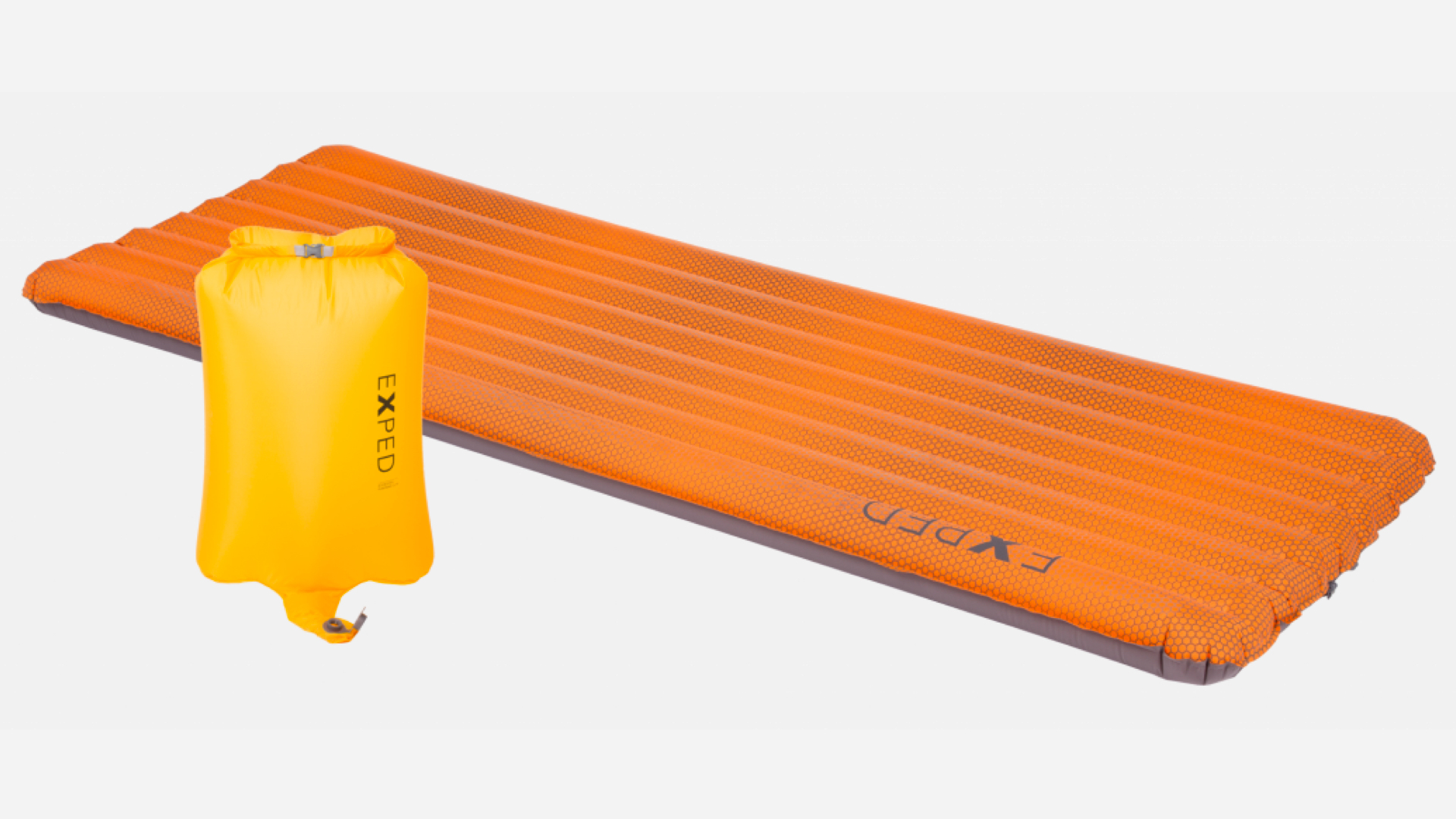
Overview
The Exped SynMat UL is a 7 cm-thick, rectangular inflatable pad with microfiber synthetic insulation, built for three-season backpacking. The Medium/Wide and Long/Wide sizes give side sleepers and restless sleepers a 65 cm platform without moving into winter-pad weights. The trade-off is warmth. The pad is comfortable and stable, but with an R-value of 3.3 it is not a shoulder-season workhorse.
Key Specs
| Spec | Detail |
|---|---|
| Weight | 565–595 g depending on size |
| R-value | 3.3 |
| Temperature rating | -4 °C (about 25 °F) |
| Thickness | 7 cm |
| Length | 183 cm (Medium/Wide), 197 cm (Long/Wide) |
| Shoulder / foot width | 65 cm / 65 cm |
| Packed size (Medium/Wide) | 27 cm tall x 10 cm diameter, 1.9 L |
| Packed size (Long/Wide) | 27 cm tall x 11 cm diameter, 2.6 L |
| Insulation | 60 g/m² Texpedloft microfiber |
| Fabric | 20D polyester, TPU laminate, GripSkin honeycomb top |
| Valves | Separate inflation and deflation FlatValves |
| Pump bag | Schnozzel, 60 g |
| Packsack | 12 g |
Versions compared
| Image | Version | Weight | vs. lightest |
|---|---|---|---|
| Medium / Wide | 565 g (19.9 oz) | lightest |
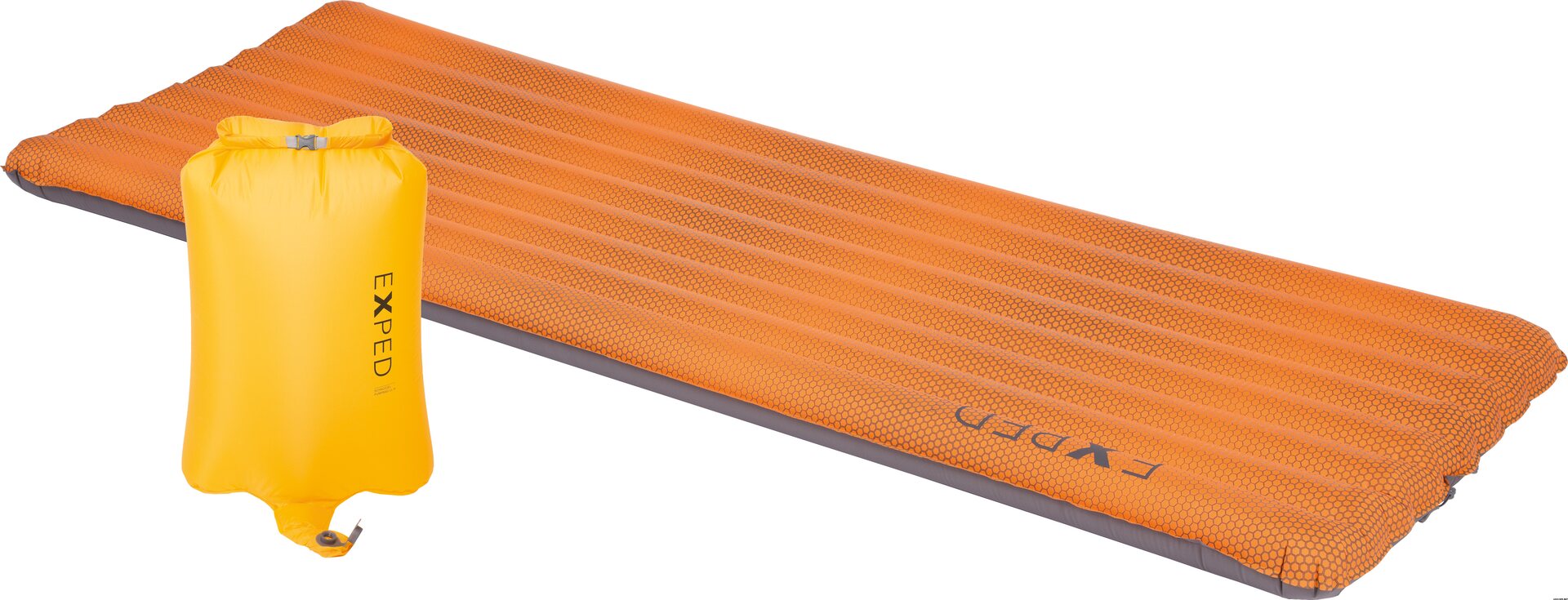 | Long / Wide | 595 g (21.0 oz) | +30 g |

Build your Gear Closet
View all of your gear in one place, create packing lists and hit the trail with confidence. Available on iOS, Android and the web.
Get StartedPerformance
Comfort and stability. At 7 cm (2.8 in), the SynMat UL sits high enough that side sleepers keep their hips off the ground on lumpy campsites. Reviewers at TrailGroove point to the long vertical baffles as the reason. The two outer tubes are slightly larger, so sleepers stay centered and the edges resist collapsing. Backwoods Pursuit’s testers likewise rated the edge-to-edge stability above other pad styles they had tried. The extra width matters here. Back sleepers whose elbows hang off a 52 cm pad find 65 cm a different experience. The one recurring complaint is that the vertical lanes don’t suit everyone, and some sleepers prefer a horizontally baffled pad.
Warmth. Exped rates the pad to -4 °C with an R-value of 3.3, and testers describe it as a good three-season pad. Backwoods Pursuit reported using it into the 20s °F and staying warm, so the stated figures held up. Another reviewer slept on it near freezing without trouble. T3’s testers recommended choosing a pad with an R-value above four or five for winter trips. A few retailers and reviewers list the pad at 2.9 rather than 3.3, which is worth knowing if the pad will be paired with a light quilt in cold shoulder-season nights. Insulation here is synthetic, so a punctured or damp pad doesn’t lose its loft the way a down-filled one can.
Inflation and packing. The Schnozzel pump bag is the pad’s defining feature. It holds a volume of air that a few squeezes push into the pad, so inflation takes no lung power and no breath moisture gets into the insulation. TrailGroove’s tester inflated the wide version in about a minute, and another reviewer counted three to five bag-fulls on the Medium. The same bag works as a compression sack. Exped’s separate deflation valve dumps the air quickly. The FlatValves sit flush with the pad, which removes the stiff protruding edge found on conventional valves and, per the retailer’s description, avoids a common failure point on inflatables. T3’s reviewers noted that few pads pack smaller, with the standard version squeezing down to roughly a one-litre water bottle. The wide sizes are bulkier, at 1.9 L and 2.6 L.
Noise and grip. The GripSkin honeycomb top keeps a sleeping bag or quilt from sliding. Owners on Reddit say Exped pads still crinkle a little as a bag shifts, though some find them quieter than pads with reflective layers inside.
Durability. Both laminates are TPU and rated hydrolysis-resistant. Owners report pads lasting several years, and one long-term user called it the most comfortable pad they had slept on before replacing it with a newer Exped model. Exped backs the pad with a two-year warranty and includes a repair kit.
Choosing a Version
Both versions share the same 7 cm thickness, 65 cm width, R-value and materials. The difference is length. The Medium/Wide measures 183 cm (6 ft) and suits most people up to average-tall height. The Long/Wide stretches to 197 cm for taller sleepers who would otherwise leave their feet or head hanging off. That extra 14 cm costs about 30 g and adds 0.7 L to the packed volume, so the penalty is small. Anyone near 185 cm (6 ft 1 in) or taller should take the Long/Wide. Everyone else can save the bulk and take the Medium/Wide.
Pros & Cons
Pros
- 7 cm of loft with stable, centered edges from the vertical baffles
- 65 cm width suits side sleepers and sprawlers
- Schnozzel pump bag inflates the pad with no lung power and keeps moisture out of the insulation
- Flush FlatValves and synthetic insulation resist the usual inflatable failure points
- Packs down to roughly a water-bottle size in the standard width, 1.9 L in Medium/Wide
- Grippy top surface holds a bag or quilt in place
Cons
- R-value of 3.3 limits it to three-season use
- Wide sizes weigh 565–595 g, heavier than the narrower Exped sizes
- Vertical baffles don’t suit every sleeper
- Some noise when a bag shifts
- Pump bag adds 60 g and a separate piece of kit to manage
Who Should Buy This
The SynMat UL Wide sizes suit spring-through-autumn backpackers who sleep on their sides or move around a lot and want a wide, thick pad that still packs small. They suit hikers who value quick, moisture-free inflation and robust valves. Gram counters who sleep on their backs and fit a 52 cm pad should look at the narrower Exped sizes or a lighter pad. Anyone camping regularly below freezing needs a pad with a higher R-value.
Verdict
The SynMat UL in the Medium/Wide and Long/Wide sizes is a comfortable, stable and well-built three-season pad, and the Schnozzel bag makes setup the easiest in its class. It carries a modest weight penalty for the width, and it runs out of warmth in true cold. Buy it for comfort on three-season trips, not for the lowest possible base weight.