Exped SynMat HL Review
Exped's discontinued SynMat HL is a 366 g full-length insulated pad with an R-value of 3.3, a grippy top surface and a narrow, thin feel that divides testers.
Overview
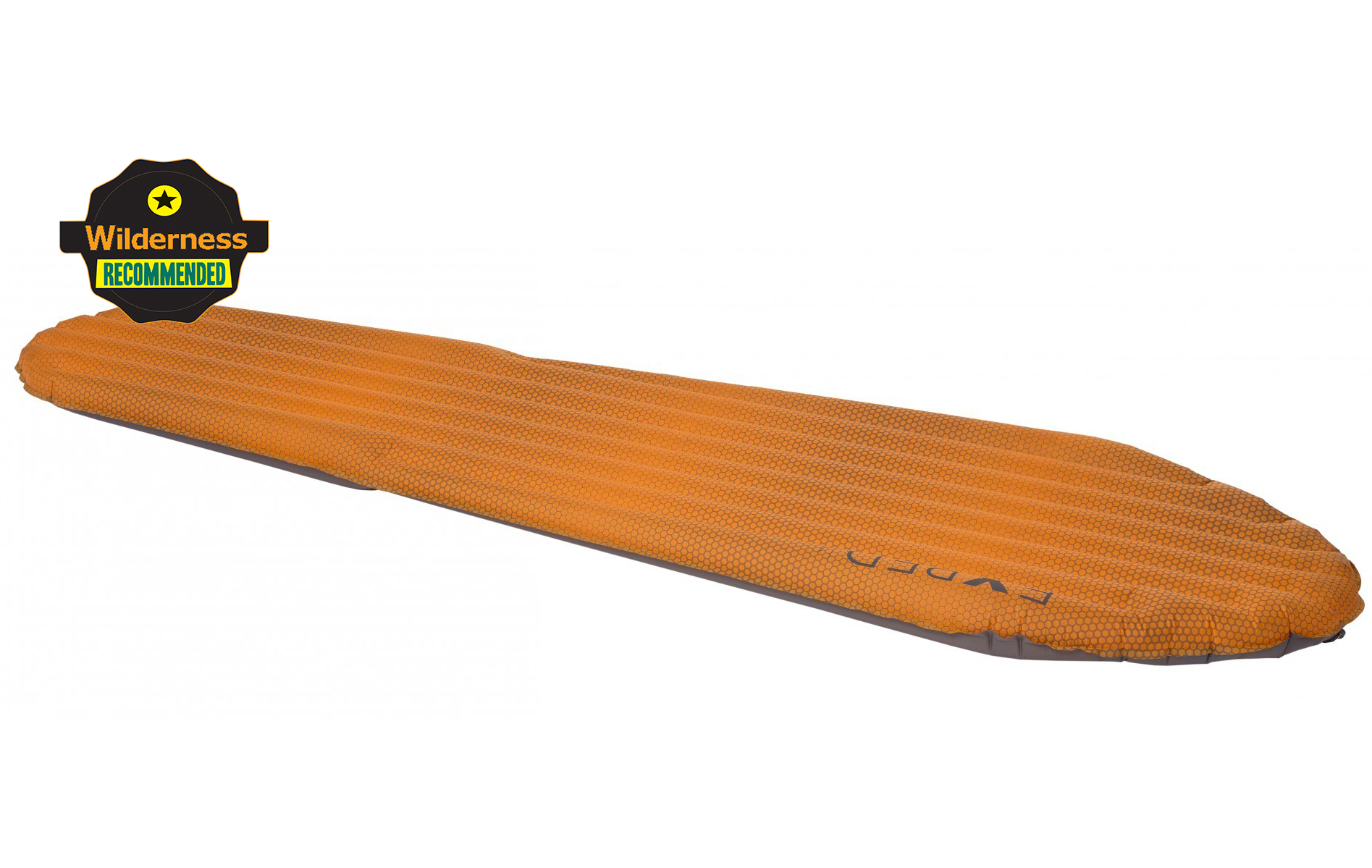
The Exped SynMat HL is a tapered, synthetic-insulated inflatable pad that weighs 366 g and packs to roughly the size of a water bottle. It was built for three-season backpackers who want a full-length, warm pad without paying down-fill prices or worrying about breath moisture. The trade-off is a narrow, tapered platform that some sleepers love and others slide off. Exped has discontinued the SynMat line, so it now turns up mostly as retail leftovers and used gear.
Key Specs
| Spec | Value |
|---|---|
| Weight | 366 g |
| R-value (Exped) | 3.3 |
| R-value (ASTM) | 2.9 |
| Temperature rating | 21.2°F / -6°C |
| Thickness | 7 cm |
| Length | 183 cm |
| Width (shoulder / foot) | 52 cm / 35 cm |
| Packed size | 19 x 9 cm |
| Packed volume | 1.2 L |
| Fabric | 20D polyester, TPU polyether film laminate |
| Insulation | 60 g/m² Texpedloft microfibre |
| Status | Discontinued |

Build your Gear Closet
View all of your gear in one place, create packing lists and hit the trail with confidence. Available on iOS, Android and the web.
Get StartedPerformance
Weight and packability. This is the pad’s strongest card. Wilderness Magazine called it the lightest full-length insulated mat on the market when it launched, and Outdoor Gear Lab’s testers noted that on weight alone it would take the top spot among ultralight insulated inflatables. At 1.2 L packed, it disappears into the bottom of a frameless pack. Reviewers who came from closed-cell foam pads often comment on how little space it takes up by comparison.
Warmth. Exped lists an R-value of 3.3. Under the stricter ASTM test the number is 2.9, which is the figure to use when comparing against pads from brands that publish ASTM values. In practice, that makes it a spring-through-fall pad. A review from Cairngorm Treks paired it with a down bag on nights around -4°C and reported staying snug. A German bikepacking reviewer reached a similar conclusion: the pad suits three-season use and is fine down to about -6°C. Outdoor Gear Lab was less impressed and scored warmth at 5 out of 10, calling it colder than some competitors in the ultralight class. Cold sleepers shouldn’t count on it for shoulder-season frosts.
Comfort. Opinions split more here than anywhere else. The Great Outdoors called it supportive, quiet and warm, and Cairngorm Treks said it was the most comfortable mat they had used. Outdoor Gear Lab scored comfort 6 out of 10, singling out the thin, narrow platform as the reason the pad trails the category leaders. One tester measured the pad and found it doesn’t reach its claimed 7 cm of thickness, though he still found it comfortable, side sleeping included. The lengthwise baffles give a lilo-like feel, and the tapered shape follows the same logic as Therm-a-Rest’s NeoAir XTherm. Wilderness Magazine notes that restless sleepers can find their legs slipping off the narrow foot end. At 183 cm, the regular length gets most sleepers fully off the ground.
Surface and noise. The GripSkin honeycomb coating on top does what Exped says it does. It keeps a slick quilt or sleeping bag from skating around, and it cuts the crinkle that plagues many ultralight pads. Wilderness Magazine’s reviewer said the quieter surface was the main benefit he noticed. Wind rustle against a tent wall is a bigger concern than pad noise for most light sleepers.
Inflation. Exped’s Schnozzel pump sack is part of the package and gets consistent praise. Outdoor Gear Lab rated ease of inflation 9 out of 10, noting that the pad’s small air volume takes about two full bags of air. It also doubles as a waterproof stuff sack and, in a pinch, a pillow cover. There’s a learning curve of a few tries. The synthetic fill tolerates breath moisture far better than down does, so ditching the pump sack to save 61 g is an option, though keeping the inside dry is still the better practice. The stuff sack includes a repair kit. Deflation is the weak spot: the single valve needs to be held open while the pad is rolled, which Wilderness Magazine called awkward. One owner of the Duo version also found that the valve doesn’t fit common mini electric pumps.
Durability. Outdoor Gear Lab gave durability 4 out of 10, the lowest score in its test. The 20D polyester shell is typical for the weight class, so the usual ultralight rules apply: clear the ground, treat the pad gently around sharp rocks, and carry the repair kit.
Pros & Cons
Pros
- 366 g for a full-length, insulated pad
- Packs to 19 x 9 cm
- Synthetic insulation shrugs off moisture from breath inflation
- Honeycomb GripSkin top holds bags in place and keeps noise down
- Schnozzel pump sack makes inflation quick and doubles as a dry bag
- Repair kit included
Cons
- Discontinued, so no new stock or warranty support to count on
- 52 cm shoulder width and tapered shape leave little room for restless sleepers
- Real-world thickness falls short of the 7 cm claim
- ASTM R-value of 2.9 limits it to mild nights
- Lowest durability scores of the pad’s test results
- Awkward single-valve deflation
Who Should Buy This
The SynMat HL suits gram-counting three-season hikers who sleep on their backs, don’t move much at night, and want a full-length pad that disappears in the pack. It also pairs well with a hammock-free tent setup where a narrow footprint is a plus. Side sleepers who roll, anyone who runs cold, and anyone planning shoulder-season trips with frost should look at a warmer or wider pad. Buyers who want a manufacturer warranty and current availability need to shop for a current model instead.
Verdict
The SynMat HL delivers a lot of pad for 366 g, and the Schnozzel system makes it easy to live with. The compromises are real: a narrow platform, modest warmth by ASTM standards, and a durability record that testers marked down. Worth picking up at a discount for dry-weather, three-season hiking, but it isn’t the pad to build a cold-weather kit around.