Cumulus X-Lite Review
Cumulus's X-Lite pairs 900 FP Polish goose down with 19 g/m² Toray Airtastic for a 350–575 g mummy bag built for fast, light three-season trips.
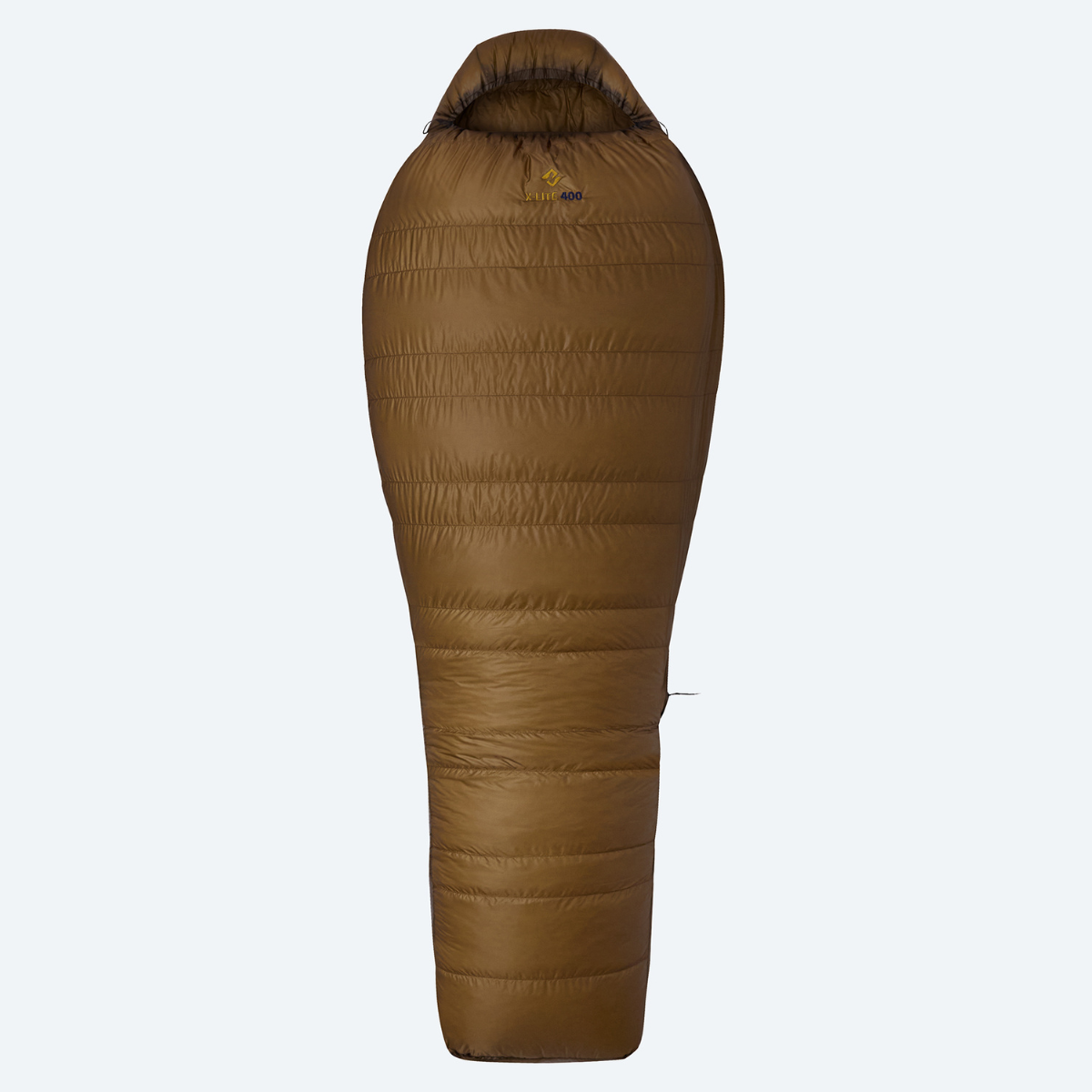
Overview
The Cumulus X-Lite is a stripped-down mummy bag for people who count grams before they count sheep: thru-hikers, bikepackers and trail runners who want real warmth without the weight of a conventional three-season bag. It comes in two fills, 200 g and 400 g of 900 fill-power Polish goose down, wrapped in one of the lightest down-proof fabrics made. The trade-off is refinement. Fabric, features and margin for error are all cut to save weight.
Key Specs
| Spec | Detail |
|---|---|
| Weight | 350–575 g depending on fill |
| Fill | 200 g or 400 g, 900 FP ethically sourced Polish goose down |
| Comfort / limit (200) | 4°C (39°F) / 0°C (32°F) |
| Comfort / limit (400) | -1°C (30°F) / -7°C (19°F) |
| Fabric | Toray® Airtastic, 0.56 oz/yd² (19 g/m²), 7D ripstop, DWR, 100% nylon |
| Zipper | YKK® #3 coil, 2/3 length |
| Shape | Close-fit mummy, H-shaped chambers, separately filled top and bottom |
| Seasons | 2–3 |
| Sizing | One standard size off the shelf; length, width and fill can be customized direct from Cumulus |
Versions compared
| Image | Version | Weight | vs. lightest |
|---|---|---|---|
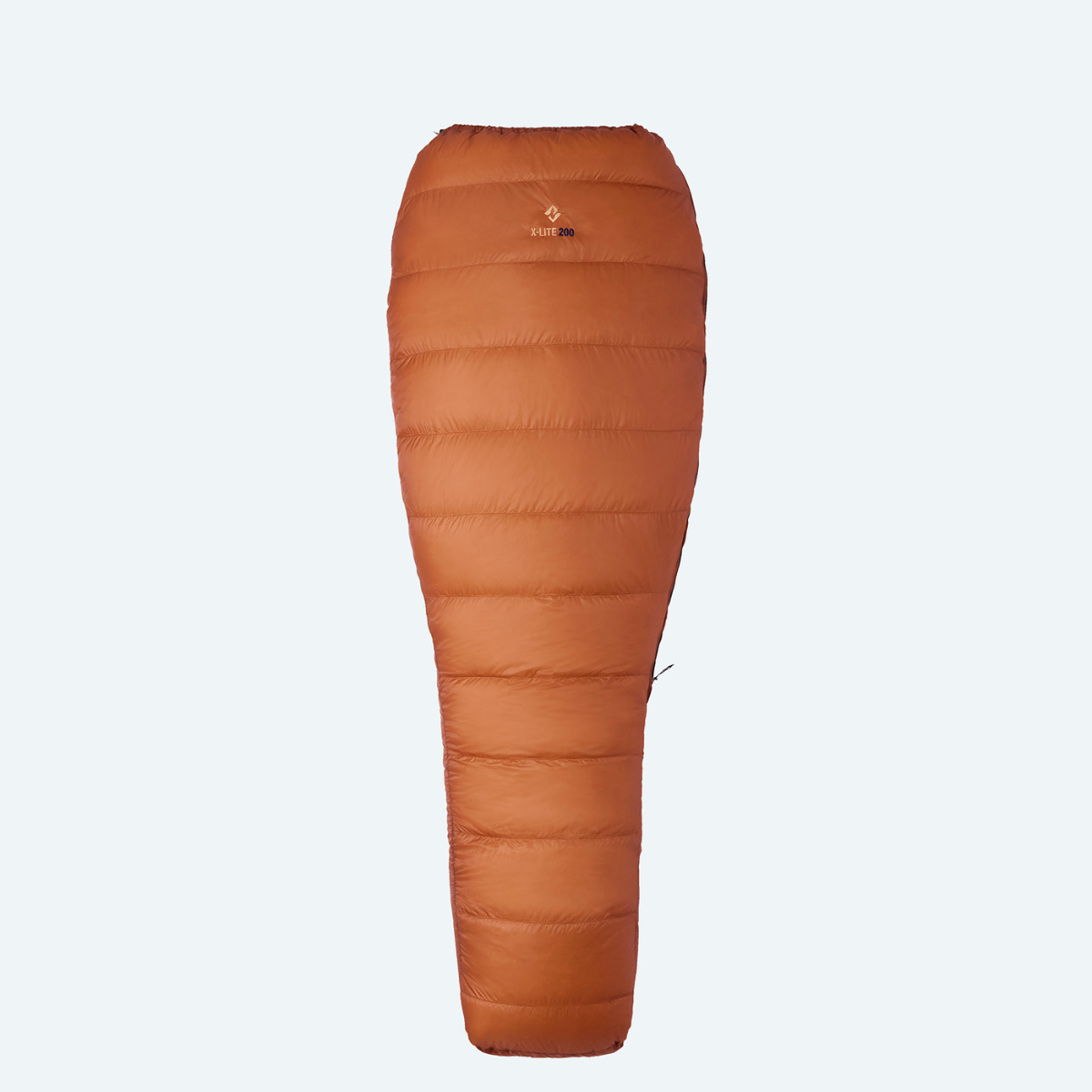 | 200g down | 350 g (12.3 oz) | lightest |
| 400g down | 575 g (20.3 oz) | +225 g |

Build your Gear Closet
View all of your gear in one place, create packing lists and hit the trail with confidence. Available on iOS, Android and the web.
Get StartedPerformance
Weight and packed size. The numbers are the headline. The 200 comes in at 12.35 oz, with roughly 150 g of that being the shell, zipper and baffles. The 400 reaches below-freezing ratings at 575 g, a figure that most bags with this much down can’t touch. Owners consistently remark on how small the bag compresses and how dramatically it expands when released from its stuff sack. One hiker who ordered a custom 440 g version described the loft as startling.
Warmth. The 400’s -1°C comfort rating holds up in owner accounts. A Reddit user with the 440 g build spent two weeks in South Africa’s Drakensberg, with four nights below freezing and one morning under snow, and reported never being cold. Another paired the 400 with a down jacket in Kyrgyzstan and found it more than adequate. At the other end, a Kungsleden hiker with a custom Cumulus slept unzipped with snow outside. The flip side is that some users find the 400 too warm once nights stay above about 40°F and drop to a lighter fill.
The 200 is a different proposition. Cumulus rates it to 4°C comfort, and it is sold as a summer and shoulder-season bag. A Czech buyer judged the rating optimistic, putting real comfort closer to 8–9°C, so cold sleepers should treat it as a warm-night bag and carry a puffy for margin. Cumulus’s figures are in-house rather than lab-certified, and a UK forum commenter noted the same point.
Cold-weather refinement. This is where the minimalism shows. The 200 is hoodless, and the same commenter pointed out that the design lacks a neck baffle, which matters when temperatures drop below freezing. Wind, a drafty shelter or a cold neck will erode the rated warmth faster than in a bag with a proper collar. The 2/3-length #3 zipper saves weight but is not the sturdiest closure in the category. Some Reddit users who customize their bags upgrade to a heavier zip for exactly that reason.
Fit. The cut is narrow, 77 cm at the shoulder and 51 cm at the foot, and snug fit is part of how the bag stays warm at this weight. Cumulus lists a maximum user height of about 183–185 cm. A reviewer at Paddling Light, who is 5’10” and 195 lb, found the fit comfortable and the shark-fin foot box roomy, but doubted the bag would suit someone near 6’1”. Larger sleepers and restless side-sleepers will feel the narrowness. Custom sizing is available, though it costs more and ships from Poland. Bags can also be zipped together with other X-Lite models.
Durability. A 7D shell does not forgive carelessness. Cumulus’s other ultralight models have shown that sharp objects such as crampons, pointed rocks and thorny brush can open the fabric quickly. In a tent with a groundsheet, the bag is fine. Dragged across granite, it won’t be. The DWR finish helps with condensation inside tents and bivies, though it will not save a bag from a soaking.
Choosing a Version
200 g down (350 g). This one is for warm-weather use: summer thru-hiking, bikepacking, trail running and fastpacking, or as a second bag on desert trips. At 4°C comfort it is a bag for nights that stay well above freezing, and it works well as a quilt substitute for hikers who prefer an enclosed bag. Anyone who sleeps cold should add a puffy layer or choose the 400.
400 g down (575 g). This is the version most three-season hikers will want. It handles spring and fall nights around freezing and, with a down jacket, can stretch below that. The extra 225 g buys 5°C of comfort range and a limit of -7°C. Hikers who sleep warm and rarely camp below 5°C should consider whether the 200 would do, since some owners report venting the 400 on mild nights. Cold sleepers and shoulder-season campers should take the 400 without hesitation.
Pros & Cons
Pros
- Weight-to-warmth ratio at the very front of the category, with 900 FP down in both versions
- Packs remarkably small, particularly the 200
- 19 g/m² Toray Airtastic fabric is among the lightest down-proof shells available
- Customizable direct from Cumulus: length, width, fill, zip and fabric
- DWR finish adds resistance to condensation
Cons
- No neck baffle or collar, so the bag leaks warmth in wind and below freezing
- Temperature ratings are Cumulus’s own rather than independently certified, and some owners find the 200 optimistic
- 7D shell is fragile around sharp gear
- Narrow cut suits slim sleepers; restless or broad sleepers will feel it
- One stock size, with customization costing extra and shipping from Poland
Who Should Buy This
Weight-obsessed thru-hikers, bikepackers and fast-and-light backpackers who sleep in a shelter and are comfortable adding a down jacket on colder nights. The 200 suits summer routes and warm sleepers; the 400 suits anyone planning to see frost. Cold sleepers expecting the rating to do all the work, tall or broad-shouldered users, and anyone camping regularly well below freezing should look at a bag with a neck baffle and more shell durability.
Verdict
The X-Lite delivers on its promise: owners report a bag that is warm for its weight and compresses to almost nothing. It asks for care with the fabric and honesty about how cold you sleep. For three-season trips where grams matter more than a margin for error, the 400 is the pick for most hikers, and the 200 is the better choice for warm-season ultralight trips.