Warbonnet Superfly Review
Warbonnet's Superfly is a 510 g, 12' x 10' silpoly hammock tarp with full-length doors: heavy for a tarp, light for the storm protection it gives.
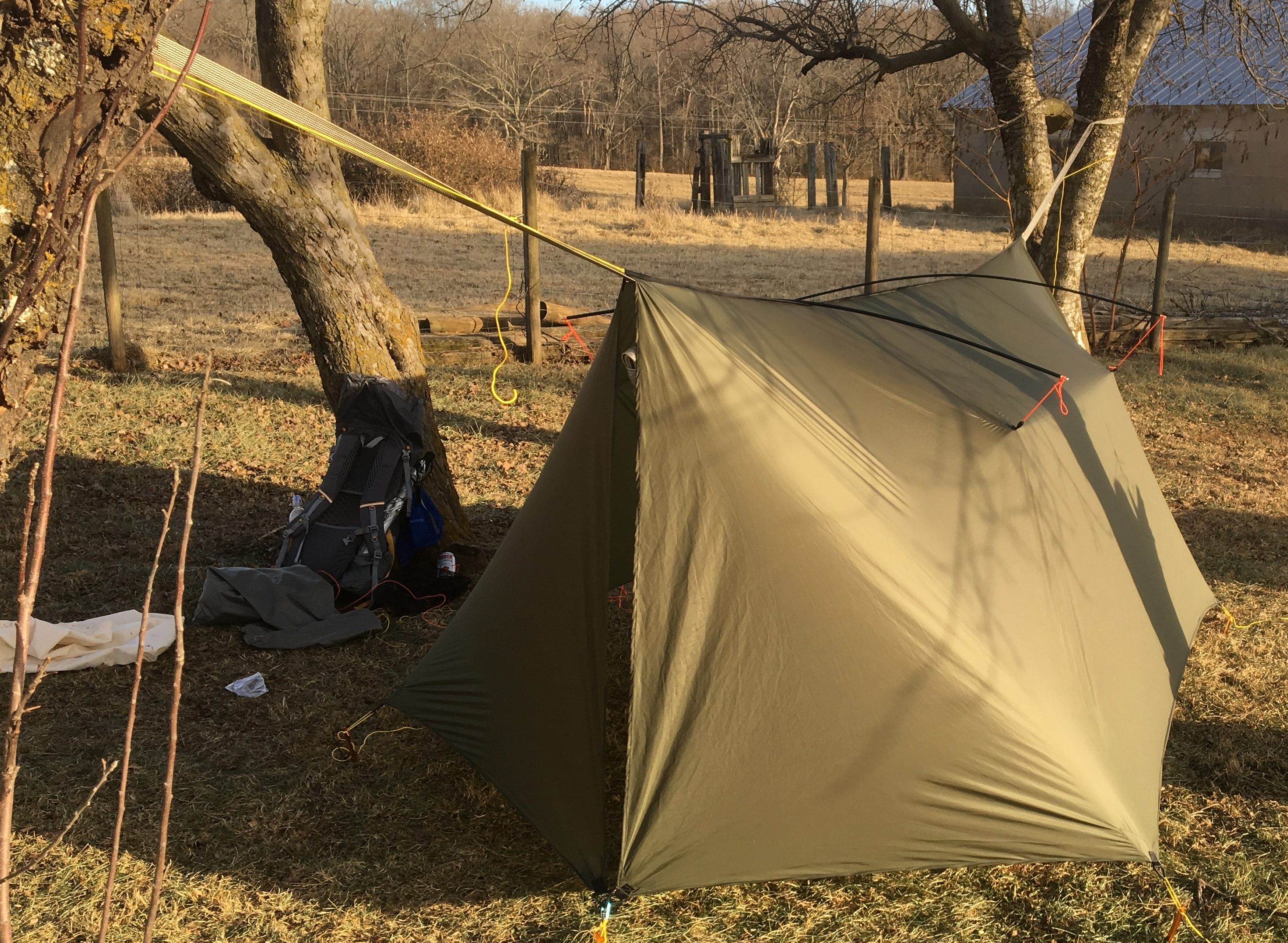
Overview
The Warbonnet Superfly is a big, door-equipped hammock tarp that has spent more than a decade as the default cold-weather and shoulder-season pick on hammock forums. It’s built from 20D 2000mm NeverMist silpoly and weighs 510 g, which is not light by tarp standards but is modest for a shelter that can close up on all four sides. The trade-off is simple: more coverage and weather-proofing than a minimalist fly, at a weight and footprint that ultralight purists will question.
Key Specs
| Spec | Detail |
|---|---|
| Weight | 510 g (about 18 oz) |
| Ridgeline length | 12’ |
| Width | 10’ |
| Fabric | 20D NeverMist Silpoly |
| Waterproof rating | 2000mm |
| Doors | Full-length, built in at both ends |
| Panel pulls | Side panel tie-outs for tying back doors and adding structure |
| Ridgeseam | Reinforced; no seam sealing required |
| Made in | USA |

Build your Gear Closet
View all of your gear in one place, create packing lists and hit the trail with confidence. Available on iOS, Android and the web.
Get StartedPerformance
Weather protection. Coverage is the Superfly’s selling point. At 10 feet wide, the tarp keeps blowing rain well away from the hammock and leaves room for a pack and boots on either side. Owners on Hammock Forums describe riding out heavy, wind-driven storms dry, and one reviewer at The Trek, a former Appalachian Trail thru-hiker, found no drips along the ridge during a windy night test with a sustained 13 mph breeze. The same reviewer did note some dripping below the side pullouts, which he attributed to the need for extra seam sealing at those points. Warbonnet’s construction removes the need to seal the ridgeline itself.
Doors. The full-length end doors are what separate the Superfly from a standard hex fly. Closed, they turn the tarp into a wind block, which is why Warbonnet markets it as a winter tarp. Pulled open and tied back with the side panel loops, they allow ventilation in warm weather. One owner notes that the doors need an extra stake at each end and add a bit of weight, a fair cost for gear that stays covered. Section Hiker’s reviewer, who used one for two years with a Blackbird hammock, concluded he rarely needed doors that long to stop horizontal rain, and that a winter sock insulated better against cold wind than a tarp did. That’s a reasonable argument for the lighter Minifly (11.75 oz in 20D silpoly), but not one that applies to anyone who wants a true four-season setup.
Living space. The tarp’s size changes how a camp works. Owners pitch it first, hang the hammock underneath, and pack up the hammock from inside the dry zone before taking the tarp down last. In porch mode, with the corners propped on trekking poles, there’s room to cook, sit and sort gear. One long-term Trailspace reviewer reported having more usable space than he’d ever had in a tent. The flip side is a large footprint and a long ridgeline that needs enough room between trees. In dense woods, that can limit pitching options.
Weight and packing. At 510 g, the silpoly version is about 1 oz lighter than the older 19 oz silnylon Superfly. Add guylines, stingers, tarp worms and sleeves and the real carried weight climbs quickly; Section Hiker’s reviewer recorded just over 21 oz fully rigged, and another owner reached 24.4 oz with his accessories. It’s heavier than a flat tarp or a minimalist hex, though owners generally call it light for the area it covers.
Durability and build. Warbonnet’s USA-made construction gets consistent praise. Instead of a separate reinforcement patch under each tie-out, it uses wide grosgrain stitched straight to the fabric, trimming bulk without weakening the corners. A recent owner review on Warbonnet’s site reports thirteen years of use across all seasons with solid fabric, tie-outs and overall construction. The usual silpoly caveat applies: the fabric’s waterproof rating of 2000mm is adequate for sustained rain when pitched taut, but silpoly doesn’t absorb water the way silnylon does, so it holds its tension better in wet weather.
Versatility. The tarp isn’t only for hammocks. Hunters and ground sleepers report pitching Warbonnet’s tarps over a hiking-pole setup as a floorless shelter, and the panel pulls make that practical.
Pros & Cons
Pros
- Very large 12’ x 10’ coverage with full-length doors for true all-season use
- Silpoly fabric holds tension in rain and needs no sealing along the ridgeseam
- Panel pulls improve wind performance and let the doors tie back
- Strong build quality, made in the USA, with long-term owners reporting years of service
- Roomy enough to set up, cook and pack up in the dry
Cons
- At 510 g bare, and often more than 600 g with a full kit, it’s heavy next to minimalist hammock flies
- The big footprint and long ridgeline need generous pitching space
- Doors need an extra stake per end and add some weight
- Side pullouts may need seam sealing to prevent drips, according to one tester
- Overkill for fair-weather summer hiking
Who Should Buy This
The Superfly suits hammock campers who sleep out in cold, windy or wet conditions and want one tarp for all of it: three-season hikers who push into winter, thru-hikers on rainy sections like the Appalachian Trail, and anyone who wants camp space under cover. Gram-counters who hike mostly in settled weather should look at the Minifly or a similar short-door hex, which cut roughly 6 oz. Anyone on tight pitching sites, or who never uses the doors, will carry the extra fabric for nothing.
Verdict
The Superfly remains one of the best-regarded hammock tarps for people who expect bad weather and want to stay comfortable through it. It isn’t the lightest shelter option, but the coverage, wind protection and build quality justify the weight for cold-season and wet-climate hikers. Fair-weather ultralighters can save weight elsewhere.