Hilleberg Anaris Review
A hands-on look at Hilleberg's trekking-pole ridge tent — where it excels, where the Yellow Label trade-offs show, and who should spend the money.
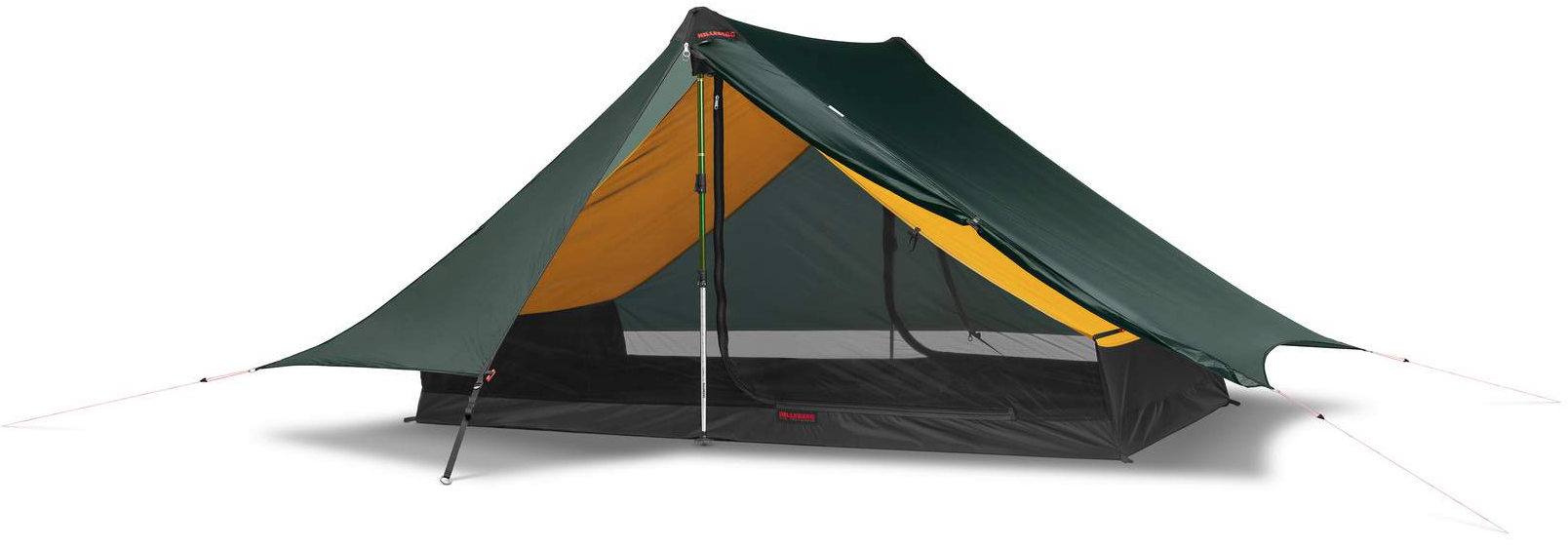
Overview
The Anaris is Hilleberg’s answer to the trekking-pole tent trend — a double-wall, two-door ridge tent that trades the brand’s usual dedicated pole architecture for your hiking poles, dropping the packed weight to 1.4 kg while keeping Hilleberg’s signature build quality. It’s part of the Yellow Label line, meaning it’s built for snow-free, three-season use rather than shoulder-season storms, and it’s aimed at trekking-pole hikers who want Hilleberg durability without the weight penalty of the brand’s Red or Black Label tunnel tents.
Key Specs
| Spec | Detail |
|---|---|
| Label | Yellow Label (3-season, snow-free) |
| Capacity | 2 person |
| Packed weight | 1400 g |
| Minimum weight | 1200 g |
| Floor area | 2.6 m² |
| Vestibule area | 2 x 0.8 m² |
| Peak head height | 105 cm |
| Packed size | 43 x 11 cm |
| Outer fabric | Kerlon 1000 — 20D High Tenacity Ripstop Nylon 66 |
| Inner fabric | 10D Ripstop Nylon (mostly mesh) |
| Floor fabric | 50D Nylon, double-coated PU |
| Outer waterproofing | 5,000 mm |
| Floor waterproofing | 12,000 mm |
| Doors / Vestibules | 2 / 2 |
| Pitch method | Trekking poles (or suspended ridge ends) |

Build your Gear Closet
View all of your gear in one place, create packing lists and hit the trail with confidence. Available on iOS, Android and the web.
Get StartedPerformance
The Anaris borrows its silhouette from the Keb, Hilleberg’s very first tent from 1973 — the Anaris is based on Hilleberg’s first ever tent, the Keb, launched back in 1973, the first tent to have a connected inner and outer so they could be pitched together, and that’s been a standard on Hilleberg tents ever since. That connected-pitch design is one of the tent’s biggest practical wins: as with all Hilleberg models, the Anaris has linked outer and inner tents, allowing simultaneous pitching of both or separate use of either. You can also strip it down to just the outer as a much roomier tarp, or run the inner alone as a bug bivy.
Setup is a genuine ridge-tent design rather than a single-pole pyramid, and reviewers consistently note it’s more forgiving than it looks. The Hilleberg Anaris is easy to pitch and after doing it a few times it takes about five minutes, and since the ridge tent is totally symmetrical it is hard to make mistakes. That said, don’t expect to nail it your first night out — setting up the Anaris as a first pole tent presented a slight learning curve, taking a couple of tries to get the tension just right. Hilleberg’s pole-length guidance is a good starting point: Hilleberg suggests setting your trekking poles to 125 to 135cm — the shorter setting brings the outer closer to the ground for more weather protection, the taller one allows for more airflow.
Interior space is where the Anaris punches above its weight class. Multiple reviewers independently flag the volume as unusually generous for a trekking-pole shelter: the interior space feels massive compared to other similar ridge tents, thanks to Hilleberg’s premium lightweight fabrics and an optimised shape that lets it pitch higher and extend further — the sloping walls are raised much higher at the head and foot ends than on comparable shelters, so heads and feet don’t brush against them or pick up condensation, which is a common annoyance in lower-volume trekking-pole tents. The dual-door, dual-vestibule layout also means two people don’t have to crawl over each other, and the two-vestibule construction is configured so the occupants sleep parallel to the vestibules, providing impressive room for two people with a dedicated entrance and vestibule for each.
Weather performance is the more nuanced part of the story, and it’s worth reading the “Yellow Label” branding literally. The Anaris keeps out heavy rain and stands up to strong winds surprisingly well, though it’s not a tent for big storms on mountain tops — it is more stable than many three-season tents generally. One reviewer who logged many nights with it in the Scottish Highlands was blunt about the ceiling on that stability: having used the Anaris on many nights in the Highlands, they were impressed with the performance and think it’s suitable for use any time of the year when snow isn’t forecast. Another tester dug into the wind behavior specifically and found the ultralight fabric itself is the limiting factor rather than the structure: the windproofness is the thing that’s different — with wind coming from the side, the ultralight 20D Kerlon 1000 fabric moves around a lot and gets pushed into the fabric of the inner tent. It’s not dangerous, but it’s noisier and less reassuring than a heavier Red or Black Label tent in the same conditions.
Ventilation is a genuine strength given the Yellow Label mission. The Kerlon 1000 outer provides outstanding weather protection while the walls not reaching all the way to the ground gives full-time air flow, and rolling both vestibule doors away lets the inner tent’s full mesh doors and entrance walls provide superlative venting for very warm conditions. Condensation management benefits from good separation between the two layers: separation between inner and outer is good so when the latter has condensation on it — which is inevitable at times — there’s little chance of pushing against it. That’s echoed by an owner who tracked it over months: there’s a nice gap between the two tents so air flow helps keep condensation down — on warm, wet nights there was some, even sleeping solo, but not a lot.
Ground conditions matter more than with a freestanding tent, since the whole structure depends on stakes holding. One long-term owner learned this the hard way: the tent is not good on rocky ground or sandy ground — the reviewer uses a different tent in the desert, because if the pegs do not have good purchase, it is a mess. The included stakes get consistent praise, though: the pegs that come with the Hilleberg Anaris are Y-shaped and provide very good grip in a lot of different surfaces, and in testing on mixed terrain the pegs have proven to be strong and the tip is not going blunt easily.
Pros & Cons
Pros
- Exceptionally roomy for its weight class — noticeably more headroom and floor-to-wall clearance than most trekking-pole tents
- Linked inner/outer pitches as one unit but separates for tarp-only or mesh-only use
- Two full doors and vestibules — no climbing over your tent-mate
- Genuine Hilleberg build quality and materials (Kerlon 1000, DAC-made poles/stakes)
- Good ventilation and manageable condensation thanks to inner/outer separation
Cons
- Yellow Label means real limits: not designed for snow loads or serious storm exposure
- Ultralight 20D outer fabric flaps and presses against the inner in strong crosswinds
- Fully stake-dependent — performs poorly on loose sand or bare rock where stakes can’t bite
- No full-coverage footprint option; the available footprint only protects the inner tent floor
- Premium Hilleberg pricing for a shelter that’s still “light,” not ultralight by gram-counter standards
Who Should Buy This
The Anaris makes the most sense for trekking-pole hikers doing three-season trips — think shoulder-season UK hillwalking, US thru-hikes below treeline, or European long trails — who want more interior volume and better ventilation than a typical single-wall pyramid, and who value Hilleberg’s fit, finish, and after-sales reputation enough to pay for it. It’s also a nice solo upgrade: several reviewers specifically call out how luxurious the space feels for one person. If you regularly camp on scree, sand dunes, or above treeline where storms roll in fast, look at Hilleberg’s Red or Black Label tunnel tents instead — the Anaris isn’t built for that.
Verdict
The Anaris delivers on its brief: a trekking-pole tent with genuinely more livable space and better ventilation than most competitors in its weight class, wrapped in the fit and finish you’d expect from Hilleberg. It’s not a mountaineering shelter and the ultralight outer fabric will remind you of that in a real blow, but for the three-season use case it’s designed for, it’s one of the most comfortable and well-built options out there. I’d rate it an 8.3/10 — excellent execution within a clearly defined (and clearly communicated) set of limits.