Aricxi Peak 1 (藏峰1) Review
A budget-friendly Chinese trekking-pole tent that punches above its price with a double-wall build and sub-1500g weight.
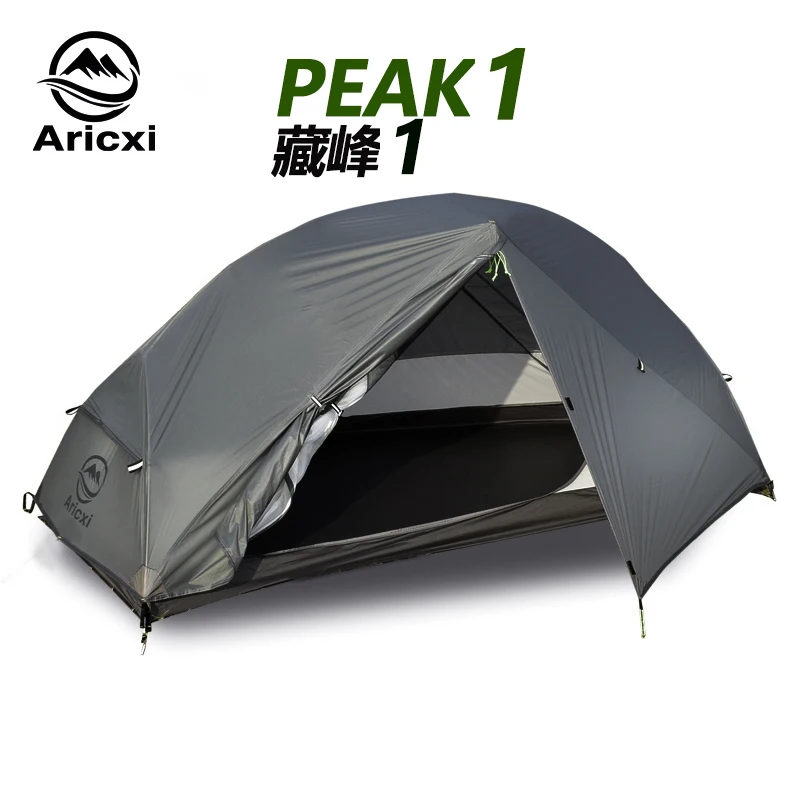
Overview
The Aricxi Peak 1 is a single-person, four-season, double-wall trekking-pole tent from one of the many Chinese cottage-gear brands that sell primarily through AliExpress and small outdoor shops. It’s aimed squarely at ultralight backpackers who already carry trekking poles and don’t want to pay Western cottage-industry prices (Durston, Zpacks, Tarptent) for a similar pitch. At 1500g for the tent body and fly, it undercuts most name-brand single-wall shelters while still giving you a bug-proof inner and separate fly — a combination that’s harder to find at this weight and price point.
Key Specs
| Spec | Detail |
|---|---|
| Capacity | 1 person |
| Trail weight | 1500 g (tent + fly) |
| Packed size | 12 x 40 cm |
| Pitched dimensions | 210 x 80 x 100 cm |
| Fly material | 15D silicone-coated nylon |
| Inner material | 40D silicone nylon body + 20D mesh |
| Floor material | 40D silicone-coated nylon |
| Waterproof rating | >3000 mm (fly and floor) |
| Seasons | 4-season |
| Groundsheet | Not included (optional, ~300 g) |
| Setup | Trekking poles (not included) |
| Color | Dark grey / black |

Build your Gear Closet
View all of your gear in one place, create packing lists and hit the trail with confidence. Available on iOS, Android and the web.
Get StartedPerformance
The Peak 1 uses a double Y-frame with an added crossbar rather than a simple A-frame or single ridgeline. This is the same basic idea you’ll see on shelters like the Tarptent Notch or the various Lanshan clones — the extra pole geometry pushes out the side walls and adds a bit of headroom and stability compared to a plain single-pole pyramid. Trekking pole tents live and die by tension, and the double Y-frame setup means slightly more time fussing with guylines and stake placement than a single-pole design, but you’re rewarded with more usable interior volume for a 1-person shelter.
Because it’s double-wall — a double-layer, tent-like geometry with a double Y-frame and an additional crossbar, increasing interior volume and stability — condensation management should be noticeably better than the single-wall Aricxi tarp-tents that show up in older reviews. Single-wall trekking pole shelters from this same brand have a well-documented condensation problem: the condensation is BAD, especially where I live, and it’s not even that wet — it’s just spring is a common refrain on similar budget single-wall designs. The Peak 1’s separate mesh-and-nylon inner should mean you’re not sleeping directly against a wet wall, though I’d still expect some moisture buildup on the fly itself in humid, still conditions — that’s physics, not a brand-specific flaw.
Waterproofing on paper looks solid: a >3000mm rating on both fly and floor is respectable for a 15D/40D fabric combo and should handle sustained rain. One thing worth flagging based on other Aricxi products: budget AliExpress tents from this brand have historically shipped with unsealed seams, requiring the buyer to seam seal it themselves, with a tube of seam sealer included in the package on at least one other Aricxi tarp model. I couldn’t confirm whether the Peak 1 ships pre-sealed, so budget an evening with seam sealer and don’t assume it’s rain-ready straight out of the bag.
The 40D floor is a meaningful upgrade over the ultra-thin 15D or 20D floors you see on some competitors — it should shrug off more abuse from rough, rocky campsites, though there’s no included groundsheet, so you’re on your own for extra floor protection (a 300g accessory groundsheet is sold separately). At 210 x 80 x 100 cm, the footprint is tight but workable for one person and a pack; taller hikers (6’2”+) may find their feet or head brushing the fly at full stretch.
Hard performance data — wind resistance in exposed conditions, exact condensation levels, long-term durability of the silicone coating — is thin for this specific model. Reviews of the broader Aricxi lineup are generally positive on build quality (the tent is very well made and well thought out was one verdict on an earlier Aricxi product), but I couldn’t find enough Peak 1-specific field reports to say definitively how it holds up over a multi-week thru-hike.
Pros & Cons
Pros
- Genuinely light at 1500g for a double-wall, 4-season-rated shelter
- Compact packed size (12 x 40 cm) — disappears into a pack side pocket
- Beefier 40D floor than many ultralight competitors, better puncture resistance
- Double Y-frame + crossbar geometry adds usable interior volume over a simple A-frame
- Price point well below comparable Western cottage brands
Cons
- No trekking poles included — you need two poles of the right length already
- No groundsheet included; it’s an extra purchase and extra weight
- Possible unsealed seams out of the box (confirm before your first trip)
- Limited independent long-term reviews or wind/storm test data available
- Narrow 80cm width will feel snug with a wide pad or larger frame
Who Should Buy This
This tent makes sense for budget-conscious ultralight hikers who already own trekking poles and are comfortable doing a bit of pre-trip prep (seam sealing, practicing the pitch) in exchange for a big price break over premium single-person shelters. It’s a reasonable choice for 3-season use and light snow load thanks to the 4-season framing, but I wouldn’t take it into serious alpine wind without more data on pole strength and guy-out points than is currently available.
Verdict
The Aricxi Peak 1 looks like a smart value play on paper — a sub-1500g double-wall trekking pole tent with a sturdier-than-average floor — but the lack of extensive user field reports means some of that is still a bet. If you’re the type who doesn’t mind doing your own seam sealing and shakedown testing, it’s worth a look; if you want a shelter with a decade of thru-hiker mileage behind it, stick with an established name. I’d put it at a 7/10 for value-focused buyers, with the caveat that real-world durability is still an open question.