ZOLEO Global Satellite Communicator Review
A budget-friendly, phone-dependent satellite communicator that wins on seamless cross-network messaging but skips on-device functionality.
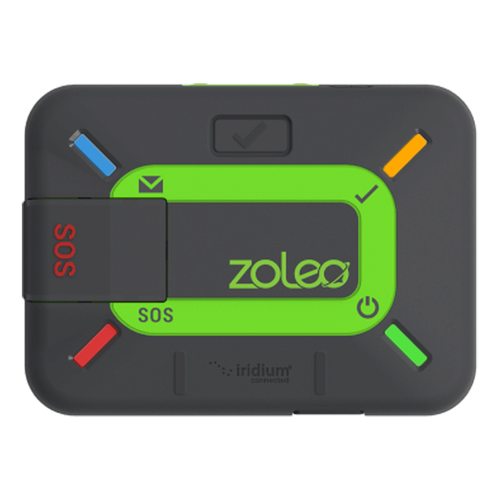
Overview
The ZOLEO Global Satellite Communicator is a pocket-sized, screen-less satellite messenger built around one core idea: your texts and emails should flow seamlessly between cellular, Wi-Fi, and Iridium satellite without you having to juggle multiple apps. It’s aimed at backpackers, hunters, boaters, and international travelers who want two-way emergency and check-in communication without paying Garmin inReach prices, and who don’t mind tethering the device to a smartphone for full functionality.
Key Specs
| Spec | Value |
|---|---|
| Weight | 150 g (5.3 oz) |
| Dimensions | 3.58” L x 2.60” W x 1.06” D |
| Satellite network | Iridium (global, pole-to-pole) |
| Connectivity | Bluetooth, Cellular, Wi-Fi, Satellite |
| Battery life | 200+ hours (checking every 12 min) |
| Water resistance | IP68 |
| Shock resistance | MIL-STD 810G |
| Screen | None (3 buttons + LED status lights) |
| On-device functions | SOS, preset check-in message |

Build your Gear Closet
View all of your gear in one place, create packing lists and hit the trail with confidence. Available on iOS, Android and the web.
Get StartedPerformance
Messaging experience. This is where ZOLEO earns its reputation. Instead of running separate apps for cell and satellite texting like you’d do with an inReach, everything routes through one ZOLEO app and one phone number/email, regardless of which network is carrying the message at the time. One reviewer summed this up well, noting the ZOLEO platform offers seamless messaging across all connection methods, using cellular, WiFi, or satellite from the same app. Users on forums echo this — battery life seems very good, with one charge lasting several days of use, and satellite connectivity is generally described as reliable in the field.
Speed and reliability. Don’t expect instant delivery. Messages are reliable but can take a long time to send and receive — the default check interval is 12 minutes, and even with manual or constant checking, expect an average wait of 5 minutes or more between sending and receiving. That’s not really a ZOLEO-specific flaw — it’s not ZOLEO’s fault; it seems pretty standard across satellite devices, since the technology just isn’t there yet. Coverage itself has been consistently praised: the satellite coverage has been good with no problems connecting, and for the most part the signal has been strong sending or receiving messages in the field.
Battery life and the phone dependency trade-off. The 200+ hour rating sounds generous, but it’s a moving target based on how often the device polls for new messages. The ZOLEO offers two-way messaging, though the function tends to eat a lot of battery since, like any satellite communicator, it has to scan for incoming messages. Leave it on constant search and you’ll pay for it — one reviewer made the mistake one night of not switching off the constant search, and as a result, the device was totally drained by the following morning. Dialing the interval back to the default 12 minutes is the fix, and real-world testing backs up the spec: running 24 hours a day checking messages every 12 minutes, the battery lasted a little more than 5 days.
The bigger catch is that ZOLEO’s “seamless messaging” magic requires your phone. Unlike Garmin’s inReach line, you cannot view or compose custom messages on the device itself — all customized messaging is done through the app, which is fine in routine use, but if something happened to your smartphone, on-device custom messaging would be nice to have. On the device alone you get exactly two functions: sending a preset check-in message and signaling SOS. One long-term user put it bluntly: if you want to do anything other than call 911 or say “I’m ok,” you’re out of luck without a phone. That also means your phone’s battery is now part of your safety chain — since it requires tethering to function beyond check-in and SOS, if you get in trouble you have to use the phone, which is extra demand on your phone battery and makes it more complicated to share the device with someone else.
Build quality. The rubberized housing feels tough for the price. The exterior is made of a rubberized plastic that offers a good balance of weight, durability, and grip, and it’s shock-resistant and dust- and water-resistant (IP68, MIL-STD 810G). Without a screen, status is communicated via beeps and four LED lights that blink or stay solid in green, amber, blue, and red — mostly intuitive, but worth packing the Quick Start Guide until you’ve memorized them. The SOS button is thoughtfully guarded: it’s protected by a hinged door, making accidental depression unlikely, though a bit more resistance on the snap closure would be reassuring.
Long-term durability concerns. Most reviews are glowing on day-one performance, but at least one longer-term account raises a flag worth noting: a user reported loving the Zoleo for its messaging and SOS features, until the battery failed after 3 years, and noted the battery isn’t user-replaceable, unlike swappable-battery competitors. To ZOLEO’s credit, they’ve apparently responded — the same reviewer later found ZOLEO had updated their battery warranty, offering a lifetime replacement guarantee for that same failure mode, though the replacement is a refurbished device, not new. Communication about that policy change was reportedly slow, so it’s worth keeping an eye on ZOLEO’s support responsiveness if you go this route.
Pros & Cons
Pros
- Genuinely seamless messaging across cell, Wi-Fi, and satellite from a single app, number, and inbox
- Rugged IP68 / MIL-STD 810G build in a compact, screen-less package
- Cheaper hardware and more flexible suspend plans than Garmin’s inReach lineup
- Solid, field-tested Iridium coverage with few reported connection failures
- SOS button well-protected against accidental triggers
Cons
- No on-device custom messaging — full functionality requires a paired smartphone
- Battery drains fast if you leave message-checking on constant/short intervals
- No standalone GPS navigation features
- Non-replaceable battery, with at least one report of failure after ~3 years
- Message latency (often 5+ minutes) is inherent to satellite messaging, but still worth setting expectations for
Who Should Buy This
The ZOLEO makes the most sense for hikers, hunters, and travelers who already carry a smartphone everywhere and want an affordable, reliable way to stay in two-way contact with people back home — without dealing with separate apps for in-town and backcountry messaging. If you want a device that can fully function without a phone (composing custom messages, navigating) or need multi-year battery reliability without recharging concerns, an inReach model is the safer bet.
Verdict
ZOLEO delivers on its core promise — messaging that genuinely feels seamless whether you’re on cell, Wi-Fi, or satellite — at a lower price than the Garmin alternatives. The trade-off is real: it’s a phone-dependent device with no standalone messaging beyond SOS and check-in, and the fixed battery raises long-term reliability questions. For most weekend and thru-hikers who just want a lightweight safety net and don’t mind the phone tether, it’s a solid 7.5/10.