Osprey Ultralight Dry Sack Review
Osprey's rectangular, roll-top Ultralight Dry Sack weighs 28–50 g in the 3–20 L sizes and stacks neatly in a pack, but IPX5 means rain-proof, not dunk-proof.

Overview
The Osprey Ultralight Dry Sack is a rectangular roll-top stuff sack in 40D recycled nylon, sold in five volumes from 3 L to 35 L. It’s built for backpackers who want a pack-interior organizer that stacks cleanly and shrugs off rain. The trade-off is in the rating: IPX5 covers splashes and downpours, not submersion.
Key Specs
| Spec | Detail |
|---|---|
| Volumes | 3 L, 6 L, 12 L, 20 L, 35 L |
| Weight | 28–50 g across the 3–20 L sizes; the 35 L is listed at 2.7 oz (about 77 g) |
| Material | 40D high-tenacity nylon, 100% recycled, bluesign approved, PFC-free DWR |
| Water resistance | IPX5 (waterproof, non-submersible) |
| Construction | Waterproof-coated fabric and seams |
| Closure | Roll-top with quick-release buckle |
| Dimensions | 3 L: 8.7 × 6 × 6 in; 6 L: 11.4 × 7 × 6 in; 12 L: 13.8 × 8.7 × 6.7 in; 20 L: 16.1 × 10.2 × 7.9 in; 35 L: 20.9 × 12.9 × 14.2 in |
| Extras | D-ring for drying or clipping; lifetime warranty |
| Price | Roughly $18–$34 depending on size |
Versions compared
| Image | Version | Weight | vs. lightest |
|---|---|---|---|
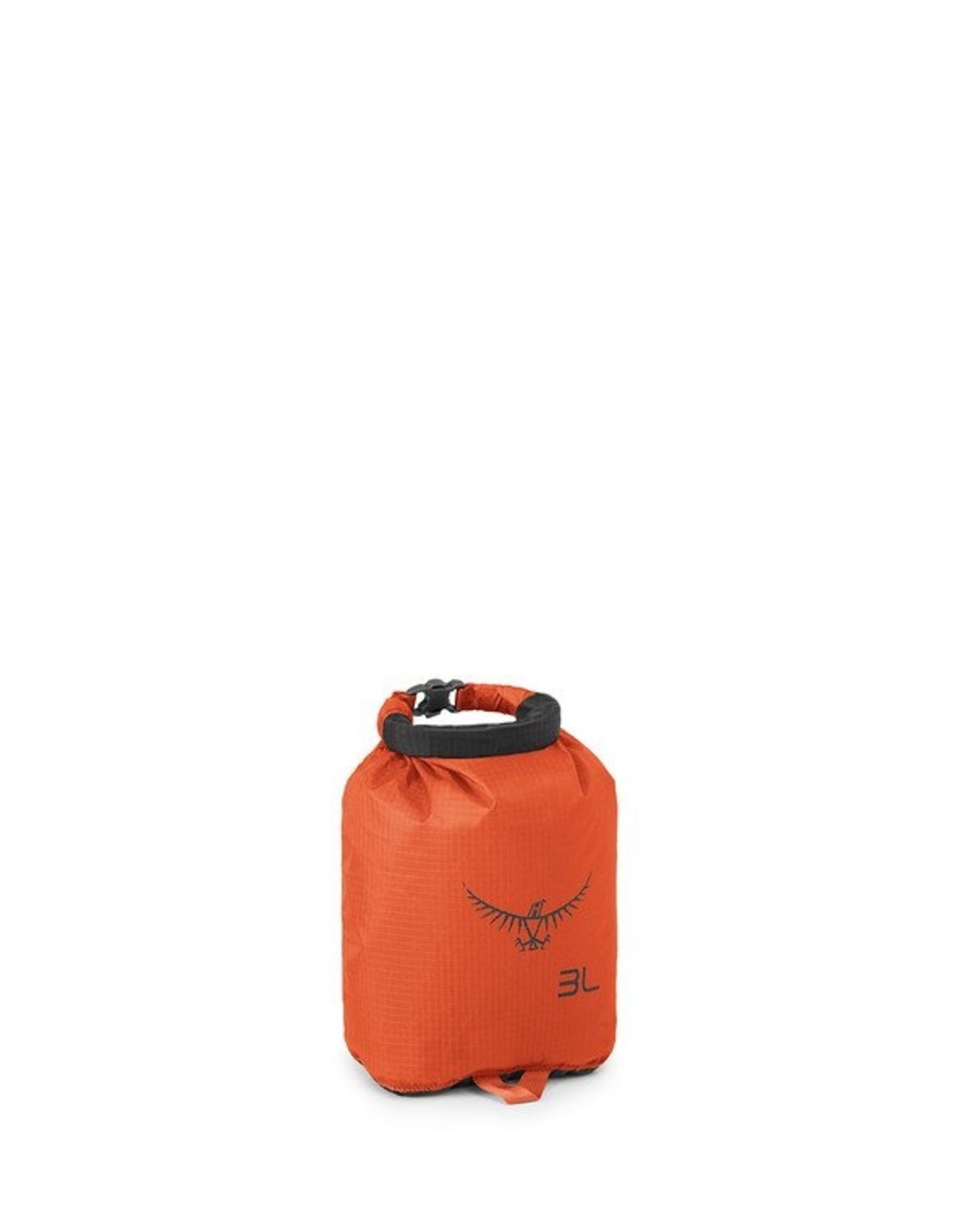 | 3 L | 28 g (1.0 oz) | lightest |
| <UNKNOWN> | 33 g (1.1 oz) | +5 g |
 | 6L | 33 g (1.1 oz) | +5 g |
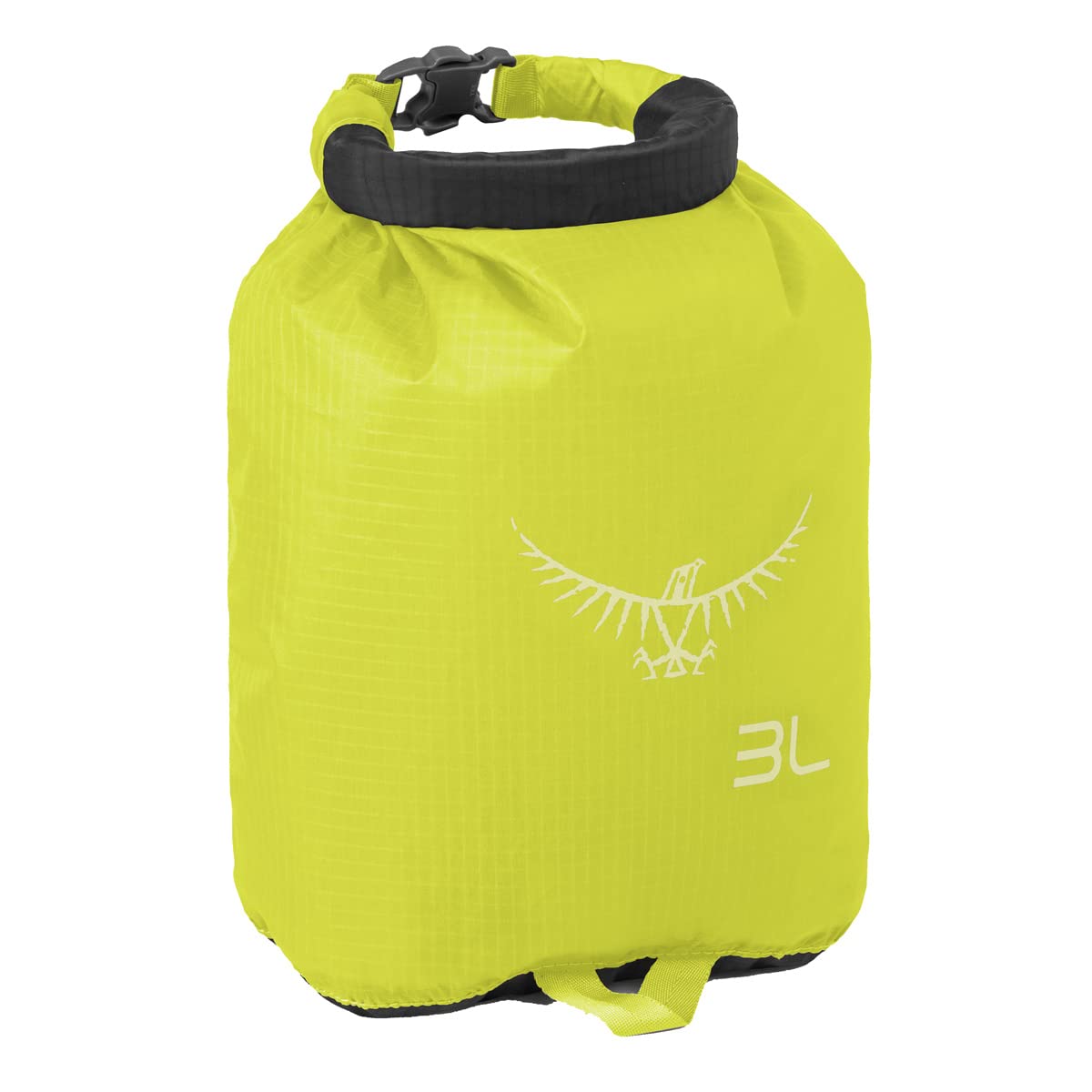 | <UNKNOWN> 6L | 34 g (1.2 oz) | +6 g |
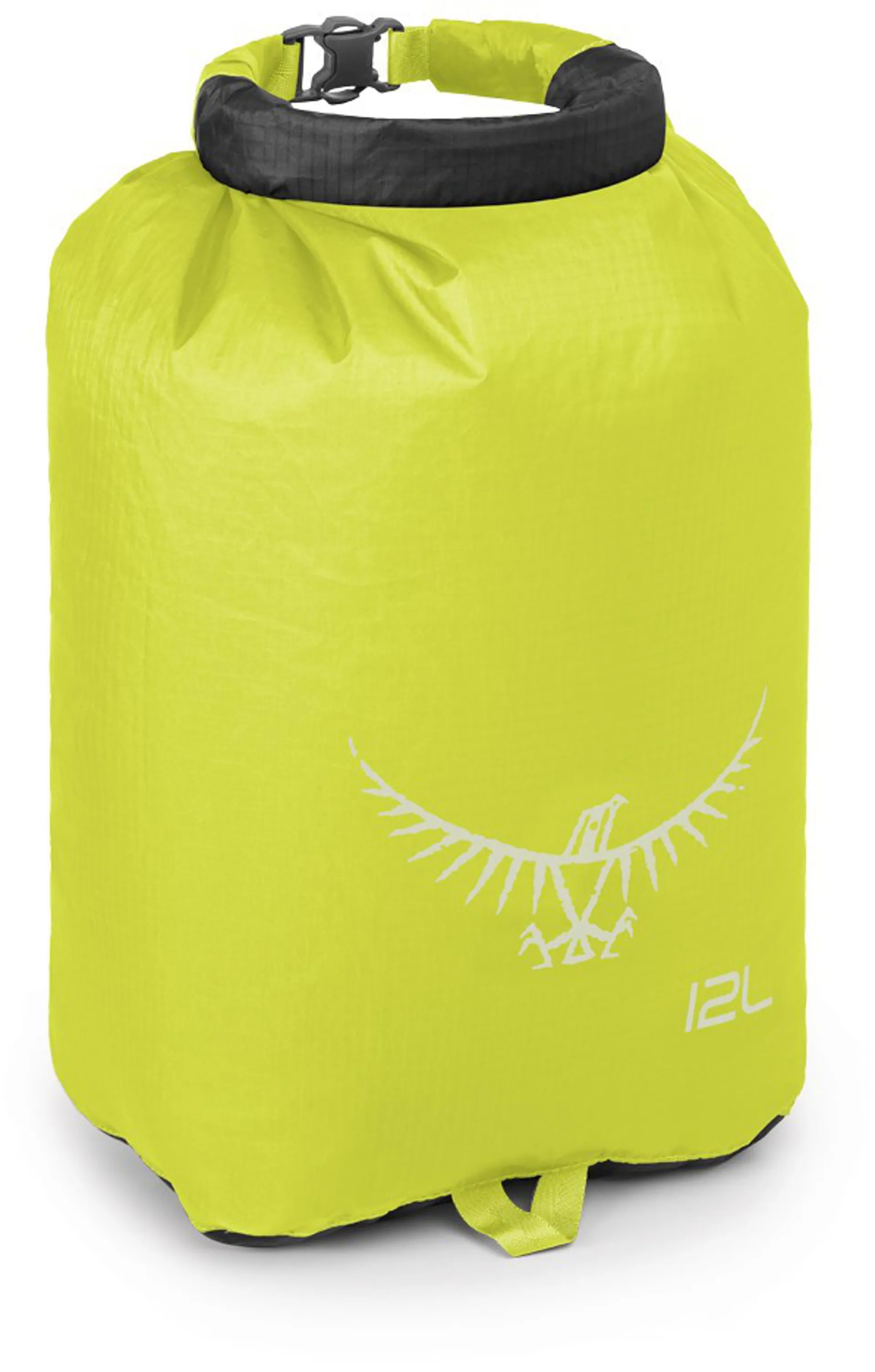 | 12 L | 46 g (1.6 oz) | +18 g |
 | 20L | 50 g (1.8 oz) | +22 g |

Build your Gear Closet
View all of your gear in one place, create packing lists and hit the trail with confidence. Available on iOS, Android and the web.
Get StartedPerformance
Water protection. IPX5 means the fabric and seams are rated against water jets, which covers sustained rain and a pack set down in a puddle. It does not cover being held underwater. Owner reports track that line closely. One user on a lazy-river float reported a small amount of water inside and was glad the phone had its own zip bag; another floated in an inner tube with everything staying dry. The variable is the roll-top. Osprey’s retailers advise at least three turns before clipping the buckle, and sacks closed that way fare better than those rolled once. In an earlier Outdoor Gear Lab comparison of dry bags, the Osprey kept water out noticeably better than Outdoor Research’s competing ultralight sack, which took on water in a lake dunk.
Shape and packing. This is the sack’s real selling point. The rectangular footprint stacks against a pack’s back panel and leaves less dead space than a tapered stuff sack, so a food bag, a clothing layer and a quilt can sit in a pack like bricks rather than loaves. Outdoor Gear Lab’s testers singled out the Osprey, along with Sea to Summit’s Big River, for a good shape and for being easy to pack and close. Neither has carrying straps, and the Osprey doesn’t pretend to.
Fabric. The 40D nylon is heavier than the gossamer fabrics on the thinnest “ultralight” sacks, and owners tend to read that as reassurance rather than a penalty. A cyclist who carried sleeping gear in one on a rear rack for 333 dusty miles described it as roomy and dust-free. The D-ring lets a damp sack hang from a guyline to dry or a wet-weather bag clip to a loop, and one quilt owner uses it to hang the sack upside-down from a bear line with the roll-top at the bottom.
Durability. Nothing in owner feedback points to a weak spot beyond the usual for sub-50 g sacks. It belongs inside the pack. Strapped outside, against rock and brush, it’s a short-lived idea.
Choosing a Version
All sizes share the same fabric, shape, closure and D-ring. Only volume and weight change, and from the 3 L to the 20 L the penalty is only about 22 g.
- 3 L (28 g): Phone, headlamp, battery bank, cables or a first-aid kit. It’s the sack for things that must stay dry and be easy to find.
- 6 L (32.5–34 g): Hat, gloves and a spare base layer, or a day’s snacks and toiletries. Listings for this size land between 32.5 and 34 g, a difference that won’t register on any scale a hiker owns. It’s the better electronics sack for anyone carrying a camera or a larger power bank.
- 12 L (46 g): A midlayer and spare socks, or a compact summer quilt.
- 20 L (50 g): The usual choice for a three-season sleeping bag or quilt. One buyer found it roomy enough for a short trip or overnight clothing kit.
- 35 L (2.7 oz): Winter bags, a shared clothing sack for two, or a liner for a smaller frameless pack. It’s deeper and squarer than the rest, so it stacks less like a brick.
Most thru-hikers need two sacks: a 12 L or 20 L for the sleep system and a 3 L or 6 L for electronics.
Pros & Cons
Pros
- 28–50 g across the 3–20 L sizes
- Rectangular shape packs more efficiently than a tapered stuff sack
- 40D recycled nylon with taped, waterproof-coated seams inspires more confidence than the thinnest sacks
- Five sizes cover everything from a phone to a winter bag
- Quick-release buckle and D-ring make it easy to close, dry and clip
- Lifetime warranty
Cons
- IPX5 is not submersible; packrafting, canoeing and deep river crossings call for a different bag
- Owners report minor leaks after prolonged immersion or sloppy roll-tops
- Costs add up if every item gets its own sack
- No carry straps or external attachment points beyond the D-ring
Who Should Buy This
Backpackers and thru-hikers who want an organized, rain-resistant pack interior will get the most from it, particularly those who already use a trash-compactor liner and want a second layer of protection around a quilt or electronics. Bikepackers keeping gear in a rack bag will find it works there too. Packrafters, kayakers and anyone who expects the pack to take a swim should buy a fully submersible roll-top. Hikers who count every gram and run a single pack liner can skip the whole category.
Verdict
The Osprey Ultralight Dry Sack does what a pack-interior organizer should: it weighs next to nothing, stacks cleanly and keeps rain off the contents. Treat it as weather protection rather than flotation-proof gear and it’s an easy recommendation, with the 12 L or 20 L plus a 3 L or 6 L the sensible starter set.