Osprey Stratos Review
Osprey's Stratos trades grams for a trampoline-style mesh back panel, built-in rain cover and tidy organization in 36 and 50 L sizes.
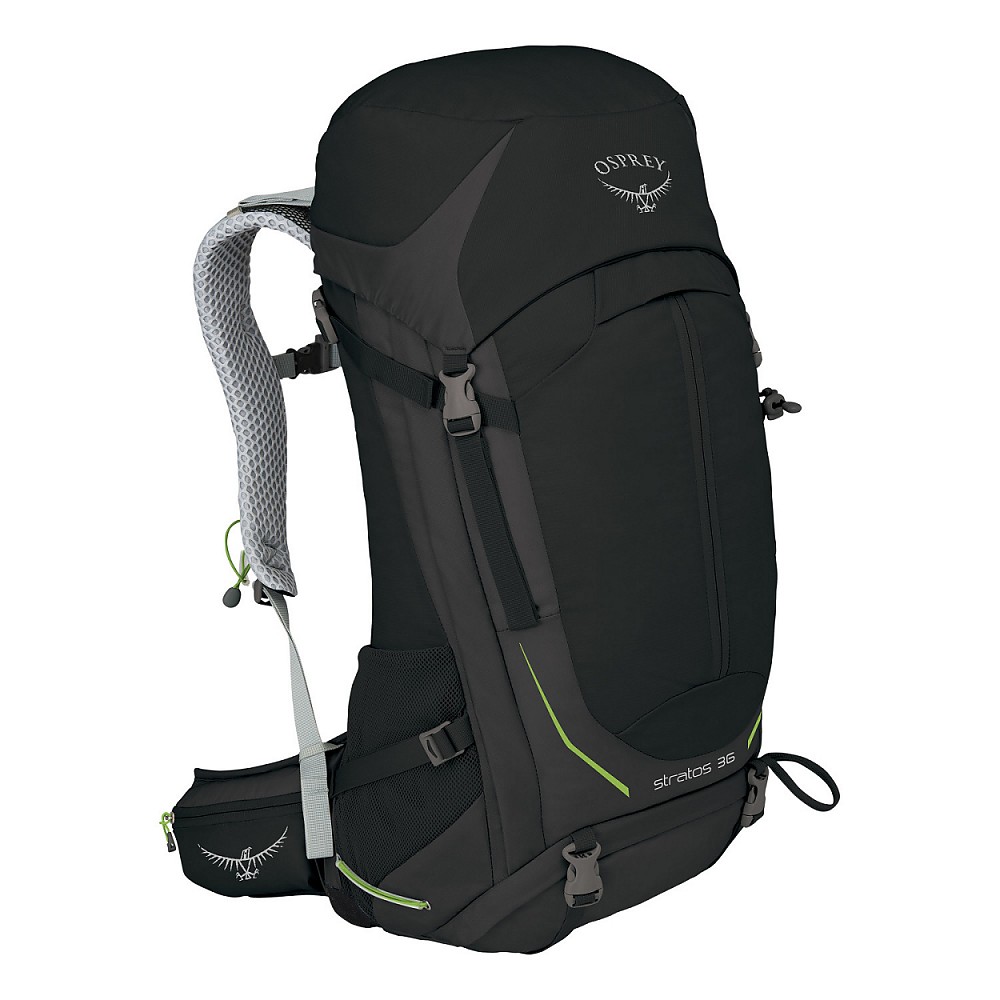
Overview
The Stratos is Osprey’s ventilated, top-loading workhorse: a tensioned-mesh AirSpeed back panel, a LightWire alloy frame, an adjustable torso and a rain cover stowed in the base. It comes in a 36 L version for long day hikes and light overnights and a 50 L version for weekend-to-multiday trips. The trade-off is plain. It is cooler on the back and better organized than a frameless ultralight pack, and it weighs roughly twice as much as one.
Key Specs
| Spec | Value |
|---|---|
| Weight | 1,438–1,670 g depending on version |
| Volume | 36 L (36 and 36 Men’s); 50 L (47 L in the S/M) |
| Main fabric (50) | 210D Nylon Crosshatch |
| Bottom fabric (50) | 420HD Nylon Packcloth |
| Suspension | AirSpeed tensioned mesh back panel, LightWire alloy frame |
| Recommended load | 20–40 lb (50); up to 30 lb (36) |
| Torso adjustment | Yes; 36 Men’s fits roughly 18–22 in |
| Rain cover | Integrated, stored in a base pocket |
| Hydration | Internal reservoir sleeve with hose port |
| Hipbelt pockets | Two zippered |
Versions compared
| Image | Version | Weight | vs. lightest |
|---|---|---|---|
| 36 | 1438 g (50.7 oz) | lightest |
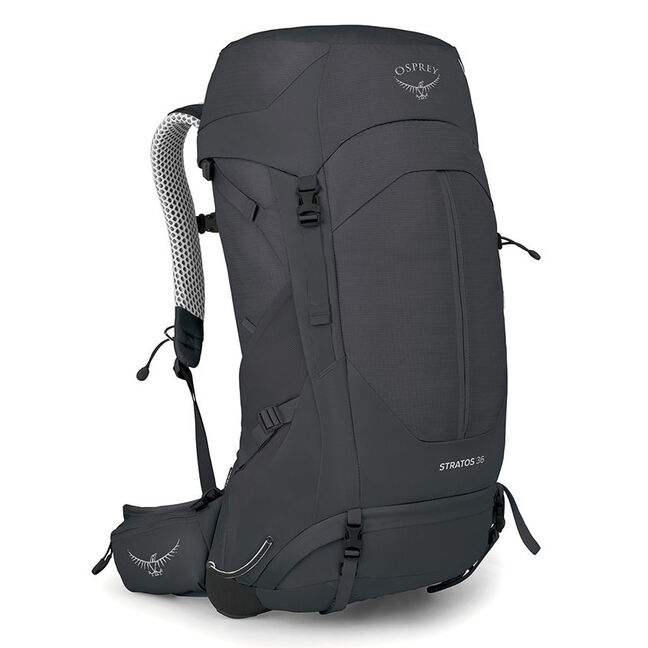 | 36 / Men's | 1488 g (52.5 oz) | +50 g |
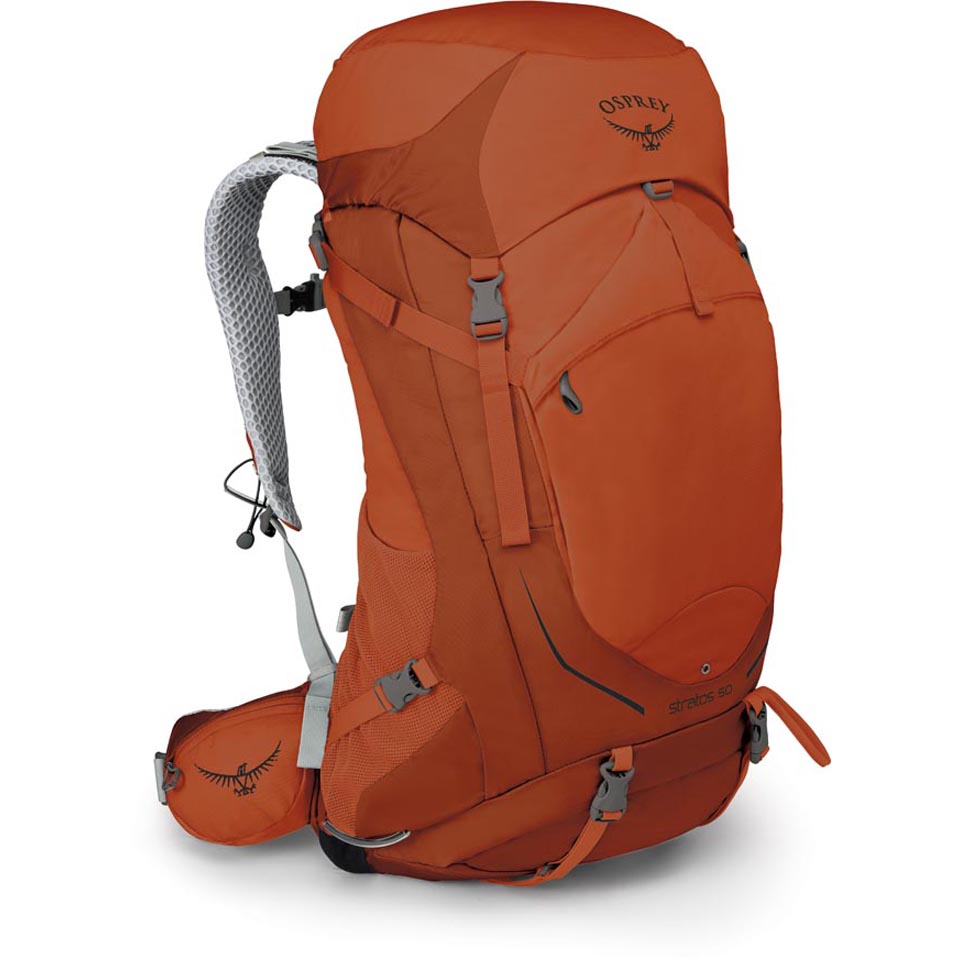 | 50 | 1670 g (58.9 oz) | +232 g |

Build your Gear Closet
View all of your gear in one place, create packing lists and hit the trail with confidence. Available on iOS, Android and the web.
Get StartedPerformance
Ventilation. The AirSpeed panel is the reason to buy a Stratos. The mesh is tensioned on a peripheral frame, so the pack body stands off the wearer’s back and air moves through the gap. On the 36, the mesh runs continuously into the hipbelt. SectionHiker’s testers credit that seamless design with cooling the wearer and removing the seam hot spots a stitched belt can cause. The current 36 also claims 40% more ventilation than the model it replaced. On a sweaty switchback climb, the difference from a foam-panel pack shows up in the shirt.
Load carrying. The 50 is rated for 20–40 lb. Independent testers found it stable at 30–35 lb, with no sway or floating on steep ascents, descents and scrambles. At around 40 lb it began to float, and stability and comfort dropped. For the 50, 35 lb is the practical ceiling. The 36 is rated to 30 lb, which is plenty for a day with extra layers or a minimalist overnight. Owners who have pushed it to the top of that range report no problems.
Long-haul limits. One hiker took the 50 on a 300-mile trek, well outside its intended use. He reported that the shoulder straps loosened under the sustained heavy load. He still did not regret the choice, but he called the pack a weekend-length tool first and foremost. That fits its design. It is not built for the abuse of a months-long thru-hike at the top of its weight range.
Organization. This is where the Stratos pulls away from minimalist packs. The 50 has two zippered lid pockets and a hidden compartment at the base that holds the rain cover. Two large zippered hipbelt pockets take a camera, GPS, snacks or gloves. The 36 adds a large vertical-zip front stash pocket, a zippered bottom compartment for a sleeping bag or wet gear, stretch side pockets and removable sleeping-pad straps. Owners of earlier 36s like how easy it is to load. The 36’s side-zip and bottom access answer the usual top-loader complaint about digging for gear at the bottom.
Rain cover. The built-in cover is a small feature that matters. One Costa Rica-based buyer chose the Stratos over the pricier Atmos for this reason. He judged it a bigger advantage in a rainy climate than the Atmos’s more elaborate suspension.
Durability. Testers who spent weeks on the 50 reported that the zippers, pockets and fabrics held up well. The 210D body with a 420D bottom is a sensible compromise for a pack that isn’t chasing the lowest weight. The 36 uses recycled nylon with the same thicker fabric on the base.
Weight. Neither size is light for its volume. The 36 Men’s weighs about 3 lb 4.5 oz, and reviewers note that lighter packs of similar or larger capacity exist. The Stratos is a choice for people who value padding, pockets and toughness over saving ounces.
Fit. Fit varies. One 50 reviewer found the shoulders a touch narrow. Trying the pack on, or buying from a retailer with easy returns, is worth the effort.
Choosing a Version
The 36 and 36 Men’s share the same 36 L volume, the same AirSpeed suspension and the same 30 lb load ceiling. The Men’s weighs 1,488 g, which is 50 g more than the standard 36 at 1,438 g. Pick between them by trying each on for shoulder width and hipbelt shape. Both carry a 36 L load, so the choice is about fit rather than capacity.
The 50 is the pack for multiday trips. At 1,670 g it weighs 232 g more than the 36 and 182 g more than the 36 Men’s. In return it has 14 L more space and a 40 lb rating. It comes in two sizes: the S/M holds 47 L and weighs 1,614 g, and the M/L holds 50 L and weighs 1,670 g. Choose the 50 for a two-to-five-night trip with a sleeping bag, shelter and food. Choose a 36 for long day hikes, hut trips and lean overnights, where the 50 would just invite overpacking.
Pros & Cons
Pros
- AirSpeed mesh back panel gives excellent ventilation in warm conditions
- Stable carry at 30–35 lb on the 50, even on technical terrain
- Organized layout: lid pockets, zippered hipbelt pockets, stash pocket and base compartment
- Integrated rain cover saves a separate purchase
- Fabrics, zippers and hardware held up through weeks of hard use
- Adjustable torso length fine-tunes fit
Cons
- Heavy for the volume: 1,438 g for 36 L, 1,670 g for 50 L
- The 50 starts to float near 40 lb
- Shoulder straps reportedly loosened on a long, heavily loaded trek
- Some users find the shoulder fit narrow
- The frame and suspension add bulk that frameless packs avoid
Who Should Buy This
The Stratos suits weekend and multiday hikers who carry 25–35 lb in the 50, or up to 30 lb in the 36. It is especially good for people who run hot or hike in warm, humid places and want a pack with real pockets and a rain cover included. Hikers with sub-20-lb base weights, anyone chasing a sub-1-kg pack, and anyone who regularly loads past 35–40 lb should look elsewhere. Frameless ultralight packs suit the first group, and Osprey’s Atmos AG suits the second.
Verdict
The Stratos does what it sets out to do. It keeps the wearer cool and comfortable under a moderate load, and the organization and rain cover earn their weight. It is not ultralight, and it falls short of expedition capability, so it should be judged against other traditional packs rather than cuben wishlists. The 50 is the better all-rounder for multiday trips, and the 36 is the right choice for lean overnights and long days.