Gregory Baltoro Review
Gregory's Baltoro in 65L and 75L trades roughly five pounds of pack weight for suspension that makes 40-pound carries feel manageable.
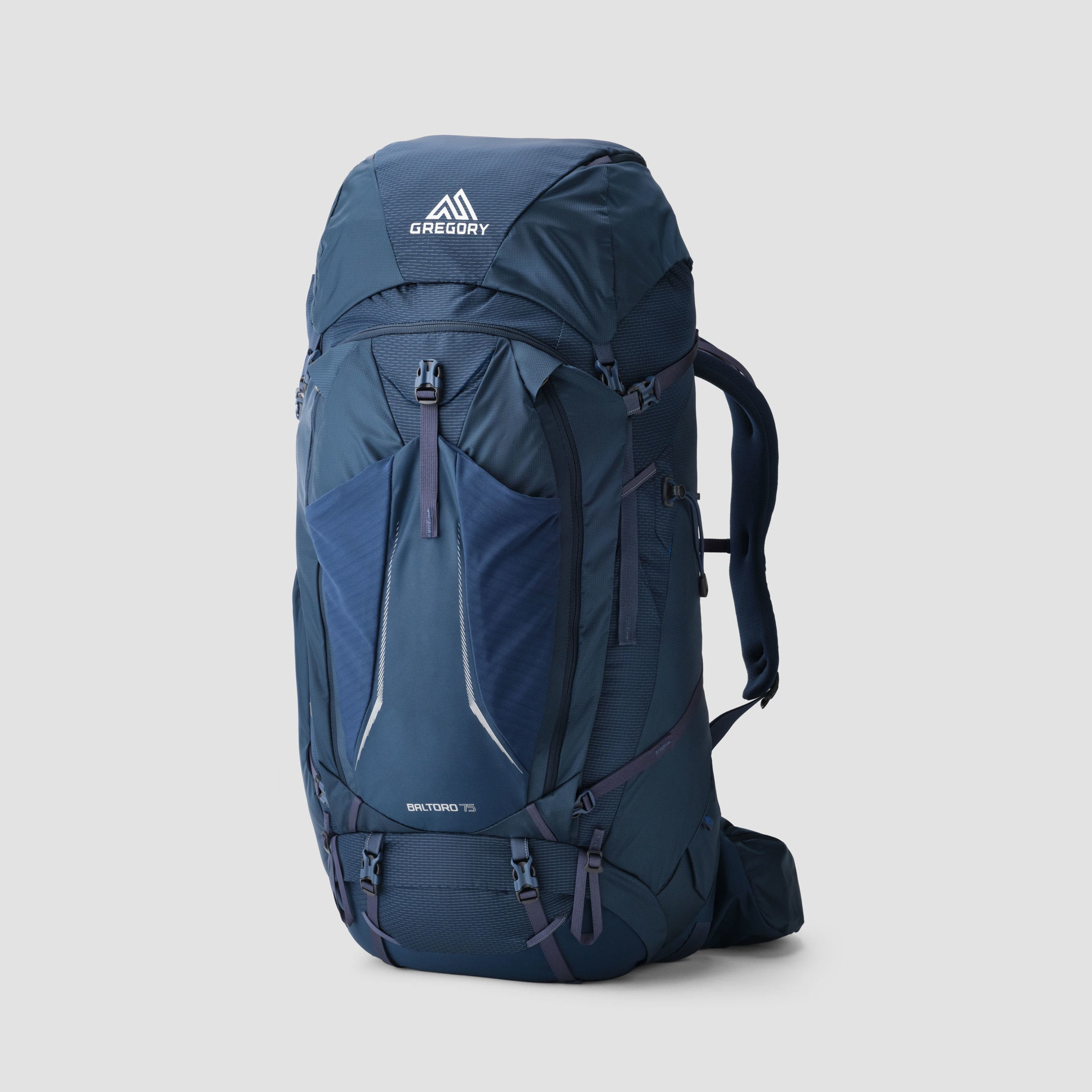
Overview
The Baltoro is Gregory’s heavy-load expedition pack, built for week-long food carries, winter layers and bulky kit that would flatten a frameless ultralight bag. Comfort is the point. A 65L and a 75L version share the same FreeFloat A3 suspension and AirCushion back panel. The cost is weight: at 2,050–2,260 g, this is roughly double what a comparably sized ultralight pack weighs.
Key Specs
| Spec | Detail |
|---|---|
| Weight | 2,050–2,260 g depending on version |
| Volume | 65 L or 75 L (stated volume shifts slightly with torso size) |
| Recommended max load | 50 lb (about 22.7 kg) |
| Fabric | 210D and 420D nylon |
| Frame | Perimeter alloy frame with fiberglass anti-barreling cross-stay |
| Suspension | FreeFloat A3, auto-rotating shoulder harness, dynamic hipbelt |
| Back panel | AirCushion foamless, 90%+ open-air 3D mesh |
| Access | Top drawcord, U-shaped front zip, bottom sleeping bag compartment with removable divider |
| Sizes | Small, Medium, Large, with an adjustable torso |
| Rain cover | Not included |
| Price (75) | $400 |
Versions compared
| Image | Version | Weight | vs. lightest |
|---|---|---|---|
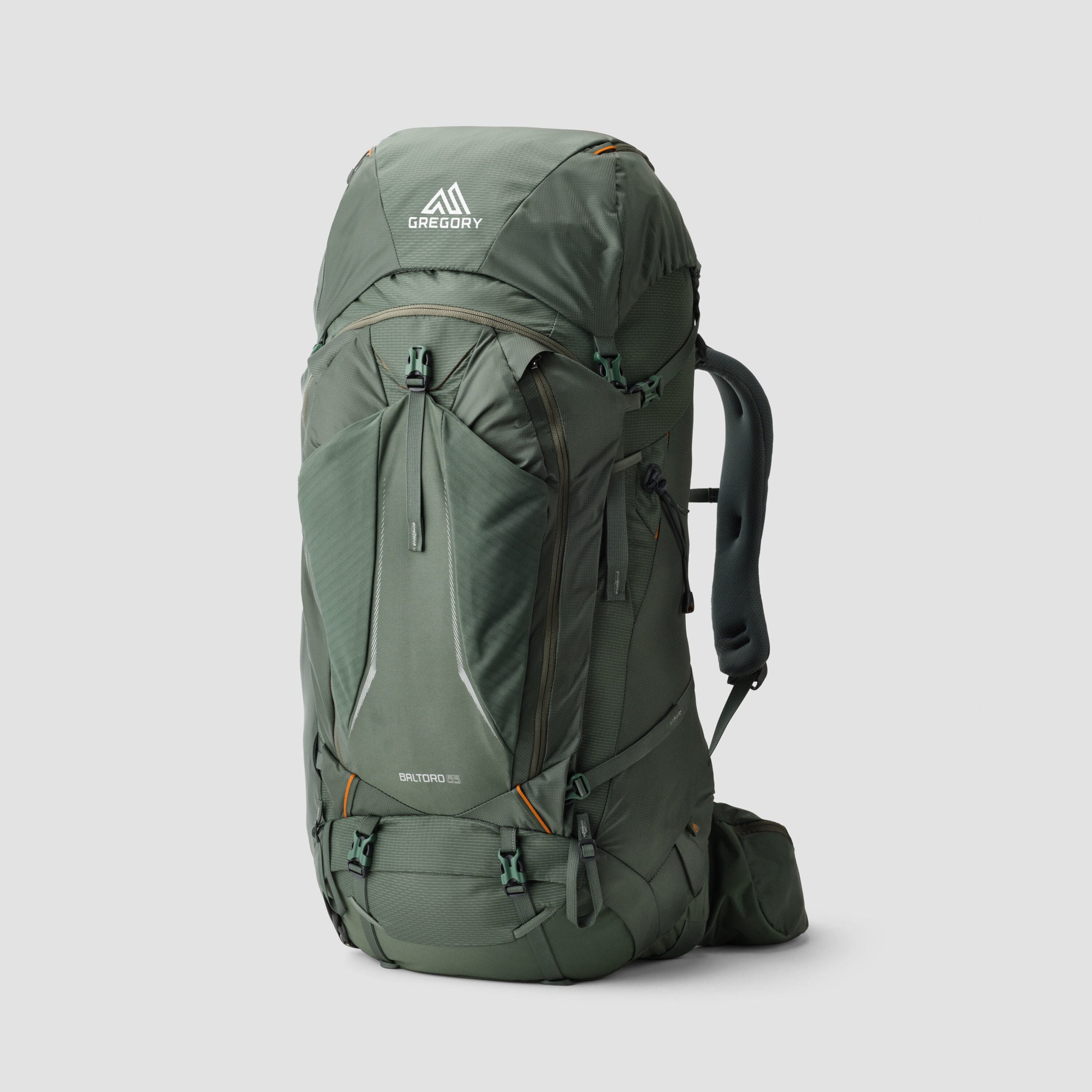 | 65 | 2050 g (72.3 oz) | lightest |
| 75 | 2260 g (79.7 oz) | +210 g |

Build your Gear Closet
View all of your gear in one place, create packing lists and hit the trail with confidence. Available on iOS, Android and the web.
Get StartedPerformance
Suspension and comfort. This is what the Baltoro is bought for. The FreeFloat A3 system lets the hipbelt, shoulder harness and lower panel move independently of the frame, so the pack follows the torso rather than fighting it. On switchbacks, downed logs and talus, the hipbelt pivots with each step. Reviewers describe the shoulder straps and hipbelt as generously padded, and some rate them plusher than the Osprey Aether Plus 70, the Baltoro’s closest rival. A removable 10 mm LumbarTune pad fills the lower-back gap for hikers who want the load held closer to the spine. It comes out in seconds if it isn’t needed.
GearJunkie’s tester loaded the 65 to 45 pounds and scored it 9 out of 10 for comfort, with an overall 7.3 out of 10 held back mainly by weight. Testers of the 75 reported that it stayed comfortable even past Gregory’s 50-pound recommendation, though the frame is not meant to be a license for 60-pound carries.
Breathability. The AirCushion panel is a suspended mesh that leaves an air gap between pack and back. Owners report less swamp-back on sustained climbs than with foam-panel packs, a real benefit with a load this size.
Organization and access. The 75 carries nine external pockets. The 65 has eight closed and three open ones, by SectionHiker’s count. Both have a top drawcord, a U-shaped front zip for reaching buried gear, and a bottom sleeping bag compartment. The SideWinder bottle holster hangs low on the side, and owners say it can be reached and restocked one-handed while walking. That is rare on a pack this big. The hipbelt pockets include one waterproof pocket sized for a phone or small camera.
The pocket count has a downside. Several reviewers note a learning curve before it’s obvious which zipper or strap does what. SectionHiker found the 65 swallows far more gear than its label suggests, and a BV500 bear canister fits both vertically and horizontally.
Weight and balance. Tested weights show how heavy it is. GearJunkie weighed the 65 at 4 lb 11.5 oz in small, 4 lb 14.7 oz in medium and 5 lb 4 oz in large, and ranked it the second-heaviest pack in its backpacking guide. A medium 75 comes in around 4 lb 15.7 oz. The pack bottoms out a little when underfilled, so heavy items belong high and close to the back.
Extras and gripes. The current model ships without a rain cover (sold separately at about $40) and without a reservoir. The hydration sleeve clip only suits Gregory reservoirs. One BetterTrail sample had a main-compartment drawcord failure, which the reviewers attributed to that unit. Excess hipbelt webbing is long and has nowhere to stow.
Choosing a Version
The two versions are the same pack in different volumes. Fit, suspension, back panel and features are shared, so the choice comes down to how much you carry.
65. Gregory lists it at 2,050 g, the lighter of the two. Volume by size runs about 60 L (small), 65 L (medium) and 70 L (large), and torso ranges overlap: small 16–19 in, medium 17–20 in, large 18–21 in. SectionHiker adds roughly 10 L of external pockets and extension collar. For three- to five-night trips, or hikers who compress well, it is enough. Measured weights for a medium 65 land within an ounce or two of a medium 75, so the real saving over the larger pack is small.
75. At 2,260 g it adds room for winter insulation, a bulky sleeping system, a week of food, or shared group or family gear. The extra volume matters little on a three-day trip. It earns its keep on long itineraries or cold-weather ones, where the load is bulky as well as heavy.
Buy the 65 if trips top out around five nights in three seasons. Buy the 75 if bulk is the problem, and note that you can cinch it down for smaller trips.
Pros & Cons
Pros
- Suspension stays comfortable at 40–50 lb, with a hipbelt that pivots on uneven ground
- AirCushion panel keeps real airflow against the back
- Three access points make digging to the bottom unnecessary
- SideWinder bottle pocket is reachable one-handed while walking
- Waterproof hipbelt pocket for electronics
- Adjustable torso and three overlapping sizes
- Tough 210D/420D nylon built for hard use
Cons
- 2,050–2,260 g is heavy by modern standards
- No rain cover included, adding about $40 to the real price
- Hydration sleeve clip only fits Gregory reservoirs
- Many pockets take time to learn
- Bottom-heavy when underpacked
- 50 lb recommended ceiling is modest for an expedition pack
Who Should Buy This
The Baltoro suits backpackers who start trips with 35 pounds or more: long food carries, winter or mountaineering gear, a parent hauling shared family kit. It also suits anyone who values a pocket for everything and a suspension that does the work. Hikers with base weights under 15 pounds, weekend trippers and thru-hikers who resupply every three or four days will carry more pack than they need and should look at lighter frames.
Verdict
The Baltoro does what it promises: it makes heavy loads tolerable over long days, and the suspension, ventilation and bottle access are all well executed. The weight and the missing rain cover are the price. A good buy at 35 pounds and up, the 65 for compact kits and the 75 for bulky ones. A poor one for anyone counting ounces.