Decathlon Barres Cacahuètes, Amandes et Fruits Rouges BIO x15 Review
A budget-friendly organic peanut, almond, and freeze-dried cherry bar built for hiking and moderate-effort snacking, tested on ingredients, nutrition, and value.
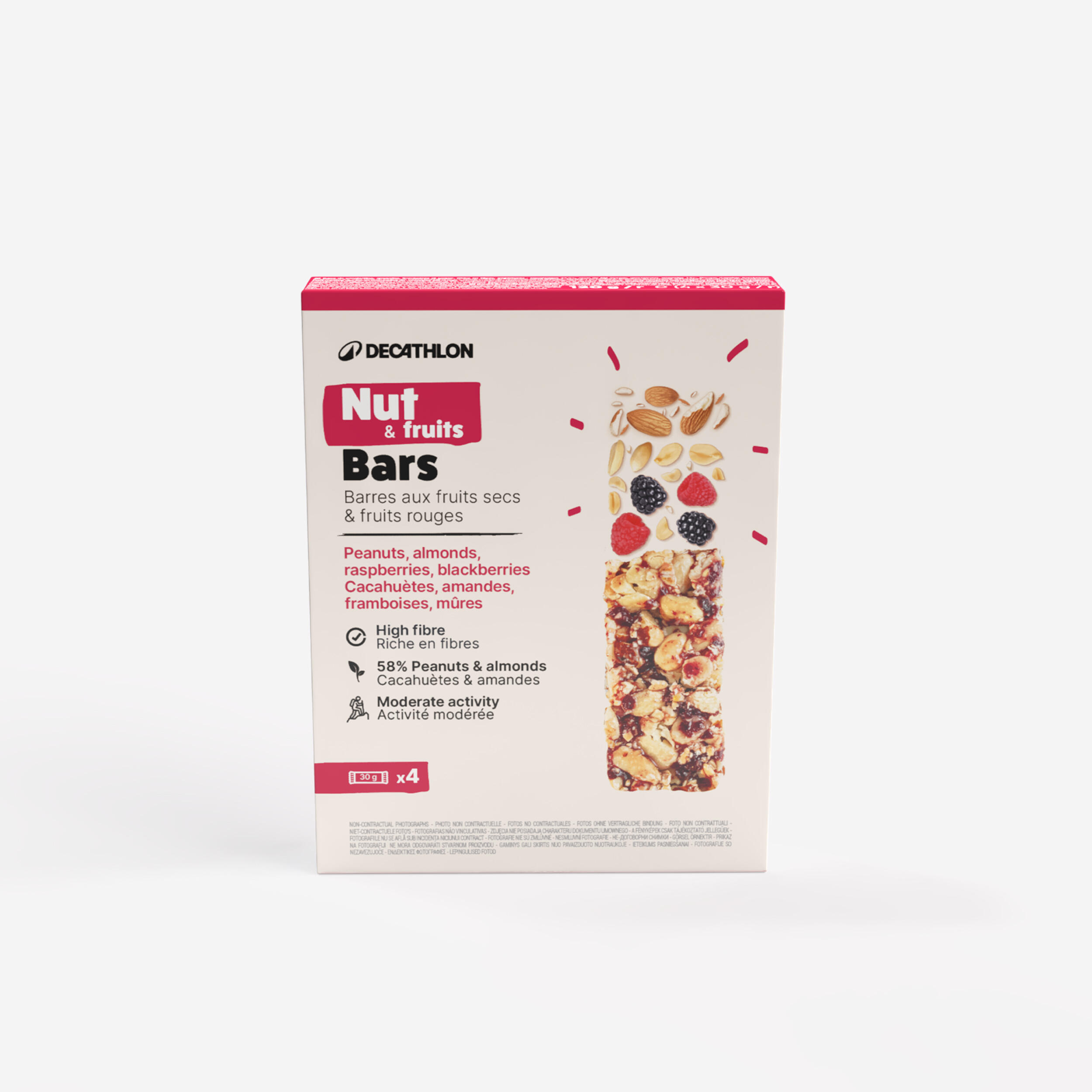
Overview
This is Decathlon’s organic nut-and-fruit bar aimed squarely at hikers, casual cyclists, and anyone who wants a not-too-sweet snack for a “moderately intense” day out rather than a full-on race-fuel gel. The x15 pack breaks down to 30g bars built mostly from peanuts and almonds, with freeze-dried cherries thrown in for a tart contrast. It’s not marketed as a performance or endurance bar — Decathlon’s own copy frames it as suited to moments sportifs modérés — parfaites alliées pour vos randonnées, vos sorties en vélo tranquilles, et même pour vos journées un peu chargées.
Key Specs
| Spec | Value |
|---|---|
| Bars per pack | 15 |
| Serving size | 30g per bar |
| Total pack weight | 450g |
| Calories | 510 kcal/100g (152 kcal per bar) |
| Fat | 33g/100g (9.9g per bar) |
| Carbs | 34g/100g (10g per bar) |
| Sugars | 18g/100g (5.5g per bar) |
| Fiber | 6.4g/100g (1.9g per bar) |
| Protein | 26g/100g (4.8g per bar) |
| Salt | 0.02g/100g |
| Organic | Yes |
| Price | ~10€ for the pack |

Build your Gear Closet
View all of your gear in one place, create packing lists and hit the trail with confidence. Available on iOS, Android and the web.
Get StartedPerformance
The nutrition profile here tells you most of what you need to know before you even open the wrapper. Per 30g bar: 633 kJ / 152 kcal, 9.9g fat (1.2g saturated), 10g carbs (5.5g sugars), 1.9g fiber, 4.8g protein, and less than 0.01g salt. That’s a fat-and-protein-forward profile rather than a fast-carb one, which lines up with how Decathlon differentiates its lineup: barres d’oléagineux contiennent moins de sucres et plus de lipides que les barres de céréales — in plain English, the nut bars run lower-sugar and higher-fat than their cereal-bar siblings.
That matters for how you should actually use this bar. A French sports dietitian reviewing Decathlon’s energy lineup notes that higher-fat snacks like this are good for low-intensity collations like hiking or trekking, since fat is a slow-burning energy source, though the higher lipid load makes them less digestible during intense efforts. In practice, that tracks with my experience eating oleaginous bars on the trail: they sit well during a steady-state hike or a lazy bike-touring day, but I wouldn’t reach for one mid-interval-run or during a hard climb where you want glucose hitting your bloodstream fast. Decathlon is explicit about this trade-off elsewhere in its nutrition lineup too, steering people toward date paste or gels for fueling during hard efforts and keeping bars like this one in the “snack” category.
The ingredient list is short and recognizable: Cacahuètes* 44,7%, amandes* 13,8%, sirop de blé* (liquide, déshydraté), flocons d’avoine*, cerises lyophilisées* 6%, miel*, huile de tournesol*, arôme naturel. No chocolate coating, no sugar alcohols, no protein isolate — just peanuts, almonds, oats, wheat syrup, honey, and freeze-dried cherries binding it together. The 6% cherry content is enough to give a noticeable tart pop against the dense, slightly sandy peanut-almond base, without turning it into a candy bar. Texture-wise, expect something closer to a compressed trail mix bar than a chewy oat bar — dense, a little crumbly, and best eaten in a few bites rather than nibbled over an hour, since it can dry out and crumble in a pocket if you try to ration it.
At 26g of protein per 100g (4.8g per bar), it’s respectable for a snack bar but not a protein-bar substitute — Decathlon sells separate protein bars for that job. Fiber at 6.4g/100g (1.9g per bar) is solid and probably contributes to it feeling more filling than its size suggests.
On value, 15 bars for around 10€ works out to roughly 0.67€ per 30g bar, which is competitive with most trail snack bars and noticeably cheaper than boutique organic energy bar brands. I couldn’t find extensive English-language user reviews or forum threads (r/Ultralight, BPL, etc.) covering this specific SKU — it’s largely a France/Europe-market product — so most of what’s available comes from Decathlon’s own product page, which lists 45 customer reviews but doesn’t surface individual comments publicly. Take the performance notes above as informed analysis of the nutrition data rather than a large sample of crowd-sourced trail testing.
Pros & Cons
Pros:
- Short, recognizable ingredient list with no artificial additives
- Organic certification across the board
- Good fiber (6.4g/100g) and protein (26g/100g) for a snack bar
- Tart cherry flavor cuts the richness of peanuts and almonds nicely
- Cheap per-bar cost for an organic product (~0.67€/bar)
- 15-bar pack size is convenient for multi-day trips or restocking a pantry
Cons:
- High fat content (33g/100g) makes it a poor choice for fueling during hard, fast efforts
- Dense, slightly crumbly texture — not ideal for eating in small bites over time
- Limited independent English-language reviews to cross-check Decathlon’s own marketing claims
- Mainly sold through Decathlon’s own stores/site, so availability outside France/Europe may be limited
- Contains peanuts, tree nuts, and wheat, plus possible traces of milk, soy, and other nuts — a no-go for several common allergies
Who Should Buy This
This bar makes the most sense for hikers, backpackers, and casual riders who want a filling, not-too-sweet snack for steady-state days — think a resupply stash for a multi-day hike or a glovebox snack for weekend rides. It’s a poor match for anyone fueling hard interval training, racing, or fast-paced trail running, where you’d be better served by a higher-carb, lower-fat option like a gel or date bar.
Verdict
For the price, this is a solid, honestly-labeled organic snack bar that does exactly what Decathlon says it does: fuel moderate-effort days, not hard efforts. It won’t replace a proper energy bar or gel for race day, but as a pantry staple for hiking and everyday snacking, it’s hard to beat on ingredients and cost. I’d put it at a 7/10 — reliable and good value, docked slightly for the lack of independent trail-tested reviews and its narrow use case.