Compeed Pansement Ampoule Petit Format Review
Compeed's small-format hydrocolloid blister plaster is a featherweight, waterproof fix for toe and side-of-foot blisters, but it's too small for heels.
Overview
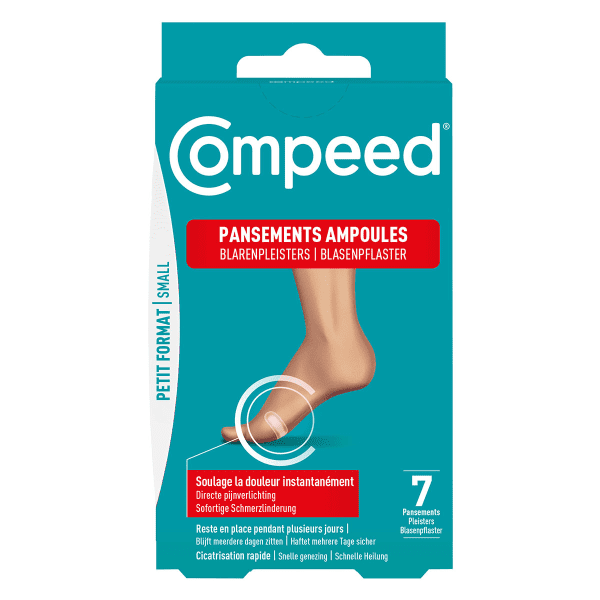
The Compeed Pansement Ampoule Petit Format is the small-oval version of the hydrocolloid blister plaster that has sat in hikers’ first-aid kits for decades. It is built for small blisters and for the curved, awkward spots on the side of the foot where a larger patch tends to wrinkle and peel. The trade-off is coverage: the plaster does its job well on a small target and is the wrong tool for a full heel blister.
Key Specs
| Spec | Detail |
|---|---|
| Weight | 3.9 g |
| Plaster size | 2 × 6 cm, oval |
| Quantity per box | 6 |
| Technology | Hydrocolloid gel |
| Waterproof | Yes |
| Best for | Small blisters; side of foot, toes |
| Backing | Polyurethane outer film |

Build your Gear Closet
View all of your gear in one place, create packing lists and hit the trail with confidence. Available on iOS, Android and the web.
Get StartedPerformance
Hydrocolloid dressings work differently from a standard adhesive bandage or a square of moleskin. The gel layer, built around sodium carboxymethyl cellulose particles under a polyurethane film, absorbs fluid from the blister and turns into a soft cushion. That cushion seals the wound and keeps it moist, which Compeed credits for faster healing. Hikers tend to notice the other half of the effect first: pressure and friction drop almost immediately once the plaster is on, and most can keep walking.
Staying power is where Compeed’s reputation was made. Trail-focused roundups regularly describe the adhesion as multi-day, surviving sweaty socks, wet shoes and river crossings. The manufacturer’s own instructions are to apply the plaster to clean, dry skin, press it down with a palm for about a minute, and leave it until it lifts by itself. That last point matters on the trail. Peeling a hydrocolloid patch off early takes the seal with it and defeats the purpose.
The small format earns its place on awkward geometry. Retailers and the manufacturer position it for the side of the foot, the toes and other curved zones, with the medium size recommended for heels. At 2 × 6 cm, the oval is long enough to wrap the outer edge of the forefoot or the side of the little toe without folding on itself. The edges are beveled and translucent, so the plaster sits close to the skin and is hard to feel inside a shoe. Compeed says it works at every stage, from a first hot spot to a formed blister, though the earlier it goes on, the faster the skin recovers.
The same strong adhesive that keeps the patch in place for days is also the most common complaint. Reviewers note that these plasters can be hard to remove and that a few users get skin sensitivity. Compeed markets the plaster as hypoallergenic, and it should not go on infected wounds. It is also contraindicated for diabetics, a point hikers with circulation or sensation problems in their feet should take seriously.
Weight is a non-issue. The listed 3.9 g is lost in any kit, and the plasters are flat and thin enough to tuck into a zip bag or the back of a wallet with no bulk. The cost is not trivial by comparison with moleskin or tape: French retailers list a box of six at roughly €6.50 to €10, so each plaster costs about €1 to €1.60. That is cheap insurance against ending a trip early.
Pros & Cons
Pros
- Instant cushioning and pain relief on small blisters
- Waterproof, with adhesion that holds for several days
- Thin, beveled edges that stay low-profile in a shoe
- 2 × 6 cm oval suits toes and the side of the foot
- Negligible weight and pack volume
- Hypoallergenic formulation for sensitive skin
Cons
- Too small for heel blisters, which call for the medium size
- Strong adhesive makes removal uncomfortable, and early removal wastes the plaster
- Six per box runs out quickly on a long trip with persistent hot spots
- Pricier per unit than moleskin or tape
- Not for infected wounds or diabetic users
Who Should Buy This
Anyone building a blister kit for a weekend trip, a section hike or a thru-hike should carry a few. That includes hikers who tend to get blisters on the little toe, the outer forefoot or the side of the foot. A box of six covers a typical trip and costs little to carry. Heel-prone hikers should buy the medium format instead, or carry both; a mixed pack covers different foot zones at once. Anyone who wants to prevent blisters before a hot spot forms may prefer tape or a lubricant, with the Compeed plaster held in reserve for treatment. Diabetics and anyone with an infected wound should skip it.
Verdict
The Compeed Petit Format does one job, covering small blisters on curved parts of the foot, and does it with the staying power and cushioning that made the brand a default in hiker first-aid kits. It is small enough that most hikers will want a second size alongside it, but the quality is not in doubt. For its weight and price, it is easy to recommend.