Jetboil Flash Review
The Jetboil Flash boils 0.5L in about two minutes from an all-in-one 371 g kit. It's ideal for freeze-dried meals, but heavy and poor at simmering.
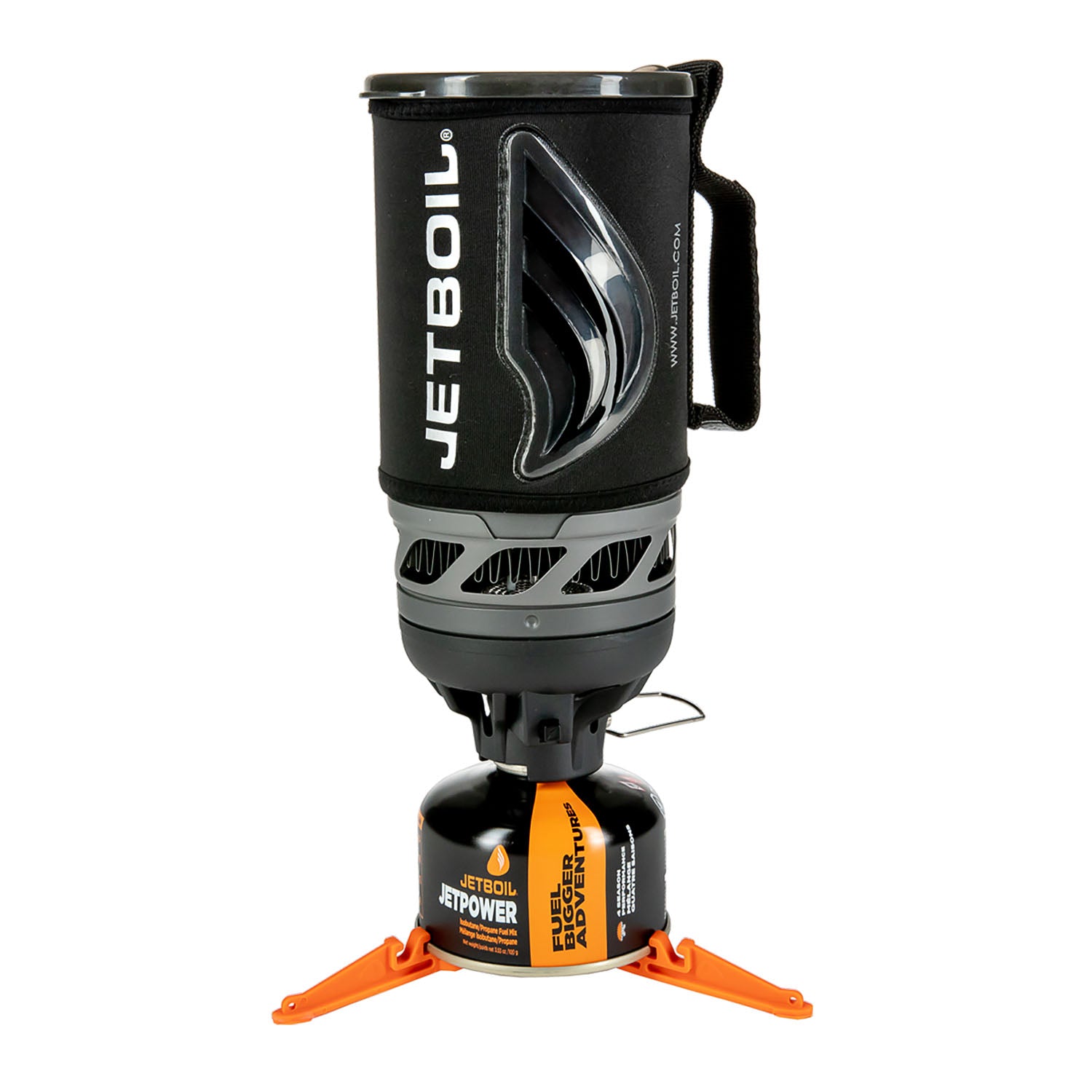
Overview
The Jetboil Flash is an integrated canister stove: a 1.0L hard-anodized aluminum pot with a FluxRing heat exchanger on the bottom, and a compact burner that twists and locks straight onto it. It is built for backpackers whose kitchen consists of freeze-dried dinners, instant oatmeal and morning coffee. The trade-off is plain: it boils water faster than almost anything else on the trail, but it weighs more than a bare-bones stove-and-pot pairing and can’t simmer.
Key Specs
| Spec | Value |
|---|---|
| Weight | 371 g (13.1 oz), excluding fuel |
| Capacity | 1.0L |
| Boil time | 120 sec for 0.5L; about 4 min for 1.0L |
| Output | 5,300 BTU/h (1.5 kW) |
| Packed size | 10.8 x 19.1 cm (4.25 x 7.5 in) |
| Fuel | Isobutane-propane canister (100 g fits inside the pot) |
| Ignition | Turn-and-click piezo, built in |
| Pressure regulator | No |
| Fuel economy | Roughly 10 L boiled per 100 g canister |
| MSRP | $129.99 |

Build your Gear Closet
View all of your gear in one place, create packing lists and hit the trail with confidence. Available on iOS, Android and the web.
Get StartedPerformance
Speed and fuel efficiency
Jetboil rates the current Flash at 120 seconds for half a liter, down from 150 seconds on the previous generation. Testers’ real-world numbers land close to that. Section Hiker clocked 120 to 130 seconds for two cups. Switchback Travel and Treeline Review both measured about four minutes for a full liter. One owner-style test log shows the number stretching to roughly 2.5 minutes in 28°F weather with a 10 to 15 mph wind, and past three minutes in a 20 mph gale. That is still quick, but the advertised figure belongs to calm, mild days.
The FluxRing does double duty. Its corrugated fins pull heat into the pot, and they also shield the flame, which helps in gusty conditions. CleverHiker credits the design with keeping heat from being swept away the way it is on exposed burners. Fuel economy is the payoff: about 10 liters of water per 100 g canister, enough for a solo weekender on one small can. Efficiency falls by roughly 25% in wind, so tucking the pot behind a pack or a rock still pays off. GearJunkie verified a burn time of about 40 minutes on a 100 g canister.
Ease of use
The 2025 update tidied up the daily routine. The turn-and-click ignition fires with a twist of the dial, the ignitor has a ceramic surround for durability, and the pot-to-burner connection now has three locking points with visual indicators. A soft-grip area on the base makes it easier to twist the burner on. GearJunkie rated ease of use 9 out of 10, and testers who ran it through a season of thru-hikes and camping trips reported no ignitor failures.
The thermochromatic heat indicator on the insulating cozy changes color as the water heats, so the pot can come off the flame before it boils over. Measuring marks inside the pot in milliliters, ounces and cups remove the need for a separate cup. Everything nests: the burner, a 100 g canister and the fuel stand all pack inside the pot, with the plastic measuring cup serving as a lid. The one ergonomic complaint is the valve. It is small and awkward to turn with gloves on.
Simmering and versatility
Like most integrated systems, the Flash is a boiler, not a cooktop. The flame can be turned down a little, but reviewers agree it won’t cook rice without scorching the bottom of the pot. CleverHiker flags the limited simmer control as the main constraint on cooking beyond hot water. The tall, narrow pot is also awkward to eat from compared with a wider pot like the Jetboil MiniMo’s.
There is no pressure regulator, so output sags as the canister drains and as temperatures drop. That makes the Flash a spring-to-fall stove. Winter trips below freezing are not its territory. Altitude and cold also stretch boil times.
Weight and packability
At 371 g, the Flash sits in an awkward middle. GearJunkie measured 13.5 oz on its scale, and Section Hiker’s 14.1 oz figure includes the fuel stand. It beats a canister stove plus a heavy pot, but a minimalist setup such as a 3 g-class titanium burner with a titanium mug weighs a fraction as much. Gram-counters routinely leave the Flash at home for that reason. Jetboil’s own Stash is substantially lighter if the integrated format appeals but the weight doesn’t. For shorter trips where convenience outweighs base weight, plenty of testers carry it anyway, and the saved fuel and fumbling take some of the sting out.
Compatibility is broad. Any isobutane-propane canister works, and Jetboil accessories such as the Hanging Kit extend it to big-wall and portaledge use.
Pros & Cons
Pros
- Boils 0.5L in about two minutes in good conditions
- Roughly 10 L per 100 g canister, so one can covers most solo weekends
- Burner, pot, canister and stand nest into a single package
- FluxRing doubles as a built-in windscreen
- Turn-and-click ignition and heat indicator remove guesswork
- Works with common isobutane-propane canisters and Jetboil accessories
Cons
- 371 g is a real penalty next to ultralight stove-and-pot setups
- Poor simmer control limits it to boil-and-eat meals
- No regulator, so performance fades in the cold and as the canister empties
- Efficiency drops about 25% in wind
- Tall pot is awkward to eat from
- Small valve is fiddly with gloves
Who Should Buy This
The Flash suits three-season solo and duo backpackers whose cooking is hot water for dehydrated meals, ramen, oatmeal and coffee. It is also a sensible first stove, since there is nothing to assemble or match up. Gram-counting thru-hikers, winter campers and anyone who wants to sauté, simmer or bake at camp should look elsewhere: a Jetboil Stash or a stove-and-pot kit for weight, a MiniMo or a regulated stove for cooking and cold weather.
Verdict
The Flash is a mature, well-sorted piece of gear that does one job quickly and without drama. It isn’t light, and it isn’t a kitchen. For boil-and-eat backpackers in three-season conditions, it remains one of the easiest stoves to recommend.