BRS-61 Integrated Cooking System Review
A budget-friendly integrated stove-and-pot combo from BRS, but one with a proprietary pot and almost no independent testing to back up the marketing.
Overview
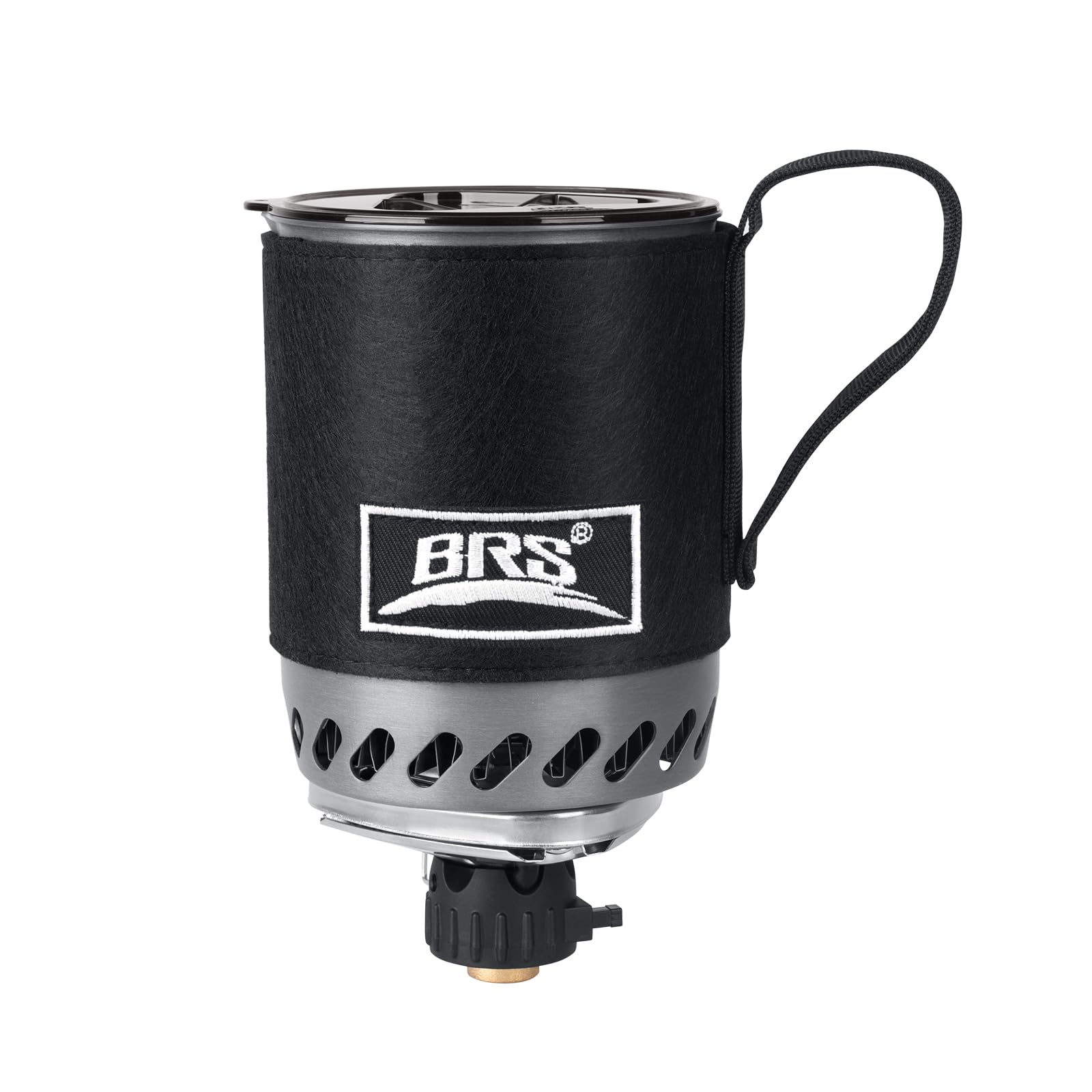
If you know BRS at all, it’s probably for the BRS-3000T — the 25-gram titanium burner that’s become a rite of passage for anyone building their first ultralight kit. The BRS-61 is a completely different animal: an integrated cooking system that fuses a burner to a dedicated 0.5L pot, in the same general category as a Jetboil Flash or Fire-Maple Petrel. It’s aimed at solo campers and budget-minded backpackers who want a self-contained “screw on a canister and go” setup rather than a stove they mix and match with their own cookware.
Key Specs
| Spec | Value |
|---|---|
| Weight | 360 g |
| Power output | 1500 W |
| Pot capacity | 0.5 L |
| Pot diameter | 100 mm |
| Pot height | 130 mm |
| Burner head size | 3.9 x 5.1 cm |
| Materials | Aluminum alloy, stainless steel, PP |
| Ignition | Electronic (piezo) |

Build your Gear Closet
View all of your gear in one place, create packing lists and hit the trail with confidence. Available on iOS, Android and the web.
Get StartedPerformance
I’ll be upfront: this isn’t a product with a stack of BPL lab tests or a long r/Ultralight thread behind it. It’s mostly sold through Amazon, Walmart, eBay, and AliExpress storefronts, and most of the “reviews” floating around online read like AI-generated marketing copy rather than actual trip reports. So take the following with the appropriate grain of salt — it’s synthesized from the handful of genuine buyer comments I could find, plus what the spec sheet tells us.
The core idea is a heat-collecting/heat-exchanger burner design, where the flame wraps around the base of the pot instead of just licking the bottom. One buyer review noted being amazed by the quality, that the water boils faster than with a classic gas stove with a cup, and that emitted heat is significantly reduced downwards and to the sides — which, if accurate, would mean less wasted fuel and better performance in a breeze than an open jet burner. Another buyer reported boiling 400 milliliters in about 2 minutes, which is respectable for a 0.5L system, though 400 mL isn’t a full boil test and I couldn’t find a controlled comparison against known quantities like the standard 1L/500mL benchmarks used by gear review sites.
On the ignition side, the built-in piezo means no lighter or matches needed in good conditions — a small but real convenience for one-pot dinners at the end of a long day. Piezo igniters in general are notorious for failing after a few months of trail grit and moisture, and I’d budget for carrying a mini BIC as backup regardless of what any integrated stove promises.
The complaint that shows up most consistently across the scattered reviews is fit: one buyer flagged that the lid is a bit too small in diameter, and this being a proprietary, sealed pot-and-burner pairing means you’re locked into using it as a single unit — you won’t be swapping in a wider pot for group cooking or a titanium mug for weight savings. That’s the fundamental trade-off of any integrated system, but it’s worth internalizing before you buy: this isn’t a burner you build a broader cook kit around.
At 360 g, this sits right in Jetboil Flash territory (the Flash runs about 13.1 oz / 371 g), not in ultralight burner territory. If you’re expecting BRS-3000T-style gram savings because it shares a brand name, you’ll be disappointed — this is a completely different design philosophy, prioritizing an all-in-one convenience package over minimum weight.
Pros & Cons
Pros
- All-in-one burner-and-pot design means less fumbling with separate pieces and better pack organization
- Heat-collecting burner design appears to reduce heat loss to the sides, which should translate to better fuel efficiency and wind resistance than an open jet burner
- Electronic ignition for one-touch lighting
- Price point is well below name-brand integrated systems like the Jetboil Flash or MSR WindBurner
- Simple, low-maintenance design with few moving parts
Cons
- Proprietary pot/burner pairing — no swapping to a different pot or scaling up for groups
- Lid fit complaints from at least one buyer
- No dedicated wind screen included, despite the heat-collecting claims
- Genuinely independent testing (BPL, CleverHiker, r/Ultralight) is essentially nonexistent for this specific model — most “reviews” online are AI-written listicles rather than field reports
- At 360 g it’s not a weight-saver compared to established integrated systems, and it’s far heavier than pairing a canister stove with a titanium pot
- Long-term durability of the piezo ignition and adjustable valve is unproven; budget stoves in this category have a mixed track record
Who Should Buy This
This is a reasonable pick for a solo camper or casual backpacker who wants a cheap, self-contained boil-and-simmer setup for coffee, freeze-dried meals, or basic one-pot cooking, and who isn’t chasing every last gram. It’s not for anyone building a genuinely ultralight kit — for that, you’re better served by pairing a separate burner (including BRS’s own 3000T) with a titanium pot of your choosing, which will save weight and give you flexibility the BRS-61’s sealed system can’t.
Verdict
The BRS-61 seems like a competent, inexpensive take on the integrated cooking system format, but the lack of independent testing and reliance on scattered, unverifiable buyer reviews makes it hard to give a confident recommendation. If you want a $150+ Jetboil-style experience at a fraction of the price and can live with a proprietary pot, it’s worth a look — just go in with tempered expectations and a backup lighter.