Smartwool Merino 250 Baselayer Crew Review
Smartwool's 100% merino 250-weight crew (now the Classic Thermal) is a soft, nearly odor-proof cold-weather layer that runs warm and wears out faster than synthetics.
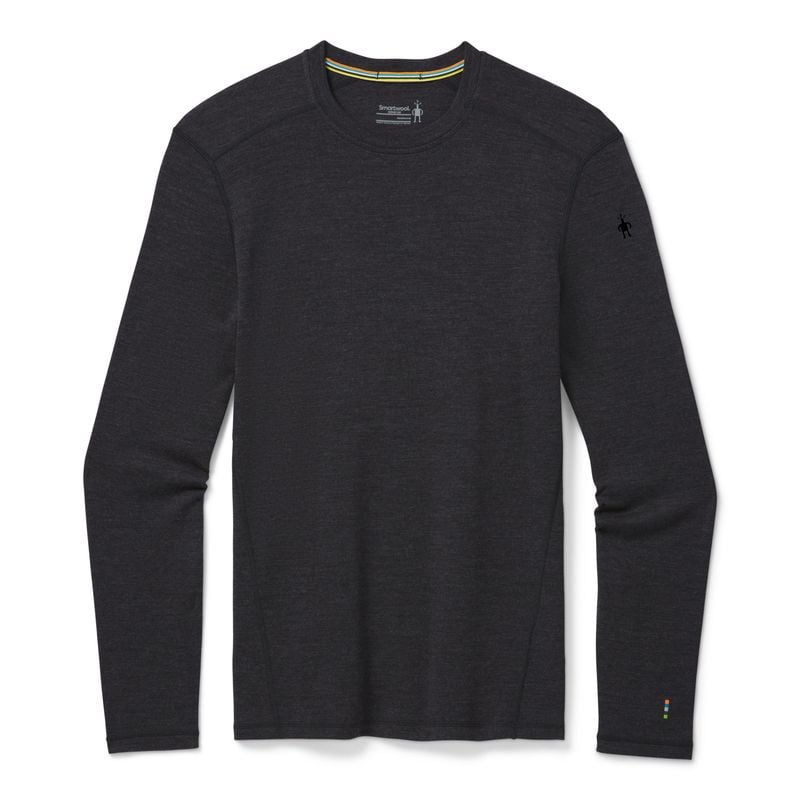
Overview
The Merino 250 Baselayer Crew, now sold as the Classic Thermal Merino Base Layer Crew, is Smartwool’s heavyweight long-sleeve top in 100% merino. It suits cold camps, winter hiking at low output, and sleeping in a quilt on shoulder-season nights. The trade-off is the usual one for thick wool: superb warmth, comfort and odor control, paid for in weight, slow drying and modest durability.
Key Specs
| Spec | Detail |
|---|---|
| Weight | 275 g (9.7 oz) |
| Fabric | 100% merino wool, interlock knit |
| Fabric weight | 250-weight class (listed at 250 g/m²) |
| Fit | Slim |
| Seams | Flatlock, with shoulder panels (no seam on top of the shoulder) |
| Sleeves | Raglan |
| Also sold as | Classic Thermal Merino Base Layer Crew (SW016349) |
| Typical price | $110–$115 |

Build your Gear Closet
View all of your gear in one place, create packing lists and hit the trail with confidence. Available on iOS, Android and the web.
Get StartedPerformance
Warmth. This is the layer’s reason for existing. Testers at GearJunkie wore the women’s version on ski days in the low 20s °F and stayed warm through windy lift rides and cold parking-lot transitions. On The Trek, a long-distance hiker used it as camp clothing inside a 20°F bag, where it kept off chill on cold mornings. Better Trail ranks the thermal line among the warmest base layers it has tested.
Comfort and fit. Wool’s itch reputation doesn’t apply here. CleverHiker’s tester found the fabric soft straight out of the package and the seams close to unnoticeable. The flatlock seams and shoulder panels keep pack straps from grinding on a seam line, which is the part that matters over 20-mile days. Greenbelly’s reviewer gave comfort a 10/10, specifically under a pack and beneath pants. The cut is slim, and CleverHiker describes it as snugger through the torso than most base layers. Some REI buyers suggest sizing down for a truly close fit, so anyone between sizes should try both. The body and sleeves run long, which keeps the hem tucked and the wrists covered.
Odor resistance. Merino’s best trick shows up clearly here. One UK reviewer at Backdrop Journal noted that the top stayed fresh through multiple touring days, a stretch after which his synthetic layers would have been unwearable. GearJunkie’s tester wore the women’s set five days straight in the Dolomites with no complaints. For multi-day trips where one top does everything, that’s the case for paying wool prices.
Breathability and drying. Here the heavyweight build costs something. Better Trail scored the thermal’s breathability 2 out of 5 and says its testers reached for the zipper on a hike in the high 40s °F. CleverHiker’s lab ran into the same issue: the top took the longest to dry of all the base layers it tested. The thermoregulation is real, but it is tuned for standing around, ski lifts and slow cold-weather walking rather than hard climbing. The Trek’s reviewer noted the top didn’t stay on long once hiking began on anything but the coldest days.
Durability. Owners are split on it. REI’s most helpful critical review calls the top not very durable, and another buyer reported small holes forming at the waist within a single winter. Better Trail rates durability 2.5 out of 5. It does note the thick 250-weight knit holds up far better than Smartwool’s 150 g/m² All-Season. Some long-time buyers also say recent versions feel thinner than the older Merino 250. Washing on gentle cycles and keeping rough hipbelts and abrasive layers away from the fabric helps.
Weight. At 275 g, this is not a gram-counter’s shirt. The Trek’s reviewer pegged the women’s crew at nearly 8 oz and still judged it worth carrying for camp use. Greenbelly’s review points out that a 250-weight merino top of this cut weighs about what any competitor’s does, because the fabric weight sets the garment weight. One wrinkle: GearJunkie reports that Smartwool rates the 250 weight at 218 g/m², which puts it closer to midweight than the “heavyweight” label suggests.
Pros & Cons
Pros
- Excellent warmth for cold camps, sleep and low-output winter days
- Very soft against skin, with no itch
- Flatlock seams and shoulder panels work well under a pack
- Stays fresh through days of continuous wear
- Long body and sleeves stay put
- Rated 4.7 out of 5 across hundreds of REI reviews
Cons
- 275 g is heavy for a single base layer
- Overheats and dries slowly during sustained effort
- Prone to thinning and holes with hard use
- Slim fit runs snug through the torso
- $110–$115 for a layer with a limited service life
Who Should Buy This
Winter hikers, shoulder-season backpackers and ski tourers who want one warm, low-odor top for camp, sleep and slow cold-weather miles. It also suits anyone who will wear the same shirt for several days in a row. Fast-and-light hikers who sweat hard, anyone on a tight gram budget, and hikers who are rough on their clothing should look at a lighter 150-weight merino or a synthetic grid fleece instead.
Verdict
The Merino 250 Crew does what a cold-weather wool base layer should: it keeps you warm, feels good against the skin and doesn’t smell. Treat it as a camp and cold-day layer rather than an all-purpose hiking shirt, and handle it gently. Used that way, it earns its 275 g.