Patagonia Nano Puff Vest Review
Patagonia's Nano Puff Vest packs 60-g PrimaLoft Gold Eco into a windproof, DWR-treated shell: a durable core-warmth midlayer that trades grams for toughness.

Overview
The Nano Puff Vest is Patagonia’s sleeveless take on its best-known synthetic puffy: 60-g PrimaLoft Gold Eco insulation inside a windproof, water-resistant recycled-polyester ripstop shell. It is built for hikers who want core warmth under a rain shell or around camp without the moisture anxiety of down. The trade-off is familiar to anyone who has owned the jacket: it is tougher and more forgiving than a down vest, but heavier and bulkier for the warmth it delivers.
Key Specs
| Spec | Detail |
|---|---|
| Weight | 227–280 g (8.0–9.9 oz) depending on version |
| Insulation | 60-g PrimaLoft Gold Insulation Eco (100% postconsumer recycled polyester) |
| Shell | 1.4-oz 20-denier 100% recycled polyester ripstop, DWR finish |
| Lining | 1.3-oz 22-denier 100% recycled polyester ripstop, DWR finish |
| Fit | Regular |
| Pockets | Two zippered handwarmer pockets; one internal zippered chest pocket that doubles as a stuff sack |
| Hem | Drawcord-adjustable drop tail |
| Quilting | Brick pattern, horizontal quilt lines on side panels |
| Construction | Fair Trade Certified sewn, made in Vietnam |
| Typical retail price | $189 |
Versions compared
| Image | Version | Weight | vs. lightest |
|---|---|---|---|
| XL | 227 g (8.0 oz) | lightest |
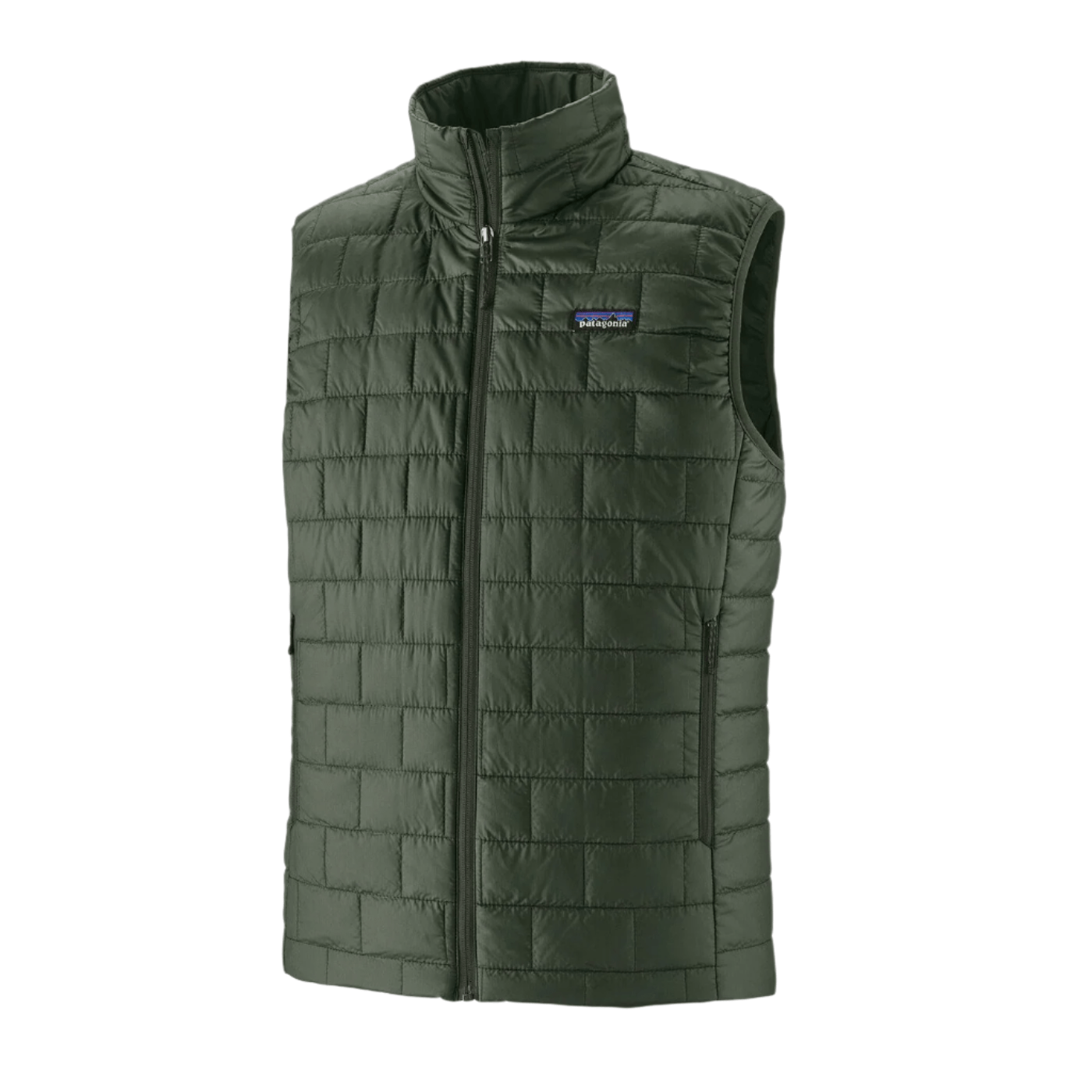 | Men's XL | 280 g (9.9 oz) | +53 g |

Build your Gear Closet
View all of your gear in one place, create packing lists and hit the trail with confidence. Available on iOS, Android and the web.
Get StartedPerformance
Warmth. The vest is a three-season piece, not a winter one. Reviewers place its comfortable range as a midlayer at roughly 35 to 60°F, and one test of the jacket version found it comfortable as a standalone layer from the 40s into the 30s°F while moving. A vest leaves the arms uninsulated, so the figure drops a few degrees for anyone who runs cold. Its natural job is keeping the torso warm under a shell on a cold morning climb, then riding in the pack once the sun is up.
Wet-weather behavior. This is the reason to choose synthetic. PrimaLoft Gold Eco keeps insulating when damp, and owners say the DWR-treated shell handles mist and light rain, such as a drizzly 45-minute stretch worn as the outermost layer. It is not waterproof, and nobody should treat it as a rain jacket. Patagonia’s DWR is made without PFCs/PFAS, which means it will need periodic refreshing like any other treatment. The tighter shell weave also blocks a useful amount of wind, which matters more than loft on exposed ridgelines.
Durability. The 20-denier ripstop shell is heavier than the gossamer fabrics on gram-counter puffies, and reviewers consistently credit it with better abrasion resistance than Patagonia’s lighter Micro Puff. The brick quilting and abrasion-resistant thread are there to hold the insulation in place. That makes it a vest that can be stuffed into the bottom of a pack, scraped past a pine branch or worn as an outer layer around town without much worry. Owners describe vests that look nearly new after two years or more of regular use.
Packability and weight. The internal chest pocket doubles as a stuff sack and has a reinforced carabiner loop. The vest compresses well, but synthetic fill is bulkier than down at the same warmth, and reviewers of the Nano Puff line note that a comparable down piece will pack smaller. At 227–280 g, depending on version, it is light for a puffy but not ultralight. A down vest can undercut it by a meaningful margin.
Fit and details. The regular fit sits close enough to layer under a shell and loose enough for a base layer or fleece underneath. One reviewer noted that the zipper seam can poke out when sitting. The chin garage and wicking interior storm flap keep the zipper off the skin, and the drop-tail hem with drawcord seals out drafts under a pack hip belt. Two zippered hand pockets keep keys or a phone secure, which is more than many ultralight vests offer.
Choosing a Version
Both versions are size XL, and the difference between them is weight. The XL listing comes in at 227 g (8.0 oz), while the Men’s XL is 280 g (9.9 oz), a gap of 53 g (1.9 oz). The construction, insulation and fabrics are the same across the line. Pick the Men’s XL if you want the regular men’s cut that matches Patagonia’s standard style 84242 sizing. Pick the lighter XL listing if its fit works for you and you are shaving ounces. Try the vest on over your usual base layer first, because the regular fit leaves little room for bulky midlayers.
Pros & Cons
Pros
- Insulation keeps working when damp, so sweat or drizzle is less of a concern than with down
- Windproof, DWR-treated 20D ripstop shell resists abrasion better than ultralight vests
- Chest pocket stuffs as a sack and has a carabiner loop
- Two zippered hand pockets and a drop-tail hem with drawcord
- Recycled fabrics and insulation, PFC-free DWR, Fair Trade Certified sewing
- Holds up to years of regular use, according to owners
Cons
- Heavier and bulkier than a down vest of similar warmth
- Sleeveless design limits its range to mild and moderate cold
- DWR is not waterproof and needs maintaining
- At about $189, it costs more than other synthetic vests
- Zipper seam can poke out when seated
Who Should Buy This
This is a good fit for three-season hikers, backpackers in damp climates, and anyone who wants a vest that doubles as a trail layer and a travel or town piece. It works especially well for people who run warm and get overheated in sleeves, or who like to layer a vest under a rain shell. Thru-hikers counting every gram, or anyone who mostly hikes in dry cold, should look at a down vest. Cold sleepers who need a camp layer should buy a jacket instead.
Verdict
The Nano Puff Vest isn’t the lightest or warmest vest available. It is among the most dependable: weather-resistant, tough and easy to live with. Buy it if you value reliability in wet conditions over saving the last few ounces.