Forclaz Down Jacket Review
Forclaz's 289 g, 800-fill RDS down jacket gives backpackers premium-grade insulation at a budget price, with a fussy zipper and no weather protection.
Overview
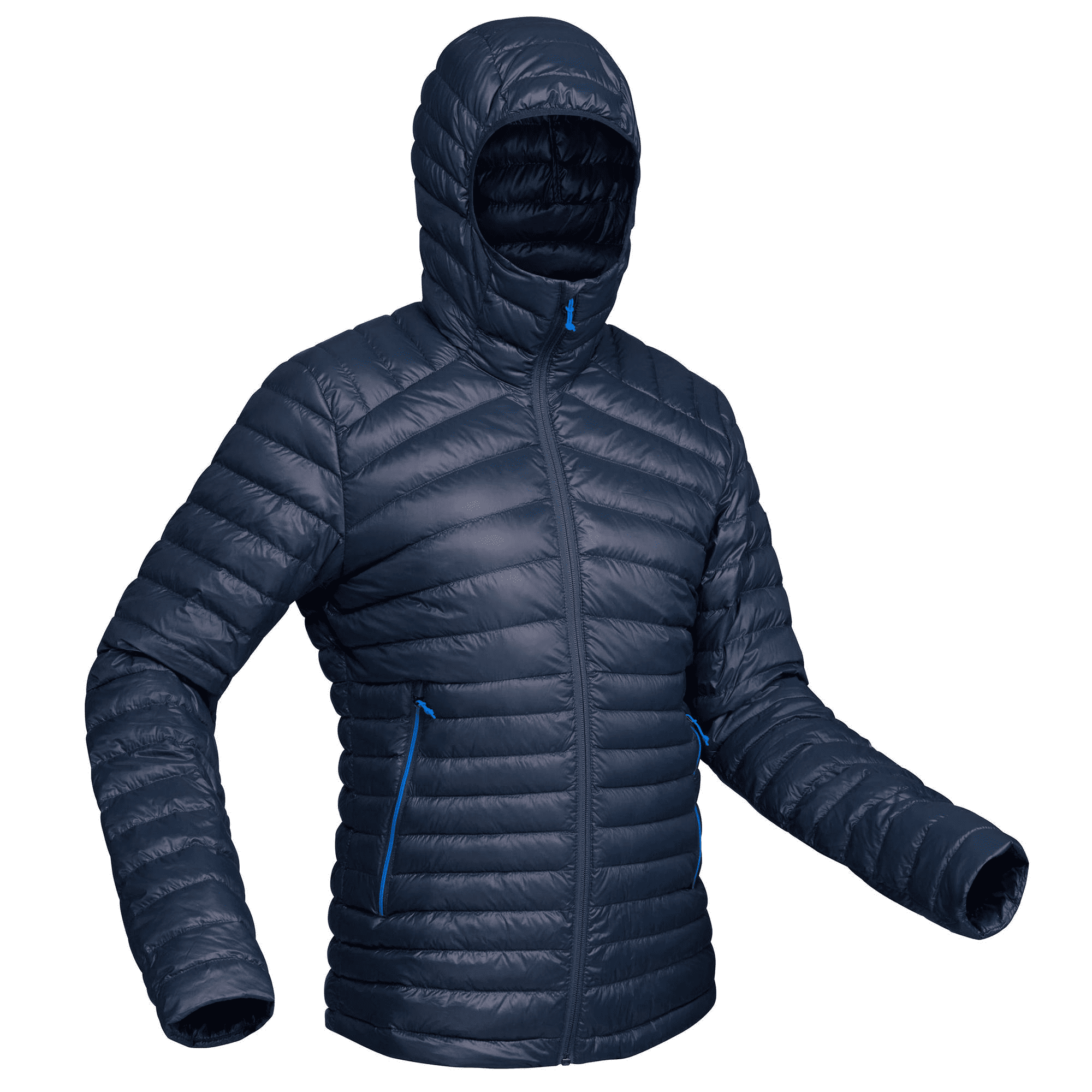
The Forclaz down jacket, sold as the Trek 100 and later rebranded MT100, is Decathlon’s answer to the ultralight puffy. It uses 800-fill-power RDS down at a list price around $100, a figure usually found in jackets that cost three or four times as much. The trade is a fussy zipper, a shell that tolerates only light moisture, and a cut that runs small.
Key Specs
| Spec | Value |
|---|---|
| Weight | 289 g (10.2 oz, men’s medium) |
| Comfort rating | 23°F–41°F |
| Fill power | 800 cuin |
| Fill material | 90% grey duck down, 10% grey duck feather |
| Outer fabric | 100% polyamide, 15-denier, DWR-treated |
| Certification | RDS (Responsible Down Standard) |
| Packability | Stuffs into its left-hand pocket |
| Price | About $80–$100 |

Build your Gear Closet
View all of your gear in one place, create packing lists and hit the trail with confidence. Available on iOS, Android and the web.
Get StartedPerformance
Warmth
The 23°F–41°F rating describes a jacket worn as a third layer over a base layer and a shell, and testers say it holds up on those terms. One tester found it was all the warmth needed over a base layer when temperatures dropped into the low 40s in Alaska’s Caines Head State Park. Another wore it as a mid-layer under a ski shell in 27°F weather and stayed comfortable.
Below freezing, it needs company. Owners consistently describe it as a layering piece, not a standalone jacket for 20-degree mornings. The fill is the draw: 800-fill down is the same grade found in jackets that cost far more, and down performs like down regardless of the price tag on the garment around it.
Packability
The jacket stuffs into its own left-hand pocket, closed with a double-pull zipper. Reviewers variously compare the packed size to a Nalgene bottle or a football, depending on how hard it is compressed. Either way, at 289 g it takes little room in a pack.
Wet Weather
The down is not hydrophobic-treated, and the 15-denier shell carries only a DWR finish. In a controlled shower test, one reviewer found the jacket stayed mostly dry apart from some soak-through at the top of the zipper. After the test, moisture got through the seams around both pockets within roughly 20 minutes. That is enough for a brief shower. In sustained rain, it needs a shell on top, and the retailer says as much. Anyone hiking in a wet climate will find the untreated down a real liability.
Breathability and Active Use
The jacket has no pit zips, mesh panels, or two-way zipper, so there is no way to dump heat. Testers found it comfortable at a moderate pace in cool air, then clammy once the pace picked up or the trail tilted uphill. Loosening the hem cinch helps a little. The usual fix is to unzip or take it off. This is a camp, break, and belay layer, not something to hike in.
Durability and Zipper
The 15-denier polyamide shell is tougher than its weight suggests. After a year of use, one reviewer reported no feather leakage and no seam problems. The main zipper is the weak point. Testers described it as small, hard to work in the cold, and prone to separating, though one separated zipper was fixed with a multitool. Gloved hands will not enjoy it.
Fit and Sizing
Sizing runs small. One reviewer who normally wears a medium or large ordered an XL and called it the right move. Those planning to layer heavily underneath are advised to size up as much as two sizes. The cut is slim and athletic, with a longer hem that stays put under a pack hipbelt and deep zippered hand pockets that remain reachable under a pack’s straps. Two quirks: the high neck can rub on the chin and lips, and the cuffs run snug, particularly over a watch.
Pros & Cons
Pros
- 800-fill-power down at a price that undercuts comparable jackets by three to four times
- RDS-certified fill
- Packs into its own pocket, down to about Nalgene size
- Longer hem stays below a pack hipbelt and covers the lower back
- 15-denier shell holds up well, with little feather leakage over a year of use
- Weighs 289 g in a men’s medium
Cons
- Main zipper is stiff, hard to use in the cold, and prone to separating
- Non-hydrophobic down and a basic DWR mean poor performance in sustained wet weather
- No ventilation features, so it overheats on the move
- Runs one to two sizes small
- High collar can chafe the chin; cuffs run tight
Who Should Buy This
Weight-conscious backpackers on a real budget should buy this, as long as they already carry a rain shell and treat the jacket as a camp or layering piece. It suits three-season trips and shoulder-season mornings and evenings. Skip it if you hike in consistently wet climates, need a standalone jacket for sub-freezing conditions, or want something to wear while moving fast. Winter trekkers should look at the heavier MT500, which Decathlon lists at about 440 g and rated down to 14°F.
Verdict
The Forclaz down jacket delivers 800-fill warmth at 289 g for a fraction of what name-brand equivalents cost, and that explains its following among ultralight hikers. The zipper and the weak wet-weather performance are real flaws, but both are manageable for someone who carries a shell and sizes up. For the budget-minded three-season backpacker, it earns a 7.5 out of 10.