DJI Mini 2 Review
The DJI Mini 2 is a sub-250g folding drone with 4K video, OcuSync 2.0 transmission, and a 3-axis gimbal — a capable travel and beginner camera platform.
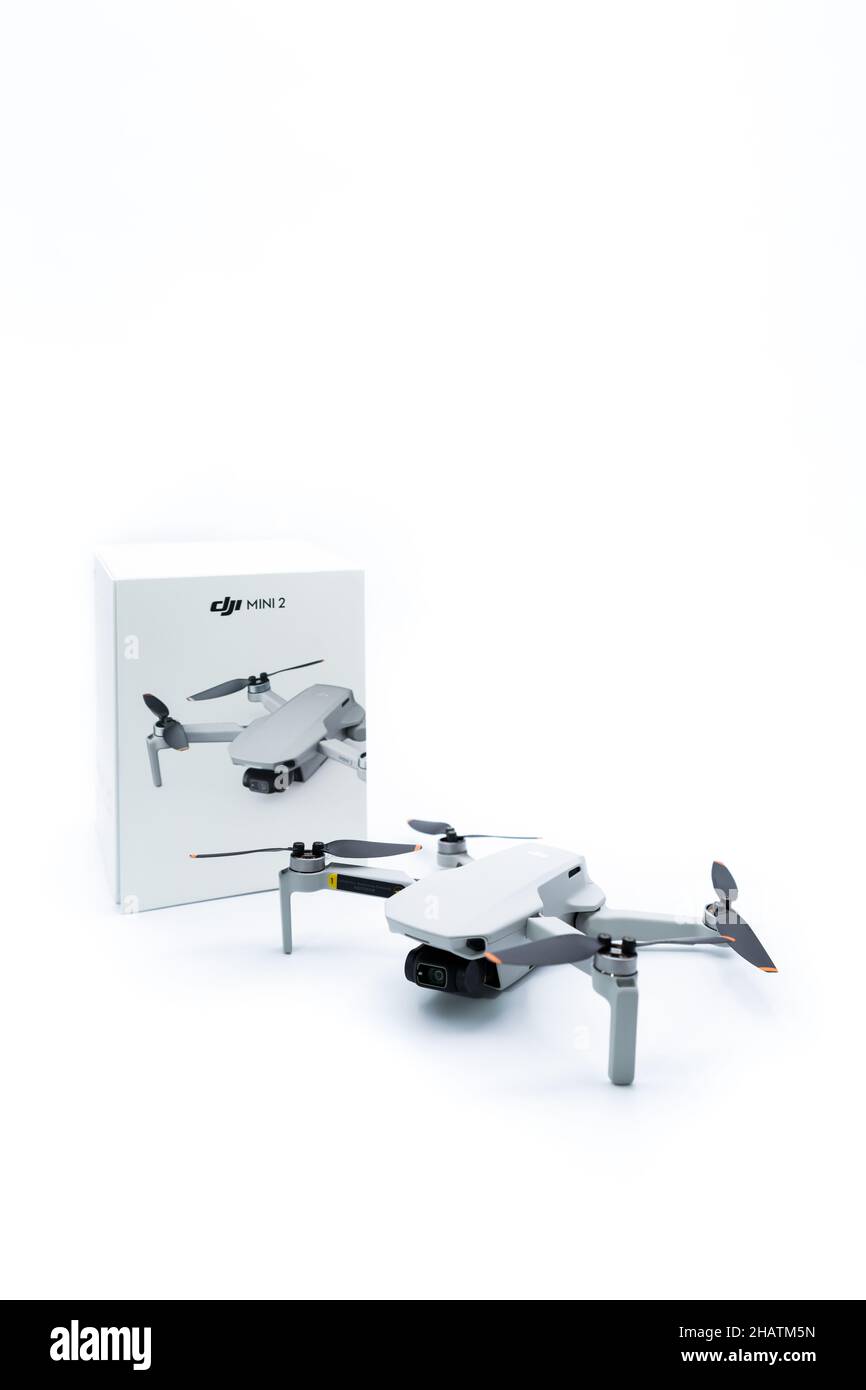
Overview
The DJI Mini 2 is a compact, sub-250g folding drone that packs genuine 4K video capability and a 3-axis stabilized gimbal into a package small enough to forget is in your bag — until you’re standing on a ridge wishing you’d brought it. Released in November 2020 as the successor to the Mavic Mini, the headline upgrade is a 1/2.3” CMOS sensor capable of 4K video, a significant step up from the 2.7K of the original. It’s aimed squarely at travel photographers, backpackers, and beginners who want real aerial footage without the bulk, registration headaches, or $1,000+ price tag of DJI’s more advanced lines.
Key Specs
| Spec | Value |
|---|---|
| Weight | 242 g (incl. battery, propellers, microSD) |
| Folded Dimensions | 138 × 81 × 58 mm |
| Unfolded Dimensions | 159 × 203 × 56 mm |
| Max Flight Time | 31 min (advertised) |
| Max Transmission Distance | 10 km (FCC) / 6 km (CE) |
| Camera Sensor | 1/2.3” CMOS |
| Photo Resolution | 12 MP (JPEG + RAW/DNG) |
| Video Resolution | 4K @ 24/25/30fps; 2.7K & 1080p up to 60fps |
| Max Video Bitrate | 100 Mbps (H.264/MP4) |
| Aperture / Focal Length | f/2.8 / 24mm equiv. (83° FOV) |
| Gimbal | 3-axis |
| Wind Resistance | Level 5 (up to ~38 kph / 24 mph) |
| Transmission System | OcuSync 2.0 (2.4 GHz / 5.8 GHz dual-band) |
| Obstacle Avoidance | Downward only (no forward/side/rear) |
| Internal Storage | None (microSD required) |
| Charging | USB-C, up to 29W (QC / USB PD) |

Build your Gear Closet
View all of your gear in one place, create packing lists and hit the trail with confidence. Available on iOS, Android and the web.
Get StartedPerformance
Flight Stability and Handling
Wind performance is the first thing that surprises people flying the Mini 2. The video is rock-steady in all but the windiest conditions — mighty impressive for such a dinky drone, with Level 5 wind resistance making a blustery day manageable. Across its three flight modes — Normal, Cine, and Sports — it whizzes when strafing across landscapes, and while sudden direction changes can momentarily throw the horizon, even inexperienced flyers can pull usable footage as the Mini 2 corrects itself quickly. Cine mode in particular is worth learning early: it deliberately slows stick response, which makes smooth pans far easier to execute manually.
Battery Life
DJI’s quoted 31-minute figure is the ceiling, not the average — in practice, with the Return-to-Home function kicking in at 25% power remaining, you’re working with closer to 23 usable minutes per battery.
That’s not a knock on the drone so much as honest physics.
The Mini 2 punches slightly above its weight in this category, though real-world results tend to fall a bit short of the advertised figure, especially when the drone is fighting sustained winds.
The Fly More Combo, which includes three batteries, is a strong buy for this reason — it opens up well over an hour of total flight time.
Transmission
The transmission system was upgraded to OcuSync 2.0 from the original’s enhanced Wi-Fi — a much more robust method supporting both 2.4 GHz and 5.8 GHz.
The dual-frequency technology automatically switches between channels to guard against interference.
In real-world urban environments you won’t see anywhere near the 10 km (FCC) headline figure —
signal in strong urban interference settles around 3 km, suburban environments around 6 km.
Still, for any practical hiking or travel scenario, the link is stable and confidence-inspiring.
Camera and Video Quality
In good daylight, the Mini 2’s footage is genuinely impressive. 4K video is captured at a clean 100 Mbps bitrate, which is more than adequate for the vast majority of users. You can select from three resolutions — 3840×2160 (4K), 2720×1530 (2.7K), and 1920×1080 (Full HD) — with frame rates topping out at 30fps in 4K and up to 60fps in 2.7K and FHD. If you shoot slow-motion, note that there’s no high-frame-rate 4K here; 4K is capped at 30fps.
RAW photo support (DNG) was a meaningful addition over the Mavic Mini
, and it makes a real difference in post-processing latitude. The fixed f/2.8 aperture does a reasonable job of protecting highlights, though
the Mini 2 suffers from some heavy lens flare when pointing it towards the sun or when sunlight directly hits the lens
— something to manage in the field.
The Mini 2 has no internal storage, so always pack a spare microSD card. Forgetting one on a sunrise hike is the kind of mistake you only make once.
Low-Light Limitations
This is where the 1/2.3” sensor shows its age. Low light is where the Mini 2 runs into roadblocks. DJI’s newer drones offer a larger sensor, but this model’s 1/2.3” chip starts showing noticeably bad noise around ISO 1600, with some visible degradation already creeping in at ISO 800 — though RAW files give enough latitude to recover images at that level with noise reduction in post. Video in low light is similarly soft. If twilight or indoor-adjacent shooting is a priority, look at the Mini 3 Pro or newer.
Missing Features Worth Knowing
The Mini 2 lacks both obstacle avoidance sensors and the ActiveTrack feature
— two omissions that matter. On obstacle avoidance:
it has no front, side, or rear collision detection, which makes the QuickShot automated modes riskier to use around trees or structures.
On ActiveTrack:
with zero tracking features, you can’t reliably film yourself without watching the remote the entire time.
These are real constraints, not theoretical ones.
Pros & Cons
Pros
- At 242 g, stays under the 249 g FAA/CAA registration threshold — no paperwork in most regions
- Genuine 4K/30fps at 100 Mbps in a jacket-pocket form factor
- OcuSync 2.0 is a major reliability upgrade over the Mavic Mini’s Wi-Fi link
- 3-axis gimbal delivers smooth, stable footage that punches well above the drone’s price class
- RAW (DNG) photo support gives meaningful editing latitude
- USB-C charging, including fast-charge support up to 29W
- QuickShot and Panorama modes (Sphere, 180°, Wide-Angle) add versatility without requiring manual skill
- Level 5 wind resistance is reassuringly robust for a sub-250g craft
Cons
- No obstacle avoidance on front, sides, or rear — demands careful, attentive flying
- No ActiveTrack; solo self-filming is impractical without a third-party solution
- Low-light photo and video quality is a genuine weakness due to the small 1/2.3” sensor
- 4K capped at 30fps; no slow-motion at full resolution
- H.264 only — no H.265 means larger file sizes for equivalent quality
- No internal storage; microSD is mandatory
- Lens flare can ruin shots when flying into the sun
- Real-world flight time is closer to 23 minutes per battery than the advertised 31
Who Should Buy This
The Mini 2 is the right drone for backpackers, travelers, and photography beginners who want legitimately good aerial footage without the weight, cost, or regulatory friction of larger platforms. Because it weighs under 249g, you don’t have to register it with the FAA in the US or most equivalent aviation bodies elsewhere — a meaningful advantage when you’re traveling internationally. It also makes a solid “always-have-it” backup for working photographers who shoot primarily with larger drones but want something throwable in a hiking pack. It’s not for anyone who relies on subject tracking, needs low-light capability, or wants to shoot slow-motion 4K.
Verdict
The DJI Mini 2 delivers a genuinely capable aerial camera at a size and weight that fits inside a backpacking kit without a second thought. Its daylight 4K footage, OcuSync 2.0 link reliability, and wind resistance all exceed what you’d expect from something this small. The absence of obstacle avoidance and ActiveTrack are real limitations that require you to fly attentively — treat it as a manual-flying tool, not an autonomous one, and it won’t disappoint. It scores an 8/10: a well-rounded, honest performer that earns its place in the pack.